Tuesday, February 13, 2018

State Reapplication For Underground Tank Program Approval

In July 2015 EPA published the 2015 underground storage tank regulation and the 2015 state program approval regulation. This was the first major revision to the federal UST regulations since 1988. The revisions were intended to strengthen the 1988 federal underground storage tank (UST) regulations by increasing emphasis on properly operating and maintaining UST equipment. The revisions included provisions to prevent and detect UST releases, which are a leading source of groundwater contamination, and to ensure all USTs in the United States, including those in Indian country, meet the same minimum standards.

Abandoned Underground Tanks Marked During 
Ground Penetrating Radar (GPR) Survey

The 2015 UST regulation changed certain portions of the 1988 underground storage tank technical regulation, added new operation and maintenance requirements, and addressed UST systems deferred in the 1988 UST regulation. The changes:
  • Added secondary containment requirements for new and replaced tanks and piping
  • Added operator training requirements
  • Added periodic operation and maintenance requirements for UST systems
  • Added requirements to ensure UST system compatibility before storing certain biofuel blends
  • Removed past deferrals for emergency generator tanks, field constructed tanks, and airport hydrant systems
  • Updated codes of practice
  • Made editorial and technical corrections
The 2015 state program approval (SPA) regulation also updated SPA requirements  and incorporated the changes to the UST technical regulation listed above.

Currently 38 states plus the District of Columbia and Puerto Rico have SPA and have three years to reapply in order to retain their SPA status. UST system owners and operators in these states must continue to follow their state requirements until the state changes its requirements or until the state’s SPA status changes. Under the 2015 state program approval regulation, the 38 states plus the District of Columbia and Puerto Rico, which currently have SPA must reapply by October 13, 2018 in order to retain their SPA status. The remaining 16 non-SPA states and territories may apply for SPA at any time.

Owners and operators in 16 non-SPA states and territories must meet the federal requirements according to the schedule in the 2015 UST regulation. In addition, owners and operators will need to follow their state requirements.


Caltha LLP | Your EH&S Compliance, Auditing
and EMS/SMS Partner

General Permits For Wastewater Proposed By IDNR

The Iowa Department of Natural Resources (DNR) has proposed two general discharge permits to cover two types of common and generally low risk discharges.

DNR plans to issue two new National Pollutant Discharge Elimination System (NPDES) general permits known as General Permit #8 (GP8) and General Permit #9 (GP9). GP8 allows for discharges of hydrostatic test water (water used to test the integrity of a pipe or tank), underground storage tank ballast water (water used to weight a tank to facilitate underground installation), and water associated with installation, repair, and replacement of potable water lines. GP9 allows for discharges from dewatering associated with construction and small residential geothermal heating and cooling systems.

IDNR is proposing to include eligibility criteria and Best Management Practices. These will ensure that discharges will comply with water quality standards. Most permittees will be automatically authorized to discharge. Only a few higher-risk dischargers will need to submit a Notice of Intent. There is no fee for either permit.

DNR is seeking public comment on proposed rules that will create two new general permits. DNR will hold three public hearings across the state in March:
  • Wednesday, Mar. 7, 4 p.m. at the Coralville, IA Public Library
  • Thursday, Mar. 8, 4 p.m. at the Harlan, IA Public Library
  • Wednesday, Mar. 14, 4 p.m. at the Urbandale, IA Public Library


Caltha LLP | Your Air Permit, Wastewater Permit, 
Storm Water Permit Partner

Monday, February 12, 2018

Commercial Chemical Product or Waste? Commercial Chemical Product Checklist

In  2017, EPA provided additional guidance to differentiate between commercial chemical products (CCPs) and manufactured articles in the Resource Conservation and Recovery Act (RCRA) Online Document #14887. In the guidance, EPA noted that manufactured articles, such as batteries, fluorescent lamps, and thermometers, are devices designed for a purpose other than to access the device’s internal chemicals. Specifically, batteries, lamps, and thermometers are used for electrical energy, for light, or to measure temperature, respectively, and not to access the mercury, lead, or other chemicals contained in them. Therefore, batteries, fluorescent lamps, and thermometers are not CCPs.

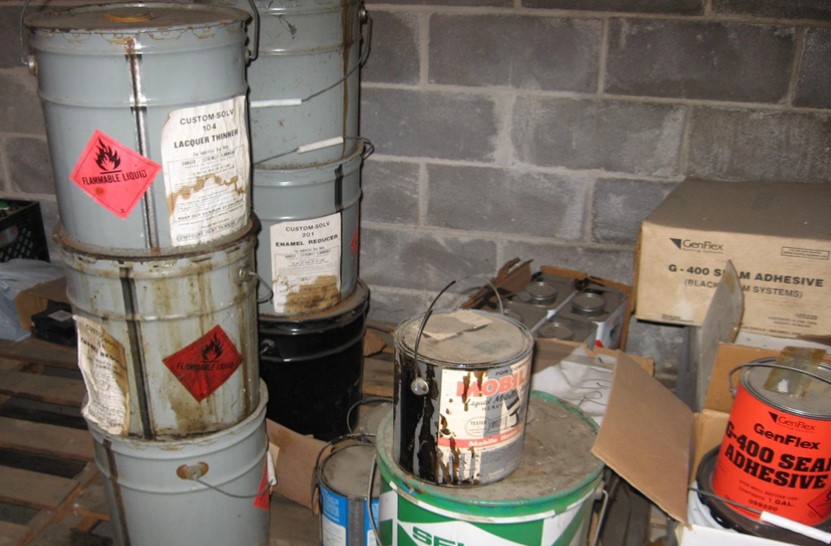
Abandoned Chemical Products Stored In Lieu Of Disposal
Abandoned Chemical Products Stored
In Lieu Of Disposal

To assist manufacturers in determining if their waste is regulated as a CCP, EPA offered the following checklist:


Commercial Chemical Product Checklist

Does the facility appear to be managing the material being evaluated in 

a manner that suggests it is a product 

(as opposed to being abandoned or stored in lieu of abandonment)?

1 Are the containers used to store the material in good condition (vs. crushed, bulging, 
corroded, dusty, leaking, incompatible with the contents, open, or overpacked)?


2
Are the containers of concern stored in a manner that suggests the material has value? 
(For example, is the material protected from precipitation, locked-up when the facility is not
 operating, or stored in a fenced/secure area?)
3 Does the management of the containers appear to preserve the material's integrity and serve to 
prevent the material from becoming unstable, unusable or contaminated?
4 Do the containers have labels that identify the contents as product?


5
Do the container labels have information, such as lot number, manufacture date, or 
expiration date, to help determine the age/viability of the material, particularly if a recommended 
expiration date has been exceeded?


6
If a container is not labeled, can the facility support a claim that the contents is a product
 (e.g., provide analytical testing results to verify that the material meets specifications for use, 
or explain that it recently had to transfer contents to a new container due to damage to the 
original container and can provide record of purchase)?


7
Does the condition of the material suggest it is a valuable product? (For example, no crystals
 have formed inside or outside the container, the material is not discolored, there is no phase 
separation evident)


8
Does the facility manage the material as a valuable commodity by limiting access to the material 
and having security procedures in place to prevent unauthorized removal of the material?
Does the facility appear to be using the material being evaluated in the production 
of its products or in support of production operations (as opposed to being abandoned
 or stored in lieu of abandonment)?
1 Can the facility describe how the material is used or show where the material is used in the facility?


2
Do the containers storing the material in question appear to be stored in an appropriate location
 Is the material stored according to manufacturer recommendations (e.g., recommended
 temperatures, light)? Are the containers accessible? Are the materials being stored in the same
 location as other similar product materials?


3
Do product specifications exist for the material or process in which it is to be used (e.g., minimum 
concentration of an active ingredient, maximum concentrations of contaminants, or dates beyond 
which the material should not be used)?


4
Is there a process in place for the facility to compare the properties of the material in question to 
specifications that must be met in order for the material to be used for the claimed purpose, or is
 documentation available to support a facility claim that the material meets such specifications?
5 Does it appear that the facility has purchased new material that will be used for the same purpose 
as the material in question?


6
Are records available to demonstrate that the facility has NOT written off the material as a loss 
(indicating that the facility still believes that the material has a use)?

Does the facility appear to be selling into commerce the material being evaluated 

(as opposed to being abandoned or stored in lieu of abandonment)?

1 Does the facility have “active” customers or a market for the material?


2
If yes, can the facility provide a list of such customers and document recent shipments 
of the material for subsequent distribution in commerce, or provide copies of contracts 
from past or future sales?
3 Can the facility identify any competitors for the sale of the material to support a claim that there 
is an existing or potential market for the material?
4 Can the facility provide a list of inactive or past customers that purchased the material?
5 Can the facility provide any information about a future market for the material?

6
Is a Material Safety Data Sheet (MSDS) or SDS under OSHA’s new Globally Harmonized System 
available for the material (supporting a claim that the material has been in, or will enter, commerce)?

7
Does the facility have a system for accepting/managing returned or off-specification products it 
produced and utilizing that material to produce a new product? If so, is this system documented?
8 Has the material been recalled or returned from a customer? If so, can the facility explain how it 
intends to use the material? Is there a market for the returned material?


Caltha LLP | Your EH&S Compliance, Auditing 
and EMS/SMS Partner
Wednesday, February 7, 2018

Is Scrap Metal Hazardous?

On February 24, 2017, EPA issued a response to an inquiry about what does and does not meet EPA’s definitions of “scrap metal” and “processed scrap metal,” as they relate to scrap tantalum anodes, wire, pellets, pins, and powders. RCRA defines scrap metal as "bits and pieces of metal parts (e.g., bars, turnings, rods, sheets, wire) or metal pieces that may be combined together with bolts or soldering (e.g., radiators, scrap automobiles, railroad box cars), which when worn or superfluous can be recycled."

RCRA also recognizes different classes of scrap metal under “Excluded scrap metal”:

  • Processed scrap metal is scrap metal which has been manually or physically altered to either separate it into distinct materials to enhance economic value or to improve the handling of materials. Processed scrap metal includes, but is not limited to scrap metal which has been baled, shredded, sheared, chopped, crushed, flattened, cut, melted, or separated by metal type (i.e., sorted), and, fines, drosses and related materials which have been agglomerated. (Note: shredded circuit boards being sent for recycling are not considered processed scrap metal. They are covered under the exclusion from the definition of solid waste for shredded circuit boards being recycled ( § 261.4(a)(14)).

  • Home scrap metal is scrap metal as generated by steel mills, foundries, and refineries such as turnings, cuttings, punchings, and borings.

  • Prompt scrap metal is scrap metal as generated by the metal working/fabrication industries and includes such scrap metal as turnings, cuttings, punchings, and borings. Prompt scrap is also known as industrial or new scrap metal.

Along with confirming scrap tantalum anodes, wire, pellets, and pins as scrap metal, more generally, EPA’s response highlights that metal powders only meet the definition of scrap metal if they are agglomerated in such a way that the agglomerated material physically resembles other types of scrap metal (i.e., bits and pieces of metal parts).

In the response, EPA noted:
 

  • Scrap tantalum anodes, wire, pellets, and pins meet the definition of “scrap metal” found at §261.1(c)(6). (Tantalum is a highly corrosion-resistant transition metal that is widely used as a component in metal alloys.) Thus, if these materials are legitimately recycled (i.e., meeting the factors in §260.43), they are exempt from RCRA hazardous waste regulation under §261.6(a)(3)(ii), even if they exhibit a characteristic or have become contaminated with a listed waste.

  • Tantalum powders would meet the definition of scrap metal in §261.1(c)(6) only if they are agglomerated in such a way that the agglomerated material physically resembles other types of scrap metal. For example, tantalum powder that has been mixed with a binder and then sintered at high temperature to cause the particles to form a structure of high mechanical strength and density would meet the definition of “fines, drosses and related materials which have been agglomerated” and would therefore be considered “processed scrap metal” per §261.1(c)(10). Per §261.4(a)(13), “processed scrap metal” is excluded from the definition of solid waste if legitimately recycled (i.e., meeting the factors in §260.43).

  • Non-agglomerated tantalum powders would not meet the definition of scrap metal in §261.1(c)(6). Thus, non-agglomerated tantalum powders that exhibit a hazardous waste characteristic per Part 261, Subpart C would be considered a hazardous waste, even when sent for recycling.


Caltha LLP | Your EHS Compliance, Auditing and EMS/SMS Partner
Revised 2018 Flammable and Combustible Liquids Code Released

The National Fire Protection Association (NFPA) has released a revised 2018 edition of NFPA 30 Flammable and Combustible Liquids Code. This version replaces the prior edition published in 2015. NFPA 30 is referenced in numerous OSHA, emergency prevention and pollution prevention regulatory programs and becomes enforceable under OSHA and many state and local regulations, NFPA 30 provides safeguards to reduce the hazards associated with the storage, handling, and use of flammable and combustible liquids.

The NFPA 30 code applies to the storage, handling, and use of flammable and combustible liquids, including waste liquids. It is intended to "reduce the hazard to a degree consistent with reasonable public safety, without undue interference with public convenience and necessity, of operations that require the use of flammable and combustible liquids." Compliance with the code does not eliminate all hazards in the use of flammable and combustible liquids.

Improper Storage And Labeling of Flammable 
Waste Observed During Audit

The NFPA 30 code does not apply to:
  • Any liquid that has a melting point of 100°F (37.8°C) or greater
  •  Any cryogenic fluid or liquefied gas
  • Any liquid that does not have a flash point, but which is capable of burning under certain conditions
  • Mixtures of flammable or combustible liquids and halogenated hydrocarbons either do not exhibit a flash point using the standard closed-cup test methods or will exhibit elevated flash points.
  • Any aerosol product, which are addressed in NFPA 30B, Code for the Manufacture and Storage of Aerosol Products.
  • Any mist, spray, or foam
  • Transportation of flammable and combustible liquids as governed by the U.S. Department of Transportation, which are addressed in NFPA 385, Standard for Tank Vehicles for Flammable and Combustible Liquids, and in the U.S. Department of Transportation’s Hazardous Materials Regulations, Title 49, Code of Federal Regulations, Parts 100–199.
  • Storage, handling, and use of fuel oil tanks and containers connected with oil-burning equipment, which are addressed in NFPA 31, Standard for the Installation of Oil- Burning Equipment.
  • Use and installation of alcohol-based hand rub (ABHR) Dispensers, which are addressed in NFPA1, Fire Code, and NFPA101, Life Safety Code.


Caltha LLP | Your Safety and Health Compliance Management Partner

Monday, February 5, 2018

Do I Need Permit For Oil Water Separator?

What Is A Flammable Waste Trap?

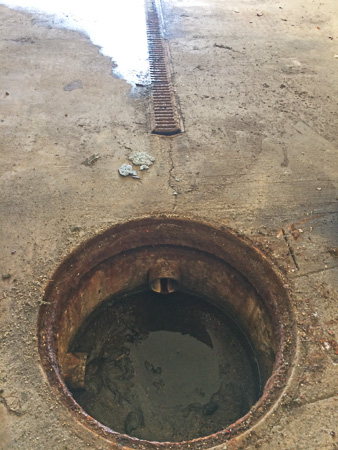
A flammable waste trap is sometimes called an oil-water separator. It is typically located underground, often under the floor of a building. It is intended to retain low density liquids (usually oils and fuel) from wastewater so that they do not discharge to the sewer. Most often oil-water separators are connected to floor drains inside a building. Oil water separately must have oil removed periodically to remain operational.


Flammable Waste Trap / Oil Water Separator

Do Flammable Waste Traps, Oil Water Separators Need a Permit?

In most cases no. However, most sewer agencies require installation of oil water separators at higher risk businesses to prevent significant quantities of oil being discharged to the sewer. Therefore they are included in facility designs which are approved by local permitting authorities for sewer connection permits, but are not permitted separately.


Caltha LLP | Your Air Permit, Wastewater Permit, Storm Water Permit Partner


Friday, February 2, 2018

Deadline For Report Air Releases From Farms Extended

In April 2017, the D.C. Circuit Court ruled that farms were required to report air releases of hazardous substances above certain thresholds under the Clean Air Act and EPCRA. EPA released guidance on those reporting obligations in November 2017. EPA requested a stay of 90 days to provide the agency additional time to prepare for any reporting obligations, cited a need for more time to refine guidance to industry on meeting the reporting obligations and to finalize agriculture-specific forms that would be used to report emissions from animal wastes to EPA.

Click here for summary of EPA and Court actions on EPCRA reporting for farms.

On February 1, 2108 the U.S. Court of Appeals for the D.C. Circuit extended a stay of air emissions reporting from livestock wastes through at least May 1, 2018.