Showing posts with label Wastewater. Show all posts

Wednesday, March 21, 2018

Wastewater Permit And Compliance Overview


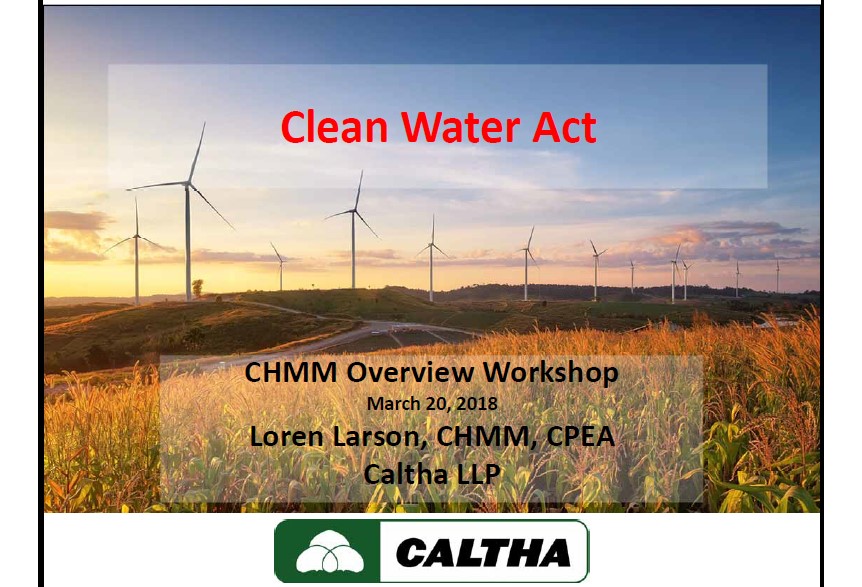
Overview of Clean Water Act 


Click link above to download presentation slides.


Overview of the Clean Water Act and underlying programs. Clean Water Act; CWA; wastewater; NPDES; pretreatment permit; water quality standards; permit limits; effluent guidelines; effluent standards; waters of the US, water quality criteria, SPCC rule

Sunday, March 18, 2018

Is Hazardous Waste Allowed In City Sewer?

FAQ: Is It Legal To Discharge Hazardous Waste Into Sewer?

Possibly, if certain conditions are met.

The Clean Water Act (CWA) Pretreatment Program regulations require that Industrial Users (IUs) report any substance discharged to the Publicly Owned Treatment Works (POTW) which, if otherwise disposed of, would be considered a Resource Conservation and Recovery Act (RCRA) hazardous waste. Under RCRA’s Domestic Sewage Exclusion (DSE), any mixture of domestic sewage and other wastes that passes through a sewer system to a POTW is not considered a hazardous waste for the purposes of RCRA.

However, reporting of such discharges are regulated under the CWA as follows:
  • 40 CFR 403.12(p) requires a one-time report for each substance discharged to a POTW that, if otherwise disposed of, would be considered RCRA hazardous waste.
  • 40 CFR 403.12(j) requires a report in advance of any substantial change in volume or character of any IU discharge.

Who Must Submit Notification of Hazardous Waste Discharge?

All IUs that discharge a substance that, if otherwise disposed of, would be characteristic or listed wastes under 40 CFR Part 261 and meet the following criteria:
  • Total waste discharged is greater than or equal to 15 kg/month; or
  • Waste discharged is acute hazardous waste.

Where Does Notification Need To Be Sent?

If notification of hazardous waste discharge is required, it needs to be submitted to:
  1. Local Sewerage Authority(i.e., POTW)
  2. EPA Regional Waste Management Director, and
  3. State Hazardous Waste Authority

What Does Notification Need To Include?

The notification must contain:

For hazardous wastes ≥ 15 kg/month or any quantity of acute, the one-time notification from an IU to a POTW must contain:
  1. Name of the hazardous waste as set forth in 40 CFR Part 261.
  2. EPA hazardous waste number (code).
  3. Type of discharge to the sewer (continuous, batch, or other).
  4. A certification that the IU has a program in place to reduce the volume and toxicity of hazardous wastes generated to the degree it has determined to be economically practical.
If the IU discharges more than 100 kg of acute or non-acute hazardous waste per calendar month to the POTW, the notification must also contain the following items of information, to the extent such information is known and available:
  • An identification of the hazardous constituents contained in the hazardous wastes.
  • An estimation of the mass and concentration of such constituents in the waste stream discharged during the calendar month in which the one-time report is made.
  • An estimation of the mass of constituents in the wastestream expected to be discharged during the 12 months following the notification.
Common Questions Regarding Notification Of Hazardous Waste Discharge To City Sewer


Air permit consultant, wastewater permit consultant, stormwater permit consultant, tank permit, RCRA permit 
Caltha LLP | Your Air Permit, Wastewater Permit, 
Storm Water Permit Partner

Saturday, February 24, 2018

Total Toxic Organics Management Plan For Metal Finisher

Caltha LLP Project Summary

Project: Total Toxic Organics Management Plan For Metal Finisher
Client: Metal Finishing Company
Location(s): Minnesota

Key Elements: Total Toxic Organics Management Plan, SPCC Plan

Overview: This metal finishing was subject to Categorical Effluent Guidelines. In lieu of monitoring wastewater discharges for the full list of “Total Toxic Organics” the facility opted to prepare and implement a Total Toxic Organic Management Plan (TTOMP) for the site. Caltha was contracted to prepare the TTOMP for the facility. The TTOMP included:
• Inventory and description of TTO compounds used in the electroplating or finishing processes, and degreasing processes;
• Inventory and description of regulated processes where TTO compounds are used;
• Description of disposal methods for materials and wastes that contain TTO compounds;
• Description of controls used to limit or eliminate the discharge of TTO compounds to the sanitary sewer.


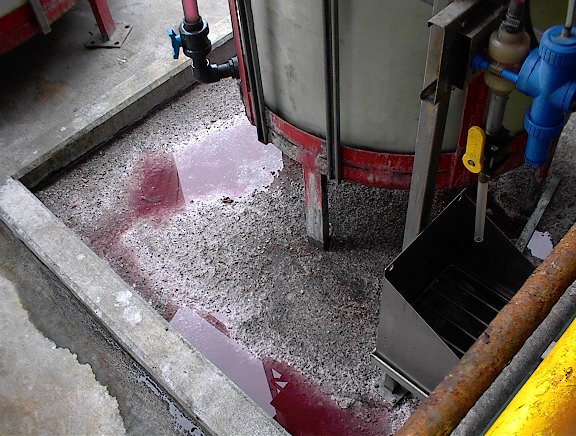
Spilled Corrosive Liquid From Aboveground Tank


The TTOMP was combined with a Facility Spill Plan which included processes and containers not specifically addressed under the Effluent Guidelines. Caltha prepared a spill control plan for the site to minimize and control spills from areas where liquids are stored, transferred and used. The spill plan included:
1. Inventory and description of chemical storage and process tanks;
2. Description of batch discharges to sanitary sewer;
3. Description of controls and procedures to prevent entry of chemicals and other restricted materials and wastes from entering the sanitary sewer;
4. Emergency notification procedures;

For more information on Caltha LLP services, go to the Caltha Contact Page


Caltha LLP | Your EH&S Compliance, Auditing 
and EMS/SMS Partner

Tuesday, February 13, 2018

General Permits For Wastewater Proposed By IDNR

The Iowa Department of Natural Resources (DNR) has proposed two general discharge permits to cover two types of common and generally low risk discharges.

DNR plans to issue two new National Pollutant Discharge Elimination System (NPDES) general permits known as General Permit #8 (GP8) and General Permit #9 (GP9). GP8 allows for discharges of hydrostatic test water (water used to test the integrity of a pipe or tank), underground storage tank ballast water (water used to weight a tank to facilitate underground installation), and water associated with installation, repair, and replacement of potable water lines. GP9 allows for discharges from dewatering associated with construction and small residential geothermal heating and cooling systems.

IDNR is proposing to include eligibility criteria and Best Management Practices. These will ensure that discharges will comply with water quality standards. Most permittees will be automatically authorized to discharge. Only a few higher-risk dischargers will need to submit a Notice of Intent. There is no fee for either permit.

DNR is seeking public comment on proposed rules that will create two new general permits. DNR will hold three public hearings across the state in March:
  • Wednesday, Mar. 7, 4 p.m. at the Coralville, IA Public Library
  • Thursday, Mar. 8, 4 p.m. at the Harlan, IA Public Library
  • Wednesday, Mar. 14, 4 p.m. at the Urbandale, IA Public Library


Caltha LLP | Your Air Permit, Wastewater Permit, 
Storm Water Permit Partner

Monday, February 5, 2018

Do I Need Permit For Oil Water Separator?

What Is A Flammable Waste Trap?

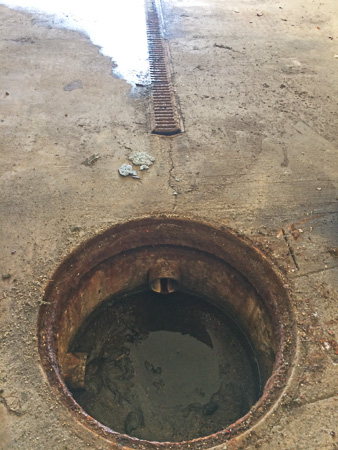
A flammable waste trap is sometimes called an oil-water separator. It is typically located underground, often under the floor of a building. It is intended to retain low density liquids (usually oils and fuel) from wastewater so that they do not discharge to the sewer. Most often oil-water separators are connected to floor drains inside a building. Oil water separately must have oil removed periodically to remain operational.


Flammable Waste Trap / Oil Water Separator

Do Flammable Waste Traps, Oil Water Separators Need a Permit?

In most cases no. However, most sewer agencies require installation of oil water separators at higher risk businesses to prevent significant quantities of oil being discharged to the sewer. Therefore they are included in facility designs which are approved by local permitting authorities for sewer connection permits, but are not permitted separately.


Caltha LLP | Your Air Permit, Wastewater Permit, Storm Water Permit Partner


Sunday, October 1, 2017

AZ Chemical Processor Needed Industrial Wastewater Management Plan


Caltha LLP Project Summary

Project: Compliance Review & Waste Water Management Procedure Development
Client:
Chemical Processing Facility
Location(s):
Arizona


Key Elements: Industrial waste water discharge, Waste management procedures, POTW industrial user rule, Wastewater sampling


Overview: Caltha LLP was retained by this Arizona chemical plant to conduct an assessment of wastewater management practices. The review included an evaluation of raw materials and waste products which could be discharged to the sanitary sewer from the process. Caltha staff met with POTW to determine waste acceptance criteria and developed key parameters which would be used to determine if specific waste streams were suitable for discharge to the POTW, or required alternate disposal methods. Caltha then prepared a written procedure for facility operators to use to screen waste streams to determine if discharge to the POTW was allowed. The procedure was provided to the POTW for review and concurrence.


For more information on Caltha LLP permit services, go to the Caltha Air, Wastewater and Waste Permitting Page

Saturday, September 30, 2017

Metal Plating Operation Required To Have Total Organic Spill Plan

Caltha LLP Project Summary

Project: Total Toxic Organics Management Plan For Metal Finisher
Client: Metal Finishing Company
Location(s): Minnesota


Key Elements: Total Toxic Organics Management Plan, SPCC Plan


Overview: This metal finishing was subject to Categorical Effluent Guidelines. In lieu of monitoring wastewater discharges for the full list of “Total Toxic Organics” the facility opted to prepare and implement a Total Toxic Organic Management Plan (TTOMP) for the site. Caltha was contracted to prepare the TTOMP for the facility. The TTOMP included:
• Inventory and description of TTO compounds used in the electroplating or finishing processes, and degreasing processes;
• Inventory and description of regulated processes where TTO compounds are used;
• Description of disposal methods for materials and wastes that contain TTO compounds;
• Description of controls used to limit or eliminate the discharge of TTO compounds to the sanitary sewer.


The TTOMP was combined with a Facility Spill Plan which included processes and containers not specifically addressed under the Effluent Guidelines. Caltha prepared a spill control plan for the site to minimize and control spills from areas where liquids are stored, transferred and used. The spill plan included:
1. Inventory and description of chemical storage and process tanks;
2. Description of batch discharges to sanitary sewer;
3. Description of controls and procedures to prevent entry of chemicals and other restricted materials and wastes from entering the sanitary sewer;
4. Emergency notification procedures;


Click here for more information on Caltha LLP Spill Prevention and Response Plan Services and SPCC Support Services.


Saturday, December 3, 2011

General Permits For Commercial Vessel Discharges

U.S. Environmental Protection Agency (EPA) is issuing two draft vessel general permits that would regulate discharges from commercial vessels, excluding military and recreational vessels. The draft Vessel General Permit, which covers commercial vessels greater than 79 feet in length, would replace the current 2008 Vessel General Permit, when it expires in December 2013. The new draft Small Vessel General Permit would cover vessels smaller than 79 feet in length and would provide such vessels with the Clean Water Act permit coverage they will be required to have as of December 2013.

Summary of Draft Vessel General Permit:
The updated permit would reduce the administrative burden for vessel owners and operators, eliminating duplicative reporting requirements, clarifying that electronic recordkeeping may be used instead of paper records, and streamlining self-inspection requirements for vessels that are out of service for extended periods. The permit will, for the first time, manage the discharge of fish hold effluent.

A key new provision of the permit is a proposed numeric standard to control the release of non-indigenous invasive species in ballast water discharges. The draft Vessel General Permit also contains updated conditions for mechanical systems that may leak lubricants into the water and exhaust gas scrubber washwater, which would reduce the amount of oil and other pollutants that enter U.S. waters. EPA will take comment on potentially more stringent requirements for bilgewater discharges.

Summary of Draft Small Vessel General Permit:
This permit would be the first under the Clean Water Act to address discharges incidental to the normal operation of commercial vessels less than 79 feet in length. The draft permit specifies best management practices for several broad discharge management categories including fuel management, engine and oil control, solid and liquid maintenance, graywater management, fish hold effluent management and ballast water management. The permit would go into effect at the conclusion of a current moratorium enacted by Congress that exempts all incidental discharges from such vessels, with the exception of ballast water, from having to obtain a permit until December 18, 2013.

Both permits will be subject to a 75-day public comment period. EPA intends to issue the final permits in November 2012 to allow vessel owners and operators time to prepare for new permit requirements.


Caltha LLP provides specialized expertise to clients nationwide in the evaluation environmental rules, developing EH&S compliance procedures, and preparing cost-effective EH&S management programs.


For further information contact Caltha LLP at

info@calthacompany.com or Caltha LLP Website


Monday, September 26, 2011

What is a Toxic Organic Management Plan?

Seven federally regulated industrial categories have pretreatment standards established for total toxic organics (TTO). The term TTO is defined as the sum of specific toxic organic compounds found in the process discharge at a concentration of 0.01 mg/l (10 ppb) or more.

Categories affected by a TTO limit include:

• Electroplating (40 CFR 413),
• Metal Finishing (40 CFR 433),
• Electrical and Electronic Components (40 CFR 469),
• Metal Molding and Casting (40 CFR 464),
• Coil Coating (40 CFR 465),
• Aluminum Forming (40 CFR 467), and
• Copper Forming (40 CFR 468).

In addition to these seven categories, Pharmaceutical Manufacturing (40 CFR 439) is subject to a specific list of toxic organics with individual discharge limits.

Compliance with the pretreatment standards may be demonstrated in several different ways, including to develop and certify the implementation of a toxic organic management plan (TOMP). The TOMP details Best Management Practices or BMPs to be used to implement the general prohibitions listed in 40 CFR 403.5(a)(1) and specific prohibitions listed in 40 CFR 403.5(b). BMPs could include treatment requirements, operating procedures, and practices to control plant site runoff, spillage or leaks, sludge or waste disposal, or drainage from raw materials storage.

Caltha LLP provides specialized expertise to clients nationwide in the evaluation environmental rules, developing EH&S compliance procedures, and preparing pollution prevention and spill control plans, including toxic organic management plans.


For further information contact Caltha LLP at

info@calthacompany.com or Caltha LLP Website


Monday, January 31, 2011

Minnesota Environmental Permit Streamlining Executive Order

Governor Mark Dayton has signed an executive order directing the Minnesota Department Natural Resources and the Minnesota Pollution Control Agency to take actions to streamline environmental permitting processes used by the agencies and to better align environmental requirements with adjoining States and States within EPA Region 5.

The order requires:

“1. The Commissioners shall accelerate and simplify environmental review and permitting by enabling environmental review and permit applications to be submitted electronically.
2. The Commissioners shall establish a goal for each of their agencies to decide, within 150 days after the agency determines that an environmental or natural resource permit application is complete, whether to issue the permit. The Commissioners shall, within six months after the effective date of this order, submit to the Governor a progress report on meeting the goal and any additional administrative recommendations to further reduce decision times.
3. The Commissioners shall establish a goal for each of their agencies to decide, within 30 days after an environmental impact statement is finally approved, whether to issue the permit. The Commissioners shall promptly report to the Governor any decisions that do not meet the goal. 4. The Commissioner of the Pollution Control Agency shall, within 60 days after the effective date of this order, evaluate and report to the Governor any recommendations the Commissioner deems appropriate to amend Minnesota Statutes, section 115.07, and applicable Minnesota Rules, to be more consistent with federal regulations that, under certain conditions, permit construction to commence before a water discharge permit is issued.
5. The Commissioner of the Pollution Control Agency shall include, in any statement of need and reasonableness for rules to adopt air quality or hazardous waste or water quality standards, an analysis of proposed standards that are more stringent than similar federal standards including justification for why the standards are needed to protect public health and the environment, and a comparison to similar standards in border states and states within Environmental Protection Agency region 5”


The Executive Order will become effective 15 days after publication in the State Register and filing with the Secretary of State.

Caltha LLP provides specialized expertise to clients nationwide in the evaluation environmental rules, developing EH&S compliance procedures, and preparing cost-effective EH&S management programs.

For further information contact Caltha LLP at

info@calthacompany.com

or

Caltha LLP Website

Monday, October 4, 2010

Proposed Air Emission Standards For Sewage Sludge Incinerators

The U.S. Environmental Protection Agency (EPA) is proposing to cut emissions of mercury, particle pollution and other airbone pollutants from sewage sludge incinerators under proposed 40 CFR 60.4770 of subpart LLLL and proposed 40 CFR 60.5005 of subpart MMMM. Sewage sludge incinerators are typically located at wastewater treatment facilities. The proposed standards would apply to both multiple hearth and fluidized bed incinerators. Units incinerating sewage sludge at other types of facilities such as commercial, industrial and institutional incinerators will be covered under different air pollution standards. Overall, the proposal would cut mercury emissions from these units by more than 75 percent.

EPA will take comment on the proposed rule for 30 days after it is published in the Federal Register. EPAexpects the rule will be finalized in 2011 and become effective in 2015.

Caltha LLP provides specialized expertise to clients nationwide in the evaluation environmental rules, developing EH&S compliance procedures, and preparing cost-effective EH&S management programs.

For further information contact Caltha LLP at

info@calthacompany.com

or

Caltha LLP Website
Monday, September 21, 2009

Wastewater Discharges From Power Plants - New Rules Planned

The U.S. EPA has announced plans to revise the existing standards for water discharges from coal-fired power plants. Earlier this year, EPA completed a multi-year study of power plant wastewater discharges. This study concluded that current regulations, which were issued in 1982, have not kept pace with changes that have occurred in the electric power industry over the last three decades. As part of the multi-year study, EPA measured the pollutants present in the wastewater and reviewed treatment technologies, focusing mostly on coal-fired power plants. Many of the toxic pollutants discharged from these power plants come from coal ash ponds and the flue gas desulfurization systems used to scrub sulfur dioxide from air emissions.

Once the new rules for electric power plants is finalized, EPA and States would incorporate the new standards into wastewater discharge permits.

Caltha LLP provides expert consulting services to public and private sector clients nationwide to address water quality standards, wastewater permitting and assessing potential impacts of chemicals in the aquatic environment.

For further information contact Caltha LLP at
info@calthacompany.com
or
Caltha LLP Website


Thursday, June 25, 2009

Definition of Waters of US - Proposed Revision

The "Clean Water Restoration Act", has been approved by the US Senate Senate Environment and Public Works Committee. The proposed law would clarify the scope of the Clean Water Act definition of "waters of the United States". Under the bill, waters of the US would be defined as including:


(A) all waters which are subject to the ebb and flow of the tide;
(B) all interstate waters, including interstate wetlands;
(C) all other waters, such as intrastate lakes, rivers, streams (including intermittent streams), mudflats, sandflats, wetlands, sloughs, prairie potholes, wet meadows, playa lakes, or natural ponds;
(D) all impoundments of waters of the United States;
(E) tributaries of the aforementioned waters;
(F) the territorial seas; and
(G) wetlands adjacent to the aforementioned waters;

The draft bill specifically excludes groundwaters from the definition of waters subject to the Clean Water Act.


Caltha LLP provides specialized expertise to clients nationwide in the evaluation of environmental, health & safety rules, developing cost effective compliance procedures, and management programs.

For further information contact Caltha LLP at
info@calthacompany.com
or
Caltha LLP Website


Monday, March 30, 2009

MassDEP Limits Mercury in Industial Wastewater Discharges

Massachusetts Department of Environmental Protection (MassDEP) restrictions on mercury discharges to municipal sewer systems go into effect on May 1, 2009. These rules, promulgated under the Massachusetts Mercury Management Act, limit the maximum concentration of mercury in sanitary sewer discharges from industrial users to less than 1 ug/L (1 ppb). By July 2007, all dischargers were to have determined possible sources of mercury in their discharges and have taken reasonable steps to eliminate them.

[What is 1 ug/L (parts per billion) mercury equivalent to?]

Caltha LLP provides specialized expertise to clients nationwide in the evaluation water quality and wastewater requirements, NPDES permitting, and preparing cost-effective wastewater programs.

For further information contact Caltha LLP at
info@calthacompany.com
or
Caltha LLP Website


Wednesday, March 25, 2009

North Carolina CAFO General NPDES Permit Renewal

The North Carolina Department of Environment, Health, and Natural Resources – Division of Water Quality has revised its general NPDES discharge permits for confined animal feeding operations (CAFO). The current general permits for waste systems at swine, cattle and dairy and wet poultry operations will expire on Sept. 30, 2009. Operators of swine, cattle and poultry farms who come under the state general permits for wastewater systems need to apply for renewal under the new permit before April 1, 2009.

Animal feeding operations that have more than 250 swine, 100 confined cattle or dairy animals, 75 horses or a wet litter operation for more than 30,000 chickens are required to apply for a permit from the state.

General permits set requirements for waste management activities common to facilities of a particular type, and are issued as a class every five years. General permits for animal operations are issued along with certificates of coverage that address specific requirements for each facility.

The new general permits differ from the current permits in some operational, monitoring and reporting requirements. The most substantive change to the current permit is that application of waste must stop within 4 hours of a National Weather Service (NWS) issuing a warning of a hurricane, tropical storm or flood watch for the county in which the CAFO is located.

Looking for other water quality-related topics?, go to:
Water Quality Standards Aquatic Toxicology NPDES Permit Limits

Caltha LLP provides specialized expertise to clients nationwide in the NPDES permitting, State and Federal water quality regualtions, and preparing cost-effective compliance management programs.

For further information contact Caltha LLP at
info@calthacompany.com
or
Caltha LLP Website


Tuesday, March 17, 2009

Regulatory Updates - Environmental Management and Compliance

In addition to this ENVIRONMENTAL REGULATORY COMPLIANCE page, Caltha LLP maintains several websites to provide regulatory updates and discussion of current environmental, health and safety topics, as listed below. Interested parties can register to receive automatic notification when a new topic is posted.

SWPPP - Stormwater Pollution Prevention Plans - Stormwater Permits - Stormwater Training
Discussions and comments on stormwater permitting programs in all States, including industrial, municipal (MS4) and construction sites. Topics include general stormwater permits, Stormwater Pollution Prevention Plans, monitoring, training, spill prevention and control, SPCC compliance.

Water Quality Standards - Aquatic Toxicology - NPDES Permit Limits
Discussion of a variety of topics related to State and Federal water quality standards, ambient water quality criteria, sediment criteria, NPDES & site-specific discharge standards, water quality management, aquatic toxicology, aquatic community impacts, and water quality assessment.

Environmental Sustainability - Sustainable Environmental Management Systems
Discussion of sustainability topics, including pollution prevention, waste reduction, material reuse, environmental management systems, product stewardship, and international environmental standards.

Environmental Due Diligence - Site Assessments - Phase I ESA - Environmental Liability
Discussions and comments regarding environmental due diligence, environmental liabilities, CERCLA liabilities, Phase I environmental site assessments, corporate liabilities, environmental compliance liabilities, quantitative environmental liability assessment.

Regulatory Briefings
Regulatory Briefings are published periodically by Caltha to highlight new or proposed regulations on a wide range of environmental, health & safety topics. These briefings are generally 2- to 4-pages in length and provide an overview of the regulations and discuss potential impacts on the regulated community. Participants must sign up to receive an email link to new Regulatory Briefings as they are posted.


Caltha LLP provides specialized expertise to clients nationwide in the environmental permitting & compliance, environmental management systems, and preparing cost-effective EHS compliance programs.

For further information contact Caltha LLP at
info@calthacompany.com
or
Caltha LLP Website

Tuesday, March 10, 2009

Pesticide NPDES Permit - NDEQ Proposed Permit By Rule

The Nebraska Department of Environmental Quality (NDEQ) is proposing a Permit-By-Rule related to the application of pesticides in and near waters of the State.

As background, the Permit-by-Rule is being proposed to address a gap in permit coverage left after a decision by the 6th Circuit Court of Appeals in January 2009, which vacated the U.S. Environmental Protection Agency (EPA)’s pesticide rule.

[Read more about vacatur of EPA pesticide rule]

The NDEQ rule establishes a Permit-by-Rule for the application of pesticides to, over, or near, waters of the state provided that the pesticide applicator:

(1) complies with FIFRA requirements relating to water quality, compliance with all label application directions, buffer zones, application locations, intended targets, protecting threatened or endangered species, times of day, temperature or other application requirements, and proper disposal of pesticide residues; and
(2) retains certain information relating to name of the pesticide, targeted pests or weeds, pesticide label, and details of the application.

The Permit-by-Rule applies to chemical pesticides only; no biological pesticides are allowed under the Permit-by-Rule. NDEQ also requires the applicator to report any adverse impacts to non-targeted species or the environment to the Department within 24 hours.


Caltha LLP provides specialized expertise to clients nationwide in the wastewater permitting, water quality assessments, and preparing cost-effective compliance management programs.


For further information contact Caltha LLP at
info@calthacompany.com
or
Caltha LLP Website


Saturday, March 7, 2009

NPDES General Permit for Vessels - Potential EPA Review

The Environmental Protection Agency has indicated that the agency plans to reconsider rules to control discharges from vessels which were finalized in December 2008 and made effective February 6, 2009. Environmental groups also sued EPA in February 2009, saying the permit did not meet requirements of the Clean Water Act.

In December, the EPA released a general permit for cargo vessels entering the Great Lakes or other US waters from overseas that includes rules for 26 types of discharges, such as ballast, oily bilge water and "gray water", deck runoff and engine cooling water. Beginning on February 6, 2009, vessels ranging from large cruise ships to barges, tankers and many recreational vessels have to obtain permit coverage and meet certain requirements under the terms of the Vessel General Permit (VGP). These new requirements include best management practices and standards that differ depending on the type of discharge and the type of vessel. Recordkeeping requirements, self reporting, training and other obligations are also required for vessel owners and operators.

One of the key goals of the permit program is to control the spread of invasive species. Ballast water is a leading pathway for the spread of zebra mussels and other non-native aquatic species, which can displace native species and result in significant damage. The agency now believes that the VGP may do too little to prevent cargo ships from spreading invasive species. Similar measures have already had been required by Canada and the U.S. Coast Guard, and evidence suggests that they have been ineffective at controlling the spread of invasive species.

On the Great Lakes System, Minnesota and Michigan set up their own discharge permit programs before the EPA completed its VGP. The other Great Lakes states, except Wisconsin, added their own specifications to the EPA rules. Wisconsin state water officials adopted the VGP without amendments.

Caltha LLP assists wastewater dischargers to obtain NPDES permits, evaluate regulatory requirements, and to develop cost effective compliance programs.

For further information contact Caltha LLP at
info@calthacompany.com
or
Caltha LLP Website


Wednesday, March 4, 2009

WIsconsin Runoff Performance Standards - Proposed NR 151

The Wisconsin Department of Natural Resources (WDNR) is currently in the process of making revisions to Wisconsin Rule NR 151. NR 151establishes runoff pollution performance standards for non−agricultural facilities and transportation facilities and performance standards and prohibitions for agricultural facilities and practices designed to achieve water quality standards.

[Read on proposed changes to WDNR amendments to stormwater runoff rules]


For further information contact Caltha LLP at
info@calthacompany.com
or
Caltha LLP Website


Friday, February 27, 2009

IDNR Antidegradation Rules - Extension of Comment Period on Proposed Revision

The Iowa Department of Natural Resources (DNR) has extended the public comment period on the proposed antidegradation rules to March 4. The antidegradation policy, required by Iowa law, would set minimum requirements for the conservation, maintenance and protection of water quality and existing uses of surface waters.

Antidegradation policy is one of the three components of water quality standards - 1) designated uses, 2) water quality criteria to protect those uses, and 3) antidegradation policy). The DNR is proposing a four-tiered approach, including creating a guidance document that establishes procedures for implementing the antidegradation policy.

The changes being proposed include the following:

  1. Incorporate by reference the document entitled “Iowa Antidegradation Implementation Procedure,” which proposes an approach to be followed in assessing and minimizing degradation of Iowa’s surface waters

  2. Update antidegradation policy language with four tier approach, and

  3. Remove High Quality (Class HQ) and High Quality Resource (Class HQR) designated uses and add several waters to the newly proposed Outstanding Iowa Water (OIW) category.

Caltha LLP provides specialized expertise to clients nationwide in the evaluation and use of ambient water quality criteria, site-specific water quality standards, and permit limits. Caltha staff have prepared national Ambient Water Quality Criteria for US EPA and provide expert resources for permittees and/or their technical consultants as they address State and Federal water quality standards.

[Click here to request further information on water quality standards technical support.]

For further information contact Caltha LLP at
info@calthacompany.com
or
Caltha LLP Website