Showing posts with label Sustainability. Show all posts

Monday, April 23, 2018

REACH, ROHS, Prop 65 and Other Chemical Compliance Certifications

Caltha LLP Project Summary

Project: Certification of REACH, ROHS, Prop 65, Conflict Minerals, Biocidal Products Compliance
Client:
 Component Manufacturer 
Location(s):
 Minnesota

Key Elements: EU Chemical Regulations, California Proposition 65 Labeling, Conflict Minerals Compliance Certifiaction

Overview: Caltha LLP was retained by this component manufacturer to compile compliance documentation and to prepare Certification of Compliance. Certification of compliance was required by customers who purchased manufactured components and incorporated them into their final products which were exported to the European Union and other areas.


Caltha prepared a certification form and background information to be completed by raw material suppliers that allowed each supplier to provide an informed certification statement regarding presence/absence of regulated chemical substances, and if present, documentation that concentrations are below regulatory thresholds.


Thursday, March 1, 2018

Maintenance of Legal And Other Requirements List For Pennsylvania Facility

Caltha LLP Project Summary

Project: Update and Maintenance of Legal and Other Requirements Listing
Client: International Steel Manufacturer
Location(s): Pennsylvania

Key Elements: Review of regulatory requirements, preparation of ISO 14001 documentation of legal and other requirements

Overview:  Caltha was contracted by the client to provide technical support to maintain their listing of "Legal and Other Requirements" which was prepared to conform to ISO 14001 Clause 4.3.2. An environmental management system that conforms to ISO 14001 must include a procedure to identify legal and other requirements that the organization believes are applicable to its operations. The organization also needs to have a system to be able to access the current version of these requirements.

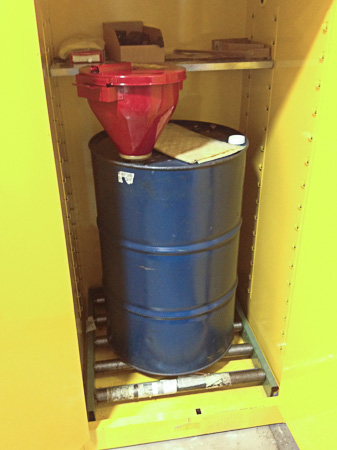
]Hazardous Waste Storage Drum In hazardous waste storage Cabinet
Hazardous Waste Storage Drum In
Flammable Cabinet


The list of requirements is also essential for complying with other Clauses of the standard. This list becomes the scope of scheduled compliance audits the organization must perform. Caltha provided a technical update to the organization's existing listing of requirements, which included several new regulations that had been recently promulgated on both the Federal and State level.

The most recent update included important changes to the hazardous waste management requirements and Pennsylvania stormwater permit requirements, included in:


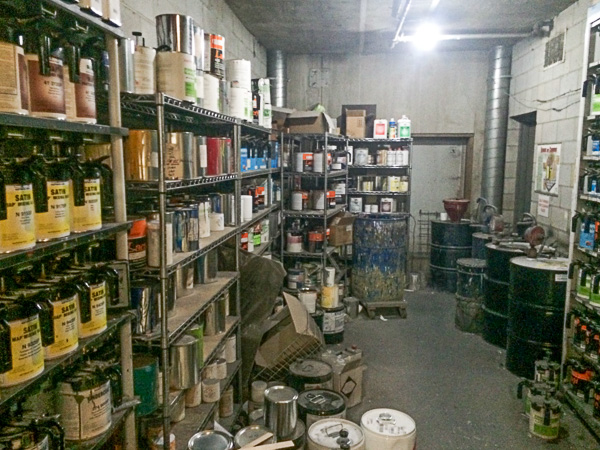
Designated storage area for Flammable Liquids and Ignitable Hazardous Waste
Flammable Liquid and Ignitable Hazardous Waste
Storage Room


For more information on Caltha LLP services, go to the Caltha Contact Page


expert consulting support of EH&S program development, compliance management, auditing, environmental management system, and safety management system. 
Caltha LLP | Your EH&S Compliance, 
Auditing and EMS/SMS Partner

Sunday, October 1, 2017

Compliance and Sustainability Training For MN and ND Industry


Caltha LLP Project Summary

Project: Environmental Awareness / Sustainability Training Module For Facility Management
Client:
Grain Processing & Food Manufacturing Corporation 
Location(s):
Minnesota, North Dakota


Key Elements: Regulatory training, Sustainability, Permit compliance, Employee training, Webinar


Overview: Caltha LLP was retained by this grain processing and food manufacturing corporation to prepare and present a training module that provides corporate and facility managers with basic compliance training to assist them in managing EH&S compliance activities at multiple facilities. The training was developed to be specific to the corporation's facilities and products and included:
  • Company's commitment to sustainability / Sustainability policy
  • Background on environmental regulations and key issues at company's locations
  • Overview of company's key procedures
Training was created as a recorded live webinar which can be replayed as needed.


For more information on Caltha LLP EH&S Training services, go to the Caltha LLP EH&S Training Page

Thursday, July 20, 2017

Environmental Awareness and Sustainability Training For Food Manufacturer

Caltha LLP Project Summary

Project: Environmental Awareness / Sustainability Training Module For Facility Management
Client:
Grain Processing & Food Manufacturing Corporation
Location(s):
Minnesota, North Dakota

Key Elements: Regulatory training, Sustainability, Permit compliance, Employee training, Webinar

Overview: Caltha LLP was retained by this grain processing and food manufacturing corporation to prepare and present a training module that provides corporate and facility managers with basic compliance training to assist them in managing EH&S compliance activities at multiple facilities. The training was developed to be specific to the corporation's facilities and products and included:
  • Company's commitment to sustainability / Sustainability policy
  • Background on environmental regulations and key issues at company's locations
  • Overview of company's key procedures
Training was created as a recorded live webinar which can be replayed as needed.

For more information on Caltha LLP services, go to the Caltha Contact Page

Sunday, December 6, 2015

ISO 14001 Cosultant In Minnesota

In September 2015, the revised ISO standard for Environmental Management Systems (EMS) was released, designated  ISO-14001:2015. The new ISO 14001:2015 is similar in many respects to the prior ISO 14001 standard, however it does make numerous changes which will require operations that currently meet the  ISO 14001:2004 to make important changes to how their programs are planned and implemented.. Organizations are granted a three-year transition period after the revision has been published to migrate their environmental management system to the new edition of the standard. After this transition period, companies that opt for third party certification will have to seek certification to the new version of the standard. The former version, ISO 14001:2004, and any certification to it, will be out of date.

Caltha LLP provides technical support to organizations seeking ISO 14001 certification or to upgrade their existing programs to meet the new requirements. Caltha also provides technical support to organizations wanting to improve their environmental and sustainability programs by implementing portions of the ISO standard, without aspiring to gain third party certification. Contact Caltha LLP for further information.

Click here to see examples of Caltha LLP ISO 14001 related projects.

Thursday, May 30, 2013

Environmental Product Declarations For Adhesives and Sealants

ASTM International has announced that it will be collaborating with industry to develop Environmental Product Declarations (EPDs) across the over 90 industry markets, including sealants. The Adhesive and Sealant Council (ASC) will be partnering with ASTM International to raise awareness and educate industry on the value of Type III EPDs, and proactively engage industry in developing Product Category Rules (PCR).

In 2012, ASTM International announced that it was becoming a global Program Operator for PCR development and EPD verification. In January 2013, the members of ASTM Committee C24 on Building Seals and Sealants agreed to become active in the PCR process and to move forward with scoping the PCR development for sealants. ASTM Committee C24 will meet in Indianapolis in June 2013.

Caltha LLP provides specialized expertise to clients nationwide in the evaluation environmental rules, developing EHS compliance procedures, and preparing cost-effective EHS management programs.
For further information contact Caltha LLP at info@calthacompany.com or Caltha LLP Website

Sunday, January 20, 2013

Federal PM Advance Program To Assist Compliance With Revised PM2.5 Air Standards

The Environmental Protection Agency (EPA) has initiated a new voluntary clean air program, 'PM Advance' to help communities continue to meet new PM2.5 air quality standards, improve air quality and protect public health.

On December 14, 2012, EPA updated the national air quality standards for PM 2.5 by revising the annual standard to 12 ug/m3. While federal rules are expected to ensure that most areas meet the new standards, areas can participate in PM Advance to help them remain in attainment. The PM Advance program is designed to help communities who meet current standards continue to meet the standards. Early work to reduce fine particles, such as PM Advance participation, can be incorporated into required planning. Through the program, participants will commit to taking specific steps to reduce fine particle pollution, such as putting in place a school bus retrofit program or an air quality action day program, while EPA will supply technical advice, outreach information, and other support.


Caltha LLP provides specialized expertise to clients nationwide in the evaluation environmental rules, developing EHS compliance procedures, and preparing cost-effective EHS management programs.
For further information contact Caltha LLP at info@calthacompany.com or Caltha LLP Website

Saturday, November 10, 2012

RFS Renewable Identification Number (RIN) Quality Assurance Program

Under the Clean Air Act, US EPA is responsible for developing and implementing regulations to ensure that transportation fuel sold in the United States contains a minimum volume of renewable fuel. The Renewable Fuel Standard (RFS) program regulations finalized in 2007 (RFS1) and 2010 (RFS2) were developed in collaboration with refiners, renewable fuel producers, and many other stakeholders.

The RFS compliance program is based on the use of unique renewable identification numbers (RINs) assigned to batches of renewable fuel by renewable fuel producers and importers. These RINs can then be sold or traded, and used by any obligated party to demonstrate compliance with the applicable standard.

According to EPA, it has recently come to the agency’s attention that the production, transfer, and use of invalid RINs has resulted in violations for parties that were not aware that the RINs were invalid. To address this, EPA is considering development of a rule will propose a voluntary mechanism for ensuring that RINs have been appropriately generated. No schedule for the proposed rulemaking was released


Caltha LLP provides specialized expertise to clients nationwide in the evaluation environmental rules, developing EHS compliance procedures, and preparing cost-effective EHS management programs.
For further information contact Caltha LLP at info@calthacompany.com or Caltha LLP Website

Monday, October 22, 2012

Proposed Changes To GHG Estimating Method Used By Electronics Manufacturers

US EPA is proposing to change the manner which electronics manufacturers calculate and monitor their greenhouse gas (GHG) emissions. The proposed rule, “GHG Reporting Program: Proposed amendments and confidentiality determinations for Subpart I,” was published in the October 16 Federal Register. Proposed changes include revising calculation methods and adding a new method, amending data reporting requirements, and clarifying terms and definitions. The Agency will accept comments until December 17, 2012.

The action also proposes confidentiality determinations for the reporting of the new and revised data elements. EPA said that many of the proposed actions are in response to a petition to reconsider specific aspects of the regulations.

Caltha LLP provides specialized expertise to clients nationwide in the evaluation environmental rules, developing EHS compliance procedures, and preparing cost-effective EHS management programs. For further information contact Caltha LLP at info@calthacompany.com or Caltha LLP Website

Saturday, September 8, 2012

New Federal Carbon Footprint Tool Released-Building GHG Reduction Planning Module Planned

On August 27, The U.S. General Services Administration (GSA) announced a new version of its GSA Carbon Footprint Tool. GSA offers tool to all federal agencies to assist them in compiling their annual comprehensive greenhouse gas (GHG) inventory and tracking their progress toward achieving their GHG reduction goals. The agency says there is no charge to use this tool.

The new upgrades include advanced analytics features to help users verify data, identify underperforming, and take corrective action. GSA says the redesign was based on extensive internal user experience audits, focus groups, and input from over 30 federal agencies. GSA believes the redesigned tool is easier to navigate, enables users to find and share key information faster, and offers better support for mobile devices. The redesign focuses on helping agencies save time and money associated with implementing GHG reductions under Executive Order 13514.

Highlights of the GSA Carbon Footprint Tool's redesign include:

  • Aligning site navigation with the GHG inventory and reduction process. The Tool is now organized by key tasks—from initial agency site setup to data collection, second-party data verification, DOE FEMP Reporting Portal reporting, GHG reduction planning, and goal tracking.
  • Enabling agencies to seamlessly import building energy data from EPA ENERGY STAR Portfolio Manager and GSA building and travel data systems. Data can also be downloaded for export to the DOE FEMP Reporting Portal with a single mouse click.
  • Embedding a quality assurance review process that allows agencies to submit their GHG emissions data to agency administrators for second-party review and verification.
  • Allowing agencies to share site and GHG emissions data on the GIS map fosters interagency collaboration for climate adaptation planning; and creating a benchmarking capability lets agencies compare their building energy and GHG emissions performance against other buildings within the portfolio and against industry averages.

GSA plans to release a Building GHG Reduction Planning module by the end of the year that will allow agencies to review the potential cost, payback period, return on investment, and GHG emissions reductions associated with building energy conservation measures. This feature will incorporate money-saving strategies in the initial planning processes so that agencies can focus their efforts on the implementation phases.


Caltha LLP provides specialized expertise to clients nationwide in the evaluation environmental rules, developing EHS compliance procedures, and preparing cost-effective EHS management programs.
For further information contact Caltha LLP at info@calthacompany.com or Caltha LLP Website 
 

Thursday, April 19, 2012

Inventory of U.S. Greenhouse Gas Emissions and Sinks: 1990-2010 Report Released

The U.S. Environmental Protection Agency (EPA) has released the 17th annual U.S. greenhouse gas inventory. The final report shows overall emissions in 2010 increased by 3.2 %from the previous year. The trend is attributed to an increase in energy consumption across all economic sectors, due to increasing energy demand associated with an expanding economy, and increased demand for electricity for air conditioning due to warmer summer weather during 2010.

Total emissions of the six main greenhouse gases in 2010 were equivalent to 6,822 million metric tons of carbon dioxide. These gases include carbon dioxide, methane, nitrous oxide, hydrofluorocarbons, perfluorocarbons and sulfur hexafluoride. The report indicates that overall emissions have grown by over 10 % from 1990 to 2010.

The Inventory of U.S. Greenhouse Gas Emissions and Sinks: 1990-2010 is the latest annual report that the United States has submitted to the Secretariat of the United Nations Framework Convention on Climate Change, which sets an overall framework for intergovernmental efforts to tackle the challenge posed by climate change. EPA prepares the annual report in collaboration with multiple federal agencies and after gathering comments from stakeholders across the country.

The inventory tracks annual greenhouse gas emissions at the national level and presents historical emissions from 1990 to 2010. The inventory also calculates carbon dioxide emissions that are removed from the atmosphere by “sinks”.

Caltha LLP provides specialized expertise to clients nationwide in the evaluation environmental rules, developing EH&S compliance procedures, and preparing cost-effective EH&S management programs.

For further information contact Caltha LLP at

info@calthacompany.com or Caltha LLP Website

Monday, February 13, 2012

Update On 2010/15 PFOA Stewardship Program

U.S. Environmental Protection Agency (EPA) has released the interim results of a voluntary effort by eight chemical manufacturers to reduce emissions and use of long-chain perfluorinated chemicals (LCPFCs), including perfluorooctanoic acid (PFOA).

EPA’s 2010/15 PFOA Stewardship Program was established in 2006 in partnership with DuPont, Solvay Solexis, Asahi Glass Company, Daikin America, Inc., Clariant International Ltd., 3M/Dyneon, Arkema Inc. and BASF (formerly Ciba Specialty Chemicals Corporation). The program set a goal of reducing facility emissions and product content of PFOA and related chemicals on a global basis by 95 % by 2010, and to work toward eliminating emissions and product content of these chemicals by 2015.

Daikin, DuPont, 3M/Dyneon and Solvay Solexis have met the program’s intermediate goal of a 95 % reduction in global emissions and product content by 2010. EPA reports that the companies continue to reduce emissions of LCPFC’s as well as overall product content of LCPFC’s. Additionally, more than 150 replacement chemicals have been developed. The eight participating companies have informed EPA that they are on track to phase out LCPFCs by the end of 2015.

Caltha LLP provides specialized expertise to clients nationwide in the evaluation environmental rules, developing EH&S compliance procedures, and preparing cost-effective EH&S management programs.


For further information contact Caltha LLP at

info@calthacompany.com or Caltha LLP Website


Monday, February 6, 2012

Electric Generating Units GHG NSPS For Existing Sources

US EPA has issued a pre-proposal notification for the development of a greenhouse gas new source performance standard (NSPS) for electric generating units. These emission guidelines will apply to existing sources. This action will amend the electric generating units (EGUs) New Source Performance Standard and add a section 111(d) greenhouse gas (GHG) standard for existing sources.

EPA did not indicate a schedule for publishing the Notice of Propose Rule Making (NPRM) in the Federal Register.

Caltha LLP provides specialized expertise to clients nationwide in the evaluation environmental rules, developing EH&S compliance procedures, and preparing cost-effective EH&S management programs.


For further information contact Caltha LLP at

info@calthacompany.com or Caltha LLP Website


Friday, July 15, 2011

New “Most Efficient” Consumer Product Designation

U.S. Department of Energy (DOE) and U.S. Environmental Protection Agency (EPA) have announced a new product recognition label for the most energy-efficient products in their category. The new designation of “Most Efficient” aims to provide all manufacturers with an incentive for greater product energy efficiency while providing consumers new information about the products that comprise the top tier in the categories.

Products that receive the Most Efficient designation demonstrate exceptional efficiency performance. The Most Efficient recognition will represent approximately the top 5% of models on the market in the following categories: clothes washers, heating and cooling equipment, televisions, and refrigerator-freezers.

Consumers will be able to identify Most Efficient products on the Energy Star website and in stores by looking for the Most Efficient designation. In addition to meeting established performance requirements, products must also be Energy Star qualified and certified by an EPA-recognized certification body. EPA is encouraging manufacturers to submit products that meet the requirements for recognition.

Caltha LLP provides specialized expertise to clients nationwide in the evaluation environmental rules, developing EH&S compliance procedures, and preparing cost-effective EH&S management programs.


For further information contact Caltha LLP at info@calthacompany.com


or Caltha LLP Website

Tuesday, June 28, 2011

SmartWay Initiative To Reduce Diesel Emissions At Ports

U.S. Environmental Protection Agency (EPA), the Coalition for Responsible Transportation and the Environmental Defense Fund have launched a new initiative to reduced emissions from thousands of short-haul trucks that service the nation’s ports. The new EPA SmartWay initiative will reduce diesel emissions from dray trucks, large diesel trucks that are widely used in port facilities to haul freight from cargo ships to nearby local distribution points.

Under the SmartWay dray truck initiative, carriers sign an agreement with EPA to track and reduce PM 2.5 emissions by 50% and nitrogen oxides (NOx) emissions by 25% below the industry average over a three year period. In addition, SmartWay dray shipper partners will commit to use the cleaner trucks to haul 75% or more of port freight. Charter shipper partners in the program include Best Buy, The Home Depot, Hewlett Packard, JC Penney, Lowe's, Nike, Target, and Walmart.

Under the agreement and through the incentives, EPA and its SmartWay partners expect to build on the SmartWay program’s success in cutting fuel costs, reducing diesel emissions, preserving jobs, and protecting air quality. Since 2004, SmartWay partners including many of the country’s top retailers, trucking and rail companies and manufacturers have reduced fuel use, cut foreign oil imports by 50 million barrels and saved an estimated $6.1 billion in fuel costs.


Caltha LLP provides specialized expertise to clients nationwide in the evaluation environmental rules, developing EH&S compliance procedures, and preparing cost-effective EH&S management programs.


For further information contact Caltha LLP at info@calthacompany.com or Caltha LLP Website

Friday, June 17, 2011

Registration Of Water Withdrawals In Wisconsin Due June 30

The Wisconsin Department of Natural Resources (WDNR) has announced that industrial water users that exceed specific thresholds will need to register with the State by June 30, 2011. All industries that withdraw 100,000 gallons or more of water per day, or 70 gallons or more per minute, from any water source, are required to register with the WDNR. The registration requirement applies to both existing and new withdrawals from either surface or groundwater sources. This requirement also applies to industries that only make temporary withdrawals. Each property that meets the registration threshold must be registered separately

Registered withdrawals will need to measure or estimate the volume of water withdrawn every month and report that information to the WDNR each year by March 1. WDNR intends to send reminders of the annual reporting requirements and the process for submitting the information.

Caltha LLP provides specialized expertise to clients in Wisconsin and nationwide in the evaluation environmental rules, developing EH&S compliance procedures, and preparing cost-effective EH&S management programs.


For further information contact Caltha LLP at


info@calthacompany.com


or


Caltha LLP Website

Thursday, April 21, 2011

New DfE Safer Product Labeling Standards

U.S. Environmental Protection Agency (EPA) has announced that more than 2,500 products are now authorized by the agency under its Design for the Environment (DfE) Safer Product Labeling Program to carry the DfE label. DfE-labeled products do not contain known chemicals of potential concern, including minor product components, like dyes and fragrances. EPA has also announced that it soon will require manufacturers with products that bear the DfE logo to disclose their ingredients to consumers. Products that carry the DfE label include all-purpose cleaners, laundry and dishwasher detergents, drain line maintainers, car and boat care and other products.

EPA is also implementing a requirement that new DfE-labeled products list all ingredients (other than trade secrets) on the product label or in another easily accessible location. New DfE-approved products also will have to meet additional life-cycle requirements such as sustainable packaging and limits on volatile organic compounds. The new disclosure and life-cycle requirements will be phased in for existing DfE products.


Caltha LLP provides specialized expertise to clients nationwide in the evaluation environmental rules, developing EH&S compliance procedures, and preparing cost-effective EH&S management programs.


For further information contact Caltha LLP at


info@calthacompany.com


or


Caltha LLP Website