Showing posts with label Air Emissions. Show all posts

Monday, April 30, 2018

New Categories For Air Permit Exemptions Proposed

Minnesota Pollution Control Agency (MPCA) is proposing to adopt amended air quality rules within “exempt source/conditionally insignificant activities rules” to clarify permit requirements for small sources of air emissions and update rules governing the treatment of small air pollution emitting activities (“insignificant activities” and “conditionally insignificant activities”). Written comments on the proposed rules are being accepted until May 29, 2018.

Permitted Dust Control System


Changes create four new categories of conditionally exempt stationary sources where emissions primarily come from one type of activity; auto-body refinishing facilities, coating facilities, woodworking facilities, and insignificant facilities that meet applicable technical standard would be exempt from obtaining an air emissions permit. Changes to the existing categories of conditionally exempt sources, gasoline service stations and concrete manufacturing, are made to align with the rule structure for the new categories.


Caltha LLP | Your Air Permitting Partner

Monday, April 9, 2018

Comments On Repeal Of Carbon Pollution Rule Due April 28

The public comment period on the EPA Proposed Rule "Repeal of Carbon Pollution Emission Guidelines for Existing Stationary Sources: Electric Utility Generating Units" is scheduled to close on April 28, 2018.

As background, on October 16, 2017, the Environmental Protection Agency published an announcement of its intention to repeal the Carbon Pollution Emission Guidelines for Existing Stationary Sources: Electric Utility Generating Units, commonly referred to as the Clean Power Plan, as promulgated on October 23, 2015. The proposal also requested public comment on the proposed rule. The EPA held public hearings on November 28 and 29, 2017, in Charleston, West Virginia, and extended the public comment period until January 16, 2018.

In response to numerous requests for additional opportunities for the public to provide oral testimony on the proposed rule in more than one location, EPA announced that three listening sessions will be held:

Wednesday, February 21, 2018 - Kansas City, Missouri;
Wednesday, February 28, 2018 - San Francisco, California;
Tuesday, March 27, 2018 - Gillette, Wyoming.

EPA also reopened the public comment period until April 26, 2018.

Air permit consultant, wastewater permit consultant, stormwater permit consultant, tank permit, RCRA permit
Caltha LLP | Your Air Permit, Wastewater Permit,
Storm Water Permit Partner

Monday, March 19, 2018

Air Permit Engineer For Wisconsin Printing Business

Caltha LLP Project Summary

Project: Update To Air Permit Emission Tracking And Reporting
Client:
Printing Operation
Location(s):
 Wisconsin

Key Elements: WDNR air permit, annual air emission inventory, VOC emission calculation

Overview: Caltha LLP has assisted this Wisconsin printing company with annual air emission inventory used for compliance reporting under the facility air emission permit issued by the Wisconsin Department of Natural Resources. This has included preparation of a site specific product usage and emission tracking workbook used by plant personnel to record monthly solvent usage and the resulting VOC emissions.

Caltha provides ad hoc training and technical support to plant staff on emission tracking and permit compliance.

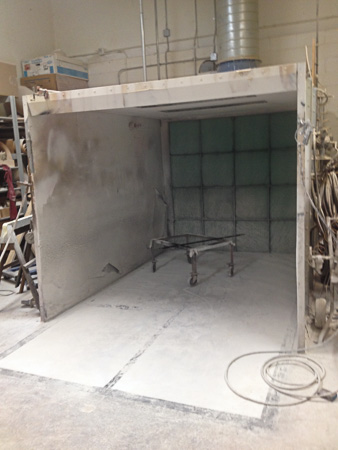
VOC emissions Often Require Spray Booths To Included In Facility Wide Air Emission Permit
Spray Booth Included In Facility
Wide Air Emission Permit


Air permit consultant, wastewater permit consultant, stormwater permit consultant, tank permit, RCRA permit 
Caltha LLP | Your Air Permit, Wastewater Permit, 
Storm Water Permit Partner

Tuesday, March 13, 2018

Used Aerosol Cans Could Be Universal Waste Under Proposed Rule

EPA is proposing to add hazardous waste aerosol cans to those “universal wastes” regulated under title 40 of the Code of Federal Regulations (CFR), part 273. This change in the Resource Conservation and Recovery Act (RCRA) regulations, once finalized, will reduce regulatory costs of a wide variety of establishments generating and managing aerosol cans, including the retail sector, by providing a clear, practical system for handling discarded aerosol cans.

How Is Aerosol Can Disposal Currently Regulated?

Aerosol cans frequently contain flammable propellants such as propane or butane which can cause the aerosol can to demonstrate the hazardous characteristic for ignitability. In addition, the aerosol can may also be a hazardous waste if they contain materials that exhibit hazardous characteristics. Similarly, a discarded aerosol can may also be a P or U-listed hazardous waste if it contains a commercial chemical product. Therefore, fir several reasons, spent aerosol cans could be a regulated hazardous waste.


RCRA Audit Finds Improper Flammable Hazardous Waste Storage And Labeling
Waste Audit Finds Improper Flammable Waste Storage And Labeling

How Are Spent Aerosols Containing Pesticides Regulated?

Hazardous waste aerosol cans that contain pesticides are also subject to the requirements of Federal Insecticide, Fungicide, and Rodenticide Act (FIFRA), including compliance with the instructions on the label. In general, the statement on aerosol pesticide product FIFRA labels prohibits the puncturing of the cans. However, in April 2004, EPA issued a determination that puncturing aerosol pesticide containers is consistent with the purposes of FIFRA and is therefore lawful pursuant to FIFRA section 2(ee)(6) provided that the following conditions are met:
  • The puncturing of the container is performed by a person who, as a general part of his or her profession, performs recycling and/or disposal activities;
  • The puncturing is conducted using a device specifically designed to safely puncture aerosol cans and effectively contain the residual contents and any emissions thereof; and
  • The puncturing, waste collection, and disposal, are conducted in compliance with all applicable federal, state and local waste (solid and hazardous waste) and occupational safety and health laws and regulations.
EPA anticipates that this 2004 FIFRA determination would not be affected by the proposed addition of hazardous waste aerosol cans to the universal waste rules.

Does The Proposed Rule On Aerosol Can Disposal Affect State Rules?

If approved, States with approved RCRA programs would need to made revisions to State rules.

Four states, California, Colorado, Utah and New Mexico, already have universal waste aerosol can programs in place, and two more states, Ohio and Minnesota, have proposed to add aerosol cans to their universal waste regulations.


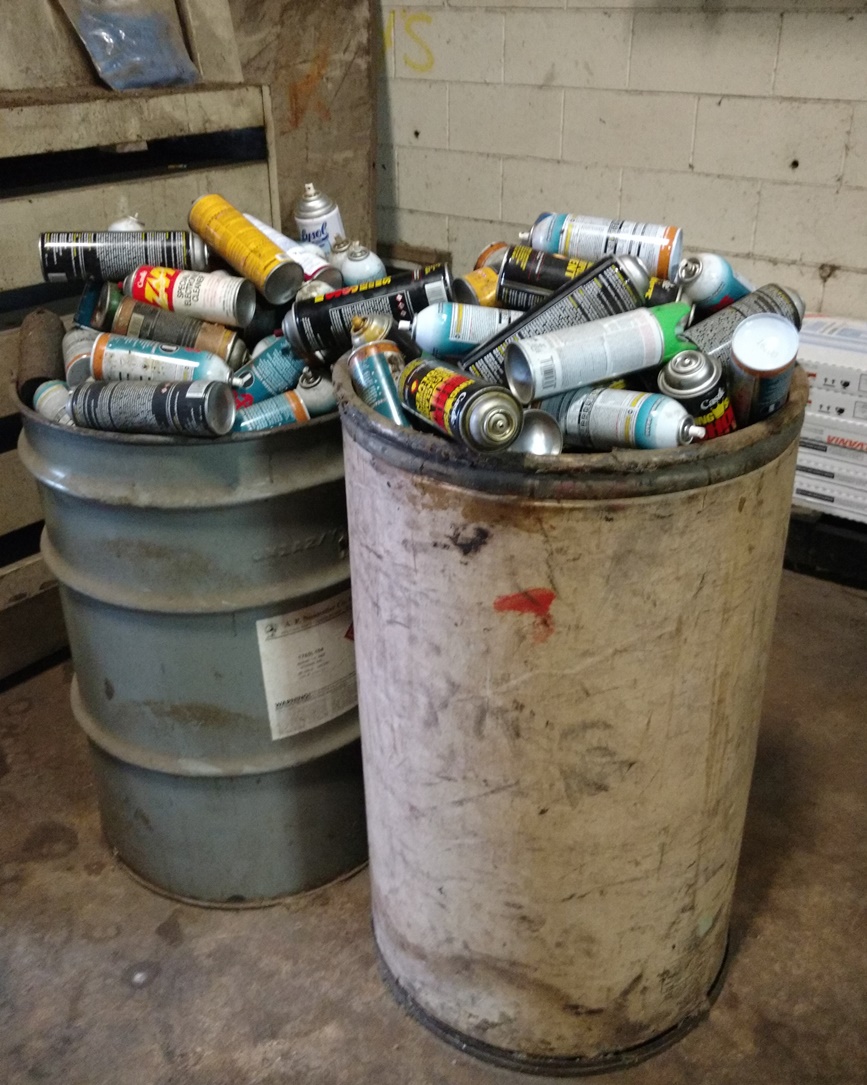
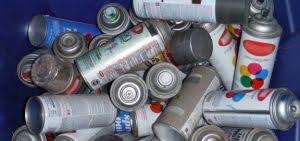
Spent Aerosol Cans Being Handled As Universal Waste

Are Any Containers Excluded From the Proposed Rule?

EPA intends the rule to be limited to sealed containers whose intended use is to dispense a material by means of a propellant or compressed gas.  Other types of containers, including compressed gas canisters and propane cylinders, present a greater risk than aerosol cans and would not be included.

EPA specifically excludes aerosol cans that have been emptied of their contents (both propellant and product). Once the contents of a universal waste aerosol can have been removed, the emptied can is considered a new point of generation and is subject to a hazardous waste determination.. An aerosol can that meets the definition of empty container is not subject to hazardous waste regulation, and may be recycled as scrap metal.

The proposed rule also excludes aerosol cans that show evidence of leakage, spillage, or damage that could cause leakage under reasonably foreseeable conditions. Through this exclusion, EPA intends that hazardous waste aerosol cans that are not intact continue to be subject to the full hazardous waste standards.

Aerosol cans can be regulated as a hazardous waste unless emptied completely
Aerosol Cans Being Stored For Disposal or Recycling


What Handling Requirements Are Proposed?

Under this proposed rule, the existing universal waste requirements currently applicable to small quantity handlers of universal waste (SQHUWs) and large quantity handlers of universal waste (LQHUWs) would also be applicable to handlers of discarded aerosol cans. For both SQHUWs and LQHUWs, these requirements include:
  • waste management standards,
  • labeling and marking,
  • accumulation time limits,
  • employee training,
  • response to releases,
  • requirements related to off-site shipments, and
  • export requirements.
For the labeling requirement, EPA is proposing that either each aerosol can, or a container in which the aerosol cans are contained, must be labeled or marked clearly with any of the following phrases: “Universal Waste—Aerosol Can(s),” “Waste Aerosol Can(s)”, or “Used Aerosol Can(s)”.

In addition, EPA is proposing that small and large quantity universal waste handlers must follow certain specific management standards while handling their aerosol cans. Under this proposal, all handlers must manage their universal waste aerosol cans in a manner designed to prevent releases to the environment. This includes accumulating universal waste aerosol cans in containers that are structurally sound and compatible with the contents of the can, and show no evidence of leaks, spills, or damage that could cause leaks under reasonably foreseeable conditions. Handlers may sort aerosol cans by type and consolidate intact aerosol cans in larger containers, remove actuators to reduce the risk of accidental release, and under certain conditions, may puncture and drain aerosol cans that are being recycled..

Future of Aerosol Can Puncturing Under Proposed EPA Rule


expert consulting support of EH&S program development, compliance management, auditing, environmental management system, and safety management system. 
Caltha LLP | Your EH&S Compliance, Auditing and EMS/SMS Partner

Sunday, February 25, 2018

Who Needs An Air Permit? Why Would I Need An Emission Control Permit?

This is a frequent question Caltha receives, often because determining if your whole facility, a single piece of equipment, or your process change requires an air emission permit requires a technical evaluation and relies on calculations which, to many, defy logic at first.

There are two primary reasons a facility or process requires an air permit:
  1. It falls into a listed category of manufacturing processes which always requires a permit, usually referred to as NSPS or NESHAP standards; or
  2. Potential air emissions exceed specific thresholds.
In most cases, facilities subject to NSPS or NESHAP standards are well acquainted with air permitting requirements; therefore this summary focuses on #2.

How Do I Determine If I Will Exceed Permit Thresholds?

The permit thresholds for regulated air pollutants are listed in federal and State regulations. Facilities must determine their Potential To Emit, or PTE, in order to determine if they exceed these thresholds.


VOC emissions Often Require Spray Booths To Included In Facility Wide Air Emission Permit
Spray Booth Included In Facility Wide Air Emission Permit

How Do I Determine My Potential To Emit?

Determining the PTE for a facility or process requires a technical evaluation of the process, including maximum throughput, process chemistry, and production bottlenecks, to estimate the maximum hourly emission rates for all regulated air pollutants. This maximum hourly rate does not include the removal efficiency of any pollution control equipment (such as baghouses, thermal oxidizer) being used.

Once the maximum hourly rate is determined, it is multiplied by 8,760 to estimate the maximum annual potential emissions. This value assumes the maximum emission rates are achieved 24 hours per day, 7 days per week for a full year.

But I Don't Operate 24/7...

Few facilities actually operate for 8,760 hours per year. However, the Potential To Emit calculation uses this value only to compare to the permit thresholds. Your actual emissions will likely be much lower.

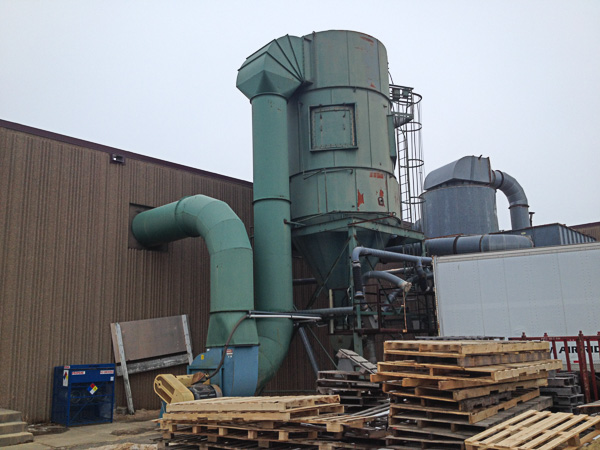
Due to particulate emissions, Dust Control Cyclone Systems often require a state air emission control permit
Permitted Dust Control Cyclone System

Why Can't I Take Credit For Pollution Control Equipment?

If a facility needs an air emission control permit, many of the permit requirements will involve how the pollution control equipment is operated and maintained to ensure effective control. The benefits of the pollution control equipment will be measured in actual emission estimates.


Caltha LLP | Your Air Permit, Wastewater Permit, 
Storm Water Permit Partner

Monday, February 19, 2018

Risk Management Plan Requirements Delayed

In January 2017, EPA published amendments to the Risk Management Program (RMP) Rule 40 CFR Part 68. The amendments included requirements for:
  • Root cause analysis as part of an incident investigation;
  • Independent third-party compliance audits following a release event reportable under RMP or when an agency requires it based on site conditions;
  • Inclusion of a safer technology and alternatives analysis as part of the process hazard analysis for processes in North American Industry Classification System (NAICS) codes 322, 324, and 325 (manufacturing of Paper, Petroleum and Coal Products, and Chemicals);
  • Emergency response enhancements such as annual coordination with local emergency response agencies, annual testing of emergency notification procedures, and full field exercises at least every 10 years for responding facilities; and
  • Measures to increase availability of chemical hazard information to the public.

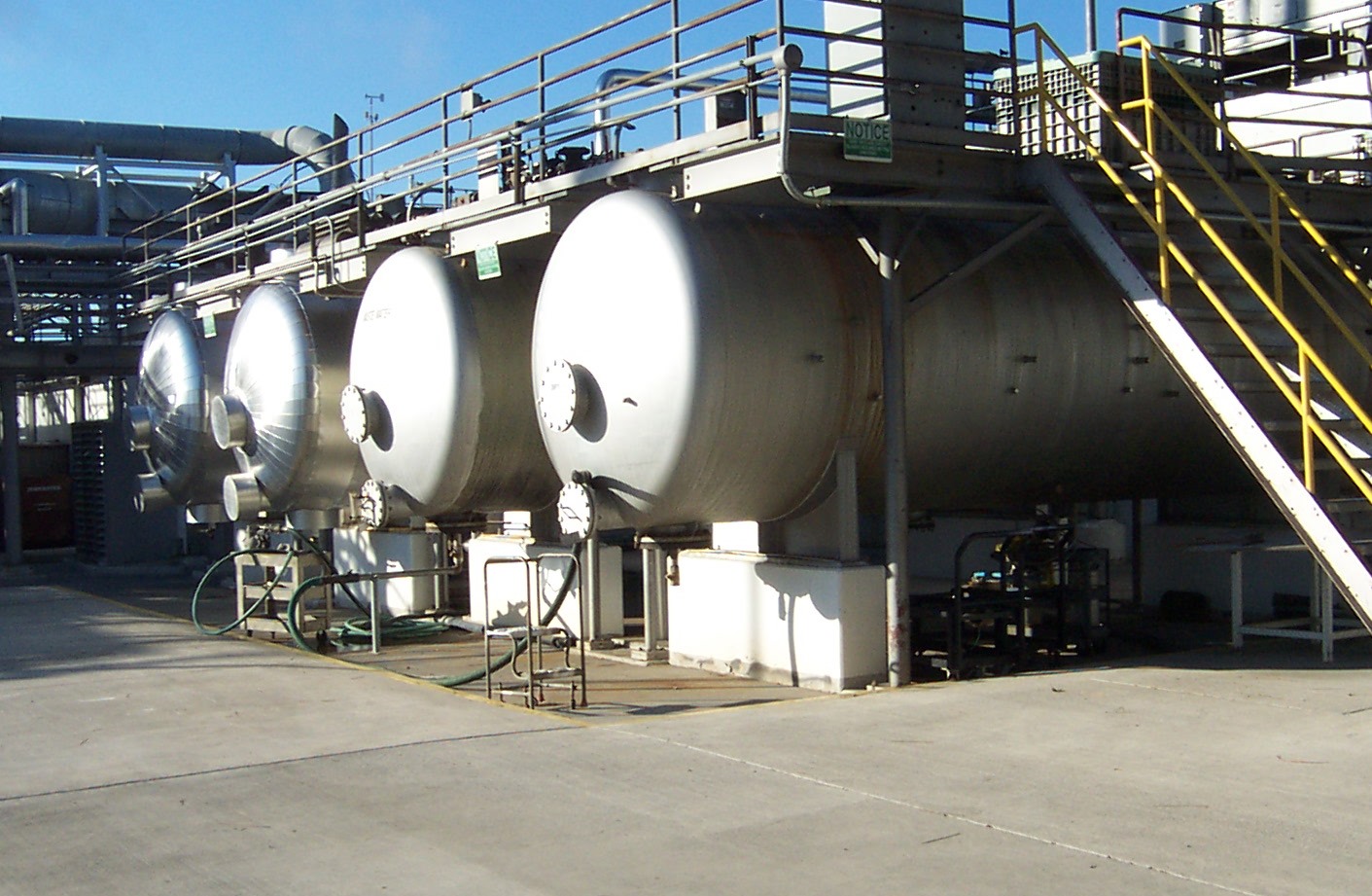
Aboveground Product Vessels


Following publication of the amendments, EPA received several petitions for reconsideration and request for stay of the amendments. On June 9, 2017, the EPA Administrator signed a final rule to delay the effective date of the RMP rule amendments until February 19, 2019.


Caltha LLP | Your Safety and Health Compliance
Management Partner

Friday, February 2, 2018

Deadline For Report Air Releases From Farms Extended

In April 2017, the D.C. Circuit Court ruled that farms were required to report air releases of hazardous substances above certain thresholds under the Clean Air Act and EPCRA. EPA released guidance on those reporting obligations in November 2017. EPA requested a stay of 90 days to provide the agency additional time to prepare for any reporting obligations, cited a need for more time to refine guidance to industry on meeting the reporting obligations and to finalize agriculture-specific forms that would be used to report emissions from animal wastes to EPA.

Click here for summary of EPA and Court actions on EPCRA reporting for farms.

On February 1, 2108 the U.S. Court of Appeals for the D.C. Circuit extended a stay of air emissions reporting from livestock wastes through at least May 1, 2018.


Tuesday, January 30, 2018

Once In Always In Policy Withdrawn By US EPA

On January 25, 2018, EPA announced it is withdrawing the “Once In, Always In” (OIAI) policy under the Clean Air Act. New EPA guidance allows stationary sources of hazardous air pollutants (HAPs) that are classified as “major sources” to limit their HAP emissions to below major source thresholds and thereby be reclassified as “area” sources at any time. In the past, major sources of HAPs remained subject to major source requirements, even if they took steps to reduce their potential to emit, or PTE, below major source thresholds.


 Area sources are subject to less onerous emission requirements than are major sources. The withdrawal of the OIAI Policy is effective immediately.


Click here to review EPA memo on Once In Always In policy

Sunday, December 31, 2017

2016 OSHA Silica Rule Upheld By Federal Court

On December 22 the U.S. Court of Appeals for the District of Columbia upheld the OSHA crystalline silica rule, rejecting all objections raised by industry groups. In 2016, OSHA published a final rule regulating workplace exposure to silica, Occupational Exposure to Respirable Crystalline Silica (29 CFR 1910, 1915 and 1926).

The industry groups had petitioned for review of several issues:
  • Whether substantial evidence supports OSHA’s finding that limiting workers’ silica exposure to the level set by the rule reduces a significant risk of material health impairment.
  • Whether substantial evidence supports OSHA’s finding that the rule is technologically and economically feasible
  • Whether OSHA had complied with the Administrative Procedure Act (APA) in promulgating the rule, and
  • Whether substantial evidence supports two provisions of the rule, which allow workers who undergo medical examinations to keep the results confidential from their employers and prohibiting employers from using dry cleaning methods unless doing so is infeasible.
Unions had requested review of parts of the rule requiring that medical surveillance for construction workers be provided only if the employee has to wear a respirator for 30 days for one employer in a one-year period and the absence of medical removal protections (MRP).

The Court rejected the unions’ challenge to the construction standard’s 30-day trigger for medical surveillance, however the Court did find that OSHA was arbitrary and capricious in declining to require MRP for some period when a medical professional recommends permanent removal, when a medical professional recommends temporary removal to alleviate COPD symptoms, and when a medical professional recommends temporary removal pending a specialist’s determination. The Court concluded that OSHA failed to adequately explain its decision to omit medical removal protections from the rule and remanded that portion of the rule back to OSHA for further consideration.

Sunday, November 5, 2017

Certified Environmental and Safety Audit in Raleigh


Caltha LLP Project Summary

Project: Multimedia EH&S Compliance Audit
Client:
National Corporation
Location(s):
Raleigh-Durham Region, North Carolina

Key Elements: EH&S audit, hazardous waste, air permit, hazardous material storage, wastewater permit, hazard communication

Overview: Caltha staff conducted a multimedia environmental, health and safety audit of this industrial facility located in Raleigh-Durham Region. The scope of the audit included:

  • EPCRA
  • Hazardous and Solid Waste Management- 15A NCAC 13B
  • Current NC Air Permit
  • NC Air Pollution Control Rule – NCAC 15A-2D
  • Current wastewater discharge permit
  • TSCA
  • Tanks
  • Hazard communication
  • DOT Hazardous material transportation
The audit was led by a IIA-certified professional auditor.


Click here to review other example Caltha EH&S auditing projects. Click here to review other Caltha projects in North Carolina and NC regulatory updates.

Wednesday, October 11, 2017

Beryllium Worker Exposure Rule Deadlines

OSHA has issued a final rule limiting worker exposure to beryllium and beryllium compounds. The rule contains standards for general industry, construction, and shipyards which take effect on May 20, 2017. Employers must comply with most elements of the rule starting March 12, 2018.


The key provisions of the rule are:
  • Reduces the permissible exposure limit (PEL) for beryllium to 0.2 micrograms per cubic meter of air, averaged over 8-hours.
  • Establishes a new short term exposure limit for beryllium of 2.0 micrograms per cubic meter of air, over a 15-minute sampling period.
  • Requires employers to: use engineering and work practice controls (such as ventilation or enclosure) to limit worker exposure to beryllium; provide respirators when controls cannot adequately limit exposure; limit worker access to high-exposure areas; develop a written exposure control plan; and train workers on beryllium hazards.
  • Requires employers to make available medical exams to monitor exposed workers and provides medical removal protection benefits to workers identified with a beryllium-related disease.

Click here for more details on the safety, health and emergency preparedness services Caltha provides.


Click here to review a sampling of our past safety related projects.

Thursday, October 5, 2017

Silica Rule Is Enforced Starting September 2017; General Industry Rule in 2018

US OSHA began enforcing the respirable crystalline silica rule for the construction industry on September 23, 2017. The rule had been set to go into effect in June; however, the Department of Labor and OSHA delayed enforcement of the rule by 90 days. The delay was intended to provide DOL and OSHA additional time to issue guidance to industry regarding compliance. The construction silica rule is a companion to OSHA’s general industry silica rule that is scheduled to be enforceable beginning June 23, 2018.

The rule lowers the permissible exposure limit (PEL) for respirable silica dust in the construction industry, to 50 microgram per cubic meter exposure limit, calculated as an eight-hour time-weighted average (TWA). Employers subject to the construction rule may comply by implementing required engineering and work practice controls and respiratory protection , or by completing exposure assessments  of employees above the action level of 25 micrograms per cubic meter.

Under the rule, employers must:
  • Make medical screening available to employees who are required to use a respirator more than 30 or more days per year;
  • Develop a written exposure control plan;
  • Maintain certain records; and
  • Comply with certain limitations on housekeeping practices, such as using wet sweeping, HEPA-filtered vacuuming, or other methods designed to reduce employee exposure when feasible.


Caltha LLP provides specialized expertise to clients nationwide in the evaluation environmental rules, developing EHS compliance procedures, and preparing cost-effective EHS management programs. For further information contact Caltha LLP at info@calthacompany.com or Caltha LLP Website

Monday, September 25, 2017

TCEQ Issues Revised General Operating Permits

The Texas Commission on Environmental Quality (TCEQ) has issued revisions to Oil and Gas General Operating Permits (GOP) 511 and 514. The revisions were needed to address the applicability status of Wise County. Sites in Wise County are now covered under GOP 511 instead of GOP 514. The revised GOPs were proposed on January 27, 2017, and the public comment period closed on February 27, 2017.

Current permit holders are required to submit an application for a new authorization to operate (ATO) no later than October 12, 2017, if any of the emission units, applicability determinations, or the basis for the applicability determinations are affected by the revisions in the renewed GOPs. If the revisions in the GOPs do not affect a site, a new ATO is not required.

For more information on Caltha LLP air permitting services in Texas, go to
Caltha Permitting And Compliance Support

New Jersey General Permit For Emergency Generators Revised

The New Jersey Department of Environmental Protection (NJDEP) Air Quality Permitting Program has revised the Emergency Generator General Permit (GP-005) used by many facilities.

Permit GP-005 was revise to incorporate the requirements of revised New Jersey Administrative Code 7:27-19, Control and Prohibition of Air pollution by Oxides of Nitrogen,  and to  incorporate the United States Environmental Protection Agency proposed New Source Performance (NSPS) requirements for Emergency Generators outlined at 40 CFR 60.4207 Subpart IIII.

The revised general permit will now allow a facility to combine all applicable emergency generators at the facility into one single registration in most situations.

For more information on Caltha LLP services related to air permitting, go to:
Caltha Permitting & Compliance Page
 

Friday, July 21, 2017

Chicago Multimedia Compliance Audit For Manufacturing Plant

Caltha LLP Project Summary


Project: HSE Compliance Audit
Client:
High Tech Manufacturer
Location(s):
Chicago, Illinois


Key Elements: EH&S audit, hazardous waste, air permit, hazardous material storage, wastewater permit, PPE assessment, hazard communication


Overview: Caltha LLP conducted a multimedia environmental, health and safety audit of this manufacturing facility located in Cook County. The scope of the audit included:

  • EPCRA
  • Hazardous and Solid Waste Management
  • Current IEPA Air Permit
  • Cook County Air Emission Ordinance
  • Current wastewater discharge permit
  • TSCA
  • Tanks
  • Hazard communication
  • DOT Hazardous material transportation

The audit was led by a IIA-certified professional auditor.


For more information on Caltha LLP services, go to the Caltha Contact Page

Thursday, July 20, 2017

PPE Assessment and Employee Exposure Review For Minnesota Manufacturer

Caltha LLP Project Summary

Project: PPE Assessment
Client:
Chemical Formulating Facility
Location(s):
Minnesota


Key Elements: PPE assessment, OSHA hazard communication, employee training, safety data sheet, employee exposure control


Overview: Caltha LLP was retained by this chemical processing facility to conduct a PPE assessment for specific processing areas, including dry mixing, blending, wet mixing, and packaging. Caltha staff reviewed raw material and finished product safety data sheets, as well as specific tasks being conducted in each area. For each area, a standard set of employee PPE was prescribed; specific materials which require additional or other types of PPE were then identified. Employees were provided training, including visual reminders at each work station, to alert them when PPE beyond the standard was required.


For more information on Caltha LLP services, go to the Caltha Contact Page

Registration Permit Review For New Facility In Minnesota

Caltha LLP Project Summary

Project: Option D Permit Review For New Process
Client:
Food Manufacturing Processing Facility
Location(s):
Minnesota

Key Elements: Air permitting, Air permit compliance, Air emission estimates, Control equipment efficiency

Overview: Caltha LLP was retained by this food manufacturing processing facility to conduct an evaluation to determine if a new project planned at the facility would require a modification to the existing air emission permit issued by MPCA or if prior notifications would be required for the project. Caltha staff reviewed project plans to determine added air emissions resulting from the new project. These estimates were added to emission estimates for all other permitted sources at the facility to determine if any permit actions were required. Based on the technical evaluation, it was determined that the project could be constructed with no permit modifications or notifications.

For more information on Caltha LLP services, go to the Caltha Contact Page

Wisconsin Air Emission Reporting For Printing Operation

Caltha LLP Project Summary

Project: Air Emission Inventory Reporting Technical Support
Client:
Printing Facility
Location(s):
Wisconsin

Key Elements: Air emission inventory, Air permit compliance, Air emission tracking, Hazardous waste management

Overview: Caltha LLP was retained by this printing facility to assisting in preparing the air emission inventory report required by the Wisconsin DNR under their FESOP for VOC emitting equipment. Caltha staff reviewed operations and developed material usage tracking systems and monthly air emission estimate tracking sheets. The tracking system incorporated adjustments based on hazardous waste disposal records. This allowed the facility to comply with monthly recordkeeping requirements which were then available for annual air emission reporting using the WDNR on-line reporting system. Caltha provided training to facility staff on emission tracking procedures.

For more information on Caltha LLP services, go to the Caltha Contact Page

Monday, February 27, 2017

Wisconsin Air Emission Reports Due To WDNR By March 1, 2017

Air emission inventory submittals are due to the Wisconsin Department of Natural Resources by March 1, 2017. Submittals are made using the WDNR Air Reporting System (ARS). The Air Reporting System allows facilities to report annual air emissions on the Internet using web-based software.


For permitted facilities that cannot submit their emission estimates by March 1, an extension must be requested through the WDNR. Those facilities granted an extension have until March 17, 2017 to submit their emission inventory.


For further information contact Caltha LLP at info@calthacompany.com or Caltha LLP Website 
 

Saturday, December 10, 2016

MPCA Delays Enforcement Action On Handling of Hazardous Aerosols & Cylinders

The Minnesota Pollution Control Agency has extended its compliance deadline for one important change to its policies regarding management of spent aerosol cans and gas cylinders that contain hazardous chemicals. Historically, the MPCA had elected not to take enforcement action against hazardous waste generators who empty aerosol cans and cylinders by releasing pressure into the atmosphere, including those who puncture cans with equipment fitted with carbon or other filtration systems to capture vapors. The agency considers this "abandonment" of hazardous waste, which is prohibited.


The MPCA had planned to change its enforcement policy as of January 1, 2017. which would require generators using such equipment to find an alternate means of handling aerosol cans and cylinders. The agency recently announced that it has extended this change to enforcement policy until January 1, 2018, to allow facilities more time to modify their practices, if needed.


Minnesota is one of only a few States that allows aerosol cans and gas cylinders to be handled as though they were universal wastes, although they are technically not regulated as universal wastes under State and Federal rules. MPCA has established some minimum requirements generators must comply with to take advantage of this policy.


Caltha LLP provides specialized expertise to clients nationwide in the evaluation environmental rules, developing EHS compliance procedures, and preparing cost-effective EHS management programs. For further information contact Caltha LLP at info@calthacompany.com or Caltha LLP Website