Showing posts with label RMP. Show all posts

Monday, February 19, 2018

Compliance Audit For Atlanta Chemical Packaging Plant

Caltha LLP Project Summary

Project: Multi-media Environmental Compliance Audit
Client: Chemical Repackaging Plant
Location(s): Georgia

Key Elements: Compliance audit

Overview: Caltha preformed a multimedia compliance audits for this chemical mixing and repackaging operation located near Atlanta, Georgia. The scope of the audit included Federal, State, County and City requirements in addition to company policies and industry standards applicable to the operations environmental aspects. Regulatory programs addressed in the audit included:

OSHA
Hazard Communication

EPCRA
EPCRA 311-312,
EPCRA 313

Hazardous and Solid Waste Management
Federal RCRA rules
State waste rules
Universal waste rules

Clean Air Act
Federal air emission rules
Federal NESHAP standards
Federal RMP rule
Site air emission permit
State air emission rules

Clean Water Act
Authorized/Unauthorized Discharges
Stormwater Discharge NEC compliance
SPCC Rule Compliance
Spill Notification and Reporting
Federal Industrial pretreatment rules
Industrial discharger permit

TSCA
Current registration
Inventory Update Rule IUR Reporting
Chemical Data Rule CDR Reporting

Tanks
Aboveground tank rules
Underground tank rules

Aboveground Product Vessels


For more information on Caltha LLP services, go to the Caltha Contact Page


Caltha LLP | Your EHS Compliance, Auditing 
and EMS/SMS Partner

Risk Management Plan Requirements Delayed

In January 2017, EPA published amendments to the Risk Management Program (RMP) Rule 40 CFR Part 68. The amendments included requirements for:
  • Root cause analysis as part of an incident investigation;
  • Independent third-party compliance audits following a release event reportable under RMP or when an agency requires it based on site conditions;
  • Inclusion of a safer technology and alternatives analysis as part of the process hazard analysis for processes in North American Industry Classification System (NAICS) codes 322, 324, and 325 (manufacturing of Paper, Petroleum and Coal Products, and Chemicals);
  • Emergency response enhancements such as annual coordination with local emergency response agencies, annual testing of emergency notification procedures, and full field exercises at least every 10 years for responding facilities; and
  • Measures to increase availability of chemical hazard information to the public.

Aboveground Product Vessels


Following publication of the amendments, EPA received several petitions for reconsideration and request for stay of the amendments. On June 9, 2017, the EPA Administrator signed a final rule to delay the effective date of the RMP rule amendments until February 19, 2019.


Caltha LLP | Your Safety and Health Compliance
Management Partner

Monday, July 23, 2012

New EPCRA Tier I and Tier II Reporting Requirements

In the July 13, 2012 final rule, US EPA has added new reporting requirements to Tier I and Tier II reporting forms it believes will be helpful for state and local agencies to develop or modify their community emergency response plans EPA is adding new data elements and revising existing data elements on the Emergency and Hazardous Chemical Inventory Forms under Section 312 of the Emergency Planning and Community Right-to-Know Act (EPCRA). In addition, EPA is revising the chemical reporting section of the Tier II inventory form to make reporting easier for facilities and make the form more user-friendly for state and local officials.

The rule will take effect on January 1, 2014.

Under EPCRA Section 312, if a facility has hazardous chemicals at or above the reporting threshold specified at 40 CFR Part 370, the facility owner or operator is required to submit an emergency and hazardous chemical inventory form (either Tier I or Tier II) to the State Emergency Response Commission (SERC), the local emergency planning committee (LEPC), and the local fire department by March 1 each year. The Tier I reporting form requires facilities to report on the general types and locations of hazardous chemicals present at the facility. Tier II inventory forms require facilities to report specific information on the amounts and locations of hazardous chemicals present at the facility. Currently, all states require facilities to submit the federal Tier II inventory form or a state equivalent form.

What is the difference between Tier 1 EPCRA Report Forms and Tier 2 EPCRA Report Forms?

Read about State EPCRA Tier II Reporting support services

EPA will now require facilities to report their latitude and longitude as well as the identification numbers assigned under the Toxic Release Inventory (TRI) program and the risk management program. Also, they will be required to indicate whether chemicals are stored at a manned or unmanned location. Another change involves reporting on the number of occupants that are expected to be in the facility at any one time rather than the maximum number of employees. EPA decided to allow facilities the option of including the facility phone number on the revised forms, as well as contact information for the facility parent company. However, facilities will be required to provide emergency contact information.

Facilities must now indicate if they are subject to EPCRA Section 302 and Clean Air Act Section 112(r), also known as the Risk Management Program.

The final rule adds separate data fields for reporting pure chemical and mixtures in the chemical reporting section of the Tier II inventory form along with a new requirement to provide a description for the storage types and conditions. The rule revises the Tier II inventory form for facilities to report any additional state or local reporting requirements or to voluntarily report hazardous chemicals below the reporting thresholds.

Caltha LLP provides specialized expertise to clients nationwide in the evaluation environmental rules, developing EHS compliance procedures, and preparing cost-effective EHS management programs.

For further information contact Caltha LLP at info@calthacompany.com or Caltha LLP Website

Tuesday, May 29, 2012

New Massachusetts Regulations On Hazardous Material Storage

The Chemical Safety and Hazard Investigation Board (CSB) has approved changes to Massachusetts regulations on hazardous materials storage and processing in the state, which includes monitoring of high risk facilities to ensure they are complying with key federal process safety and risk management programs.

The Massachusetts Department of Fire Services has satisfied a key recommendation made by the CSB in its 2008 final report on the 2006 explosion at an ink and paint products manufacturing facility in Danvers, MA. The CSB concluded that an unattended mixing tank overheated in an unventilated building causing the release of flammable vapors which subsequently ignited. The facility stored alcohols, heptanes, other solvents, pigments, resin and nitrocellulose; all of which were destroyed in the explosion. In addition, 24 houses and 6 businesses were destroyed.

An investigation found that the company had increased its quantities of flammable liquids over the years. The additional quantities went undetected by local authorities who had not inspected the facility for over 4 years prior to the time of the incident.

Massachusetts now requires companies storing and handling flammable materials to amend their license and re-register with state or local authorities when increasing their quantities of flammable materials; they must also verify compliance with local and state fire codes and hazardous chemical regulations. The Massachusetts regulations classify hazardous materials into five categories based on threshold quantities. Categories 1–4 must be in compliance with OSHA's Hazard Communication standard. Category 5, under which the ink and paint product manufacturing facility would have fallen, requires companies to certify compliance with the OSHA Process Safety Management standard and with the EPA Risk Management Program regulation.

Caltha LLP provides specialized expertise to clients nationwide in the evaluation environmental rules, developing EH&S compliance procedures, and preparing cost-effective EH&S management programs.
For further information contact Caltha LLP at
info@calthacompany.com or Caltha LLP Website

Tuesday, July 27, 2010

RMP Compliance Grant for Iowa Ammonia Facilities

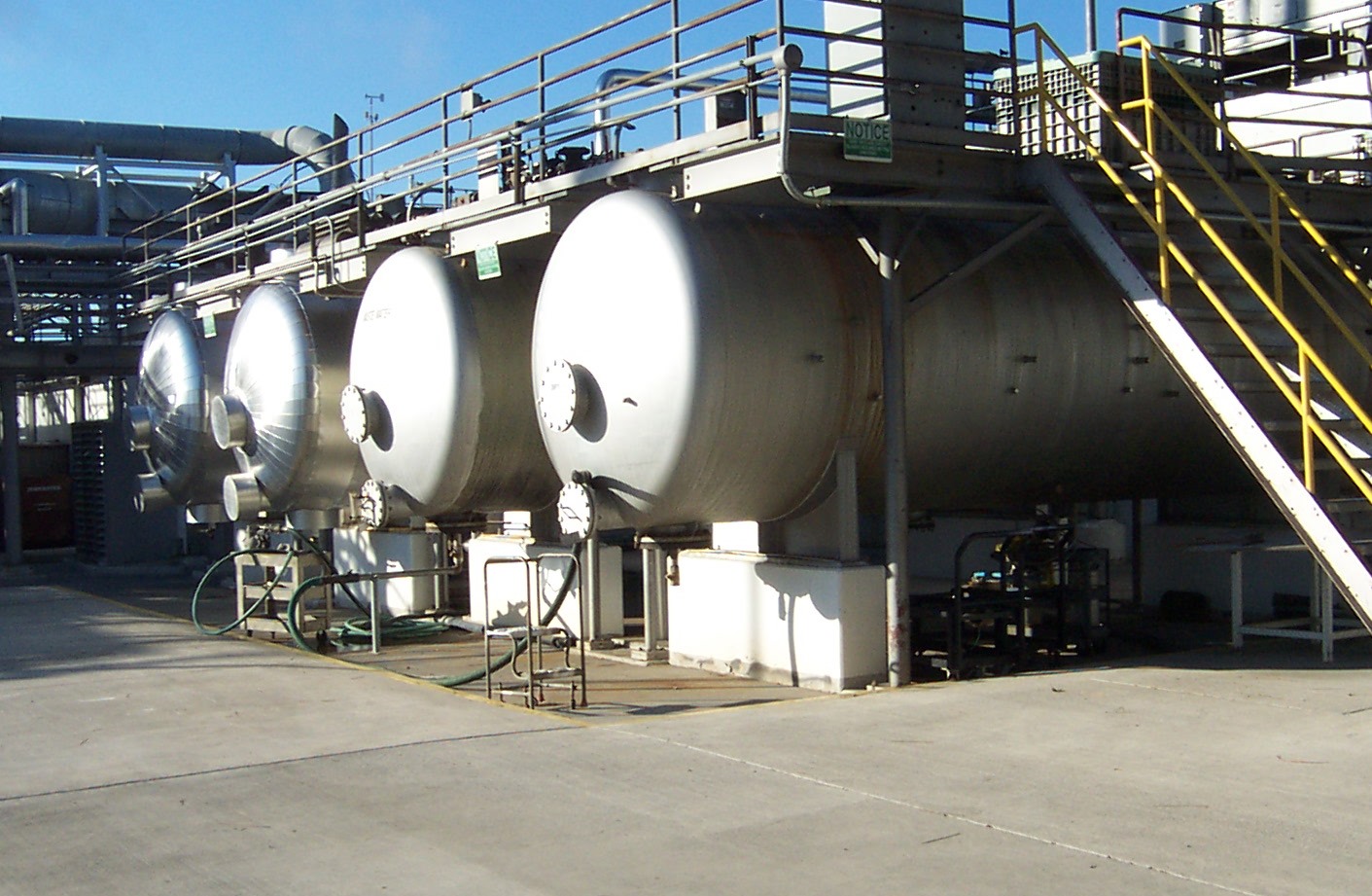
EPA has awarded the Iowa Department of Agriculture and Land Stewardship (IDALS) a grant for $70,000 to assist with outreach, education and implementation of the Clean Air Act’s Risk Management Program (RMP) at anhydrous ammonia facilities. All fertilizer facilities that handle, process or store more than 10,000 pounds of anhydrous ammonia are subject to EPA’s chemical safety requirements. IDALS plans to use funding to conduct on-site audits, workshops and follow-up safety assessments at agricultural retail anhydrous ammonia facilities in Iowa.

EPA Region 7 receives more accidental release reports for ammonia than for any other chemical. In addition to releases caused by transportation accidents, human error and equipment failure, a number of releases have been caused by anhydrous ammonia thefts. Anhydrous ammonia is a key ingredient in the illegal production of methamphetamine. When stolen, the toxic gas can be unintentionally released, causing injuries to emergency responders, law enforcement personnel, and the public.

Retailers were first required to be in compliance with the Risk Management Program in 1999. EPA then started facility inspections and enforcement of the program, which includes five components: hazard assessment system, management, accident prevention, emergency response and submittal of a risk management plan.

Caltha LLP provides specialized expertise to clients nationwide in the evaluation environmental rules, developing EH&S compliance procedures, and preparing cost-effective EH&S management programs.

For further information contact Caltha LLP at

info@calthacompany.com

or

Caltha LLP Website
Wednesday, June 23, 2010

RMP Inspections - Chemical Safety Inspection Interim Guidance

The Environmental Protection Agency (EPA) has released interim guidance on the agency’s chemical safety inspections process. Under the interim guidance, EPA inspectors will offer employees and employee representatives the opportunity to participate in chemical safety inspections. In addition, EPA will request that state and local agencies adopt similar procedures under the Risk Management Program.

The interim guidance pertains to inspections conducted by EPA under the Risk Management Program (RMP). The RMP is intended to reduce the risks to surrounding communities that arise from the management, use or storage of certain hazardous chemicals. Under the Clean Air Act, the Chemical Accident Prevention Provisions (Section 112(r)) require facilities that produce, handle, process, distribute, or store certain chemicals to develop a Risk Management Program, prepare a risk management plan, and submit the plan to EPA.

EPA expects to issue final guidance on participation of employees and employee representative in RMP inspections later this year.

Caltha LLP provides specialized expertise to clients nationwide in the evaluation environmental rules, developing EH&S compliance procedures, and preparing cost-effective EH&S management programs.

For further information contact Caltha LLP at

info@calthacompany.com

or

Caltha LLP Website