Showing posts with label Georgia. Show all posts

Monday, February 19, 2018

Compliance Audit For Atlanta Chemical Packaging Plant

Caltha LLP Project Summary

Project: Multi-media Environmental Compliance Audit
Client: Chemical Repackaging Plant
Location(s): Georgia

Key Elements: Compliance audit

Overview: Caltha preformed a multimedia compliance audits for this chemical mixing and repackaging operation located near Atlanta, Georgia. The scope of the audit included Federal, State, County and City requirements in addition to company policies and industry standards applicable to the operations environmental aspects. Regulatory programs addressed in the audit included:

OSHA
Hazard Communication

EPCRA
EPCRA 311-312,
EPCRA 313

Hazardous and Solid Waste Management
Federal RCRA rules
State waste rules
Universal waste rules

Clean Air Act
Federal air emission rules
Federal NESHAP standards
Federal RMP rule
Site air emission permit
State air emission rules

Clean Water Act
Authorized/Unauthorized Discharges
Stormwater Discharge NEC compliance
SPCC Rule Compliance
Spill Notification and Reporting
Federal Industrial pretreatment rules
Industrial discharger permit

TSCA
Current registration
Inventory Update Rule IUR Reporting
Chemical Data Rule CDR Reporting

Tanks
Aboveground tank rules
Underground tank rules
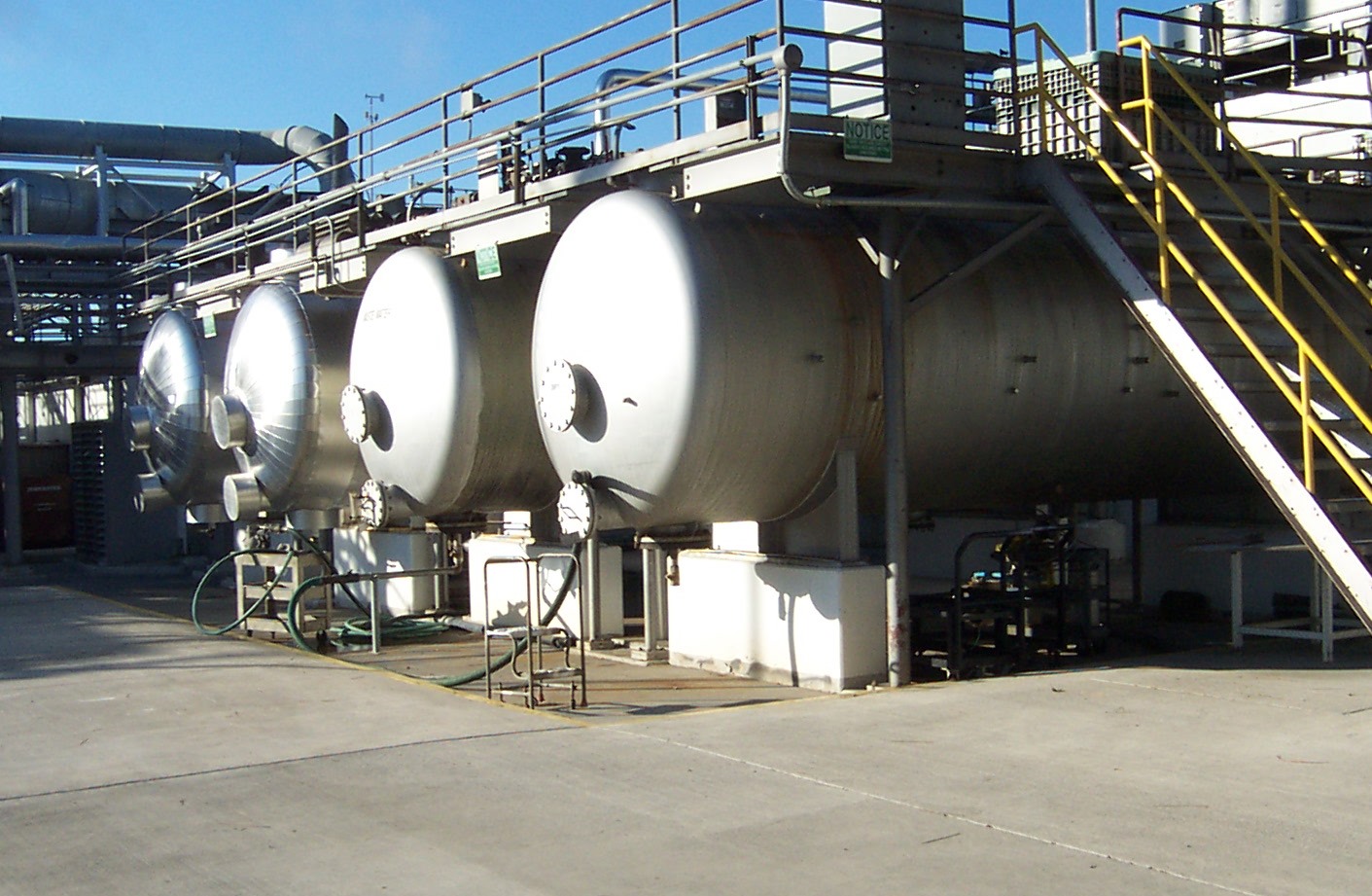
Aboveground Product Vessels


For more information on Caltha LLP services, go to the Caltha Contact Page

 
Caltha LLP | Your EHS Compliance, Auditing 
and EMS/SMS Partner

Sunday, October 1, 2017

Certified Environmental Health and Safety Audit Services


Caltha LLP provides IAA-BEAC certified auditors to perform internal EH&S audits to support ISO 14001 registered organizations or to support routine internal audit programs implemented as part of an overall governance system. Caltha can provide:
  • Single auditors to support audit teams as a media or regulatory expert,
  • Audit teams to address multiple program areas, or
  • Due diligence auditors / audit teams.
Caltha auditors can act as adjunct auditors to augment your existing internal audit team, or can act as an independent third party auditor.


Caltha auditors have conducted assessments in all 50 US States, Canada, Mexico, South America, Europe and Asia.


Click here for more information on Caltha Compliance Audit, Management System Audit and Due Diligence Assessment services


Wednesday, August 24, 2016

Georgia EPD Proposed Change To Excess Emission Rule

The Environmental Protection Division (EPD) of the Georgia Department of Natural Resources has proposed amendments to Georgia’s Rules for Air Quality Control, Chapter 391-3-1.


EPD is proposing changes to Rule 391-3-1-.02(2)(a)7; “Excess Emissions,” is being renamed “Startup, Shutdown, and Malfunction Emissions”; this section describes requirements for minimizing excess emissions during periods of Startup, Shutdown and Malfunction (SSM) for certain Georgia Rules and retains the language of the former Excess Emission Rule. The section is amended to comply with EPA’s Startup, Shutdown and Malfunction (SSM) SIP Call, while addressing process equipment and air pollution control equipment limitations by including the option of complying with alternative work practice standards during periods of startup and shutdown.


A section “Malfunction Emissions,” is being added to allow compliance with source-specific alternative work practice standards during periods of malfunctions.


Rules changes will be submitted as a SIP revision to EPA.


Caltha LLP provides specialized expertise to clients nationwide in the evaluation environmental rules, developing EHS compliance procedures, and preparing cost-effective EHS management programs. For further information contact Caltha LLP at info@calthacompany.com or Caltha LLP Website 

Thursday, May 2, 2013

EPA Approval of Changes To Georgia RCRA Rules

The Environmental Protection Agency (EPA) has proposed final authorization of State Hazardous Waste Management Program Revisions submitted by the Geogia Environmental Protection Division. Georgia applied to EPA for final authorization of changes to its hazardous waste program under the Resource Conservation and Recovery Act (RCRA). EPA determined that these changes satisfy all requirements needed to qualify for final authorization. Unless EPA receives written comments that oppose this authorization during the comment period, the decision to authorize Georgia's changes to its hazardous waste program will take effect on July 1, 2013.

EPA has determined there are no State requirements in this program revision considered to be more stringent or broader in scope than the Federal requirements. While Georgia has adopted the necessary regulations to receive authorization for the Uniform Hazardous Waste Manifest Rule, EPA cannot delegate the Federal manifest registry functions or the export or import provisions. and will continue to implement these requirements. Similarly, EPA cannot delegate the Federal requirements at 40 CFR 261.39(a)(5), 261.40 and 261.41 contained in the Cathode Ray Tubes Rule. While Georgia has properly adopted these requirements by reference at Georgia Hazardous Waste Management Rule 391-3-11-.07(1), EPA will continue to implement these requirements.

Georgia will issue permits for all the provisions for which it is authorized and will administer the permits it issues. EPA will continue to administer any RCRA hazardous waste permits or portions of permits which EPA issued prior to the effective date of the authorization until they expire or are terminated. EPA will not issue any more permits or new portions of permits for the provisions listed in the authorization after the effective date. EPA will continue to implement and issue permits for HSWA requirements for which Georgia is not authorized.

Caltha LLP provides specialized expertise to clients in Georgia and nationwide in the evaluation environmental rules, developing EHS compliance procedures, and preparing cost-effective EHS management programs.
For further information contact Caltha LLP at info@calthacompany.com or Caltha LLP Website 
 

Friday, February 22, 2013

EPA Proposes Review of SIPs For SSM Requirements

The EPA is proposing to take action on a petition for rulemaking filed by the Sierra Club in 2011 concerning the treatment of excess emissions in state rules by sources during periods of startup, shutdown, or malfunction (SSM). EPA is proposing to grant in part and to deny in part the request to rescind its policy interpreting the Clean Air Act (CAA) to allow states to have appropriately drawn state implementation plan (SIP) provisions that provide affirmative defenses to monetary penalties for violations during periods of SSM. The EPA is also proposing either to grant or to deny the Petition regarding existing SIP provisions related to SSM in each of 39 states identified in the petition.

For each of those states where EPA proposes to grant the petition concerning specific provisions, EPA also is proposing to find that the existing SIP provision is substantially inadequate to meet CAA requirements and proposes a "SIP call." For those affected states EPA will require the states to submit a corrective SIP revision. Comments on the proposed actions must be received on or before March 25, 2013.

Through this rulemaking, EPA intends to clarify its interpretation of the CAA regarding excess emissions during SSM events. EPA may find specific SIP provisions to be substantially inadequate to meet CAA requirements; if a state's existing SIP provision allows an automatic exemption for excess emissions during periods of startup, shutdown, or malfunction, then the EPA may determine that the SIP provision is substantially inadequate because the provision is inconsistent with requirements of the CAA.
The affected States include:

Alabama
Alaska
Arizona
Arkansas
Colorado
Delaware
District of Columbia
Florida
Georgia
Idaho
Illinois
Indiana
Iowa
Kansas
Kentucky
Louisiana
Maine
Michigan
Minnesota
Mississippi
Missouri
Montana
Nebraska
New Hampshire
New Jersey
New Mexico
North Carolina
North Dakota
Ohio
Oklahoma
Oregon
Rhode Island
South Carolina
South Dakota
Tennessee
Virginia
Washington
West Virginia
Wyoming

Caltha LLP provides specialized expertise to clients nationwide in the evaluation environmental rules, developing EHS compliance procedures, and preparing cost-effective EHS management programs. For further information contact Caltha LLP at info@calthacompany.com or Caltha LLP Website

Tuesday, November 29, 2011

Changes Proposed To Georgia Hazardous Waste Rules

The Georgia Environmental Protection Division (EPD) is proposing changes to State rules governing the management of hazardous wastes in Chapter 391-3-11. The proposed rule amendment is currently released for public comment. The public comment period ends on December 29, 2011.

Some of the key changes proposed are:


  1. The Environmental Protection Division is proposing regulations to clarify notification requirements, specifically for hazardous waste transfer facilities and used oil facilities, and documentation and record keeping requirements for hazardous waste accumulation areas. Also clarifying that used oil containers and tanks must be kept closed except when adding or removing waste.

  2. Amends the F019 listing to exempt the wastewater treatment sludge generated from zinc phosphating processes used in automobile assembly, provided the wastes are not placed outside on the land prior to shipment to a landfill for disposal and it is disposed in a landfill unit subject to certain liner requirements.

  3. Establishes an alternative set of generator requirements applicable to eligible academic entities that are flexible and protective. It also addresses the specific nature of hazardous waste generation and accumulation in these laboratories. The rules are also amended for technical corrections to these requirements. EPD believes this change provides incentives for eligible academic entities to conduct laboratory clean outs of old, unneeded chemicals.

  4. Termination of the National Environmental Performance Track Program. Former members of this program must now comply with the standard Resource Conservation and Recovery Act (RCRA) requirements for hazardous waste accumulation times and facility inspections.

  5. Finalizes amendments to National Emission Standards for Hazardous Air Pollutants and Final Standards for Hazardous Air Pollutants for hazardous waste combustors.

  6. Changes requirements for the management of used oil. New rules require that used oil tanks and containers be kept closed to prevent releases to the environment. Tanks and containers must be kept closed except when adding or removing used oil, or if tanks and containers are kept indoors or within secondary containment areas.


Caltha LLP provides specialized expertise to clients in Georgia and nationwide in the evaluation environmental rules, developing EH&S compliance procedures, and preparing cost-effective EH&S management programs.


For further information contact Caltha LLP at

info@calthacompany.com or Caltha LLP Website