Showing posts with label Chemical Security. Show all posts

Monday, February 19, 2018

Compliance Audit For Atlanta Chemical Packaging Plant

Caltha LLP Project Summary

Project: Multi-media Environmental Compliance Audit
Client: Chemical Repackaging Plant
Location(s): Georgia

Key Elements: Compliance audit

Overview: Caltha preformed a multimedia compliance audits for this chemical mixing and repackaging operation located near Atlanta, Georgia. The scope of the audit included Federal, State, County and City requirements in addition to company policies and industry standards applicable to the operations environmental aspects. Regulatory programs addressed in the audit included:

OSHA
Hazard Communication

EPCRA
EPCRA 311-312,
EPCRA 313

Hazardous and Solid Waste Management
Federal RCRA rules
State waste rules
Universal waste rules

Clean Air Act
Federal air emission rules
Federal NESHAP standards
Federal RMP rule
Site air emission permit
State air emission rules

Clean Water Act
Authorized/Unauthorized Discharges
Stormwater Discharge NEC compliance
SPCC Rule Compliance
Spill Notification and Reporting
Federal Industrial pretreatment rules
Industrial discharger permit

TSCA
Current registration
Inventory Update Rule IUR Reporting
Chemical Data Rule CDR Reporting

Tanks
Aboveground tank rules
Underground tank rules
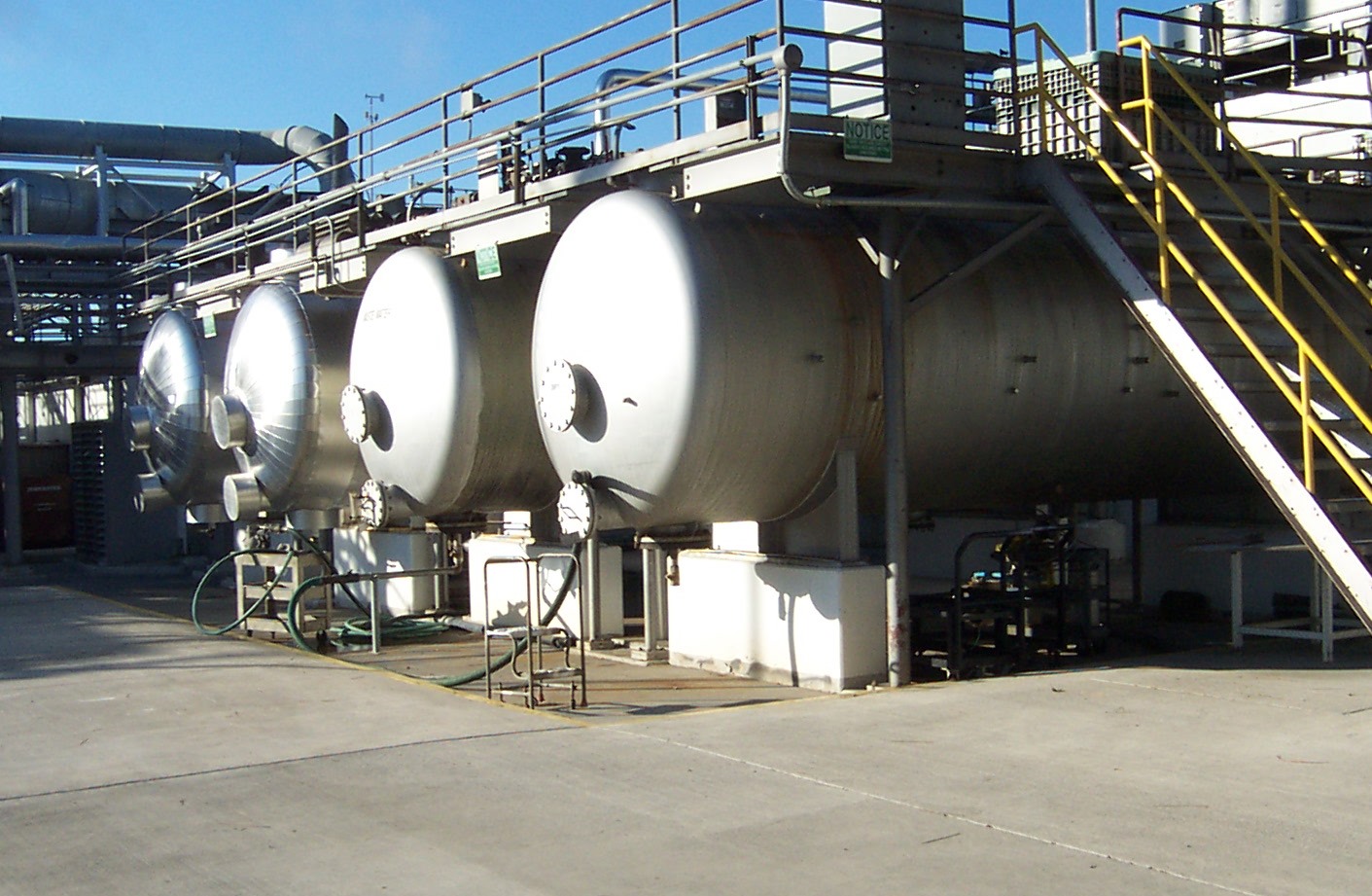
Aboveground Product Vessels


For more information on Caltha LLP services, go to the Caltha Contact Page

 
Caltha LLP | Your EHS Compliance, Auditing 
and EMS/SMS Partner

Thursday, July 20, 2017

Hazardous Waste and DOT Hazardous Material Training For Minnesota Facility

Caltha LLP Project Summary

Project: Employee training on Hazardous Waste management, Universal Waste Management, and DOT HazMat training for shipping of regulated hazardous materials
Client:
Medical product manufacturer
Location(s): Minnesota

Key Elements: Waste management, Employee training, DOT hazardous material shipping

Overview: Caltha LLP assisted this medical product manufacturer by conducting employee training sessions at the client's facility covering:
  • Hazardous waste management, for conditionally exempt small quality generator (CESQG)
  • Universal waste management
  • DOT HazMat employee training for individuals responsible for preparing and shipping hazardous materials, including wastes
For more information on Caltha LLP training services provided to small and medium sized facilities, go to Employer's Environmental Health and Safety Training Center.

Monday, August 27, 2012

Ohio Revises Rules For Underground Storage Tanks

Ohio has changed its underground storage tank regulations to align with federal rules.Under Ohio Rule OAC 1301-7-9-06, all new UST Systems must have secondary containment. Previously, only UST Systems in sensitive areas had to secondary containment. Further, when the cumulative replacement of an existing UST system exceeds 50%, then the entire system must have secondary containment. When new dispensers are installed or when existing dispensers are repaired and did not have containment pans under the dispenser, containment must be then installed under the dispenser.

Under Rule OAC 1301-7-9-19, by August 8, 2012, Owners and operators had to designate, train and document the training of Class A, B and C operators. This training was for operators of UST systems and is in addition to the licensure requirements for UST installers. Licensed UST installers automatically qualify as Class A operators.

Class A Operators have the primary responsibility for achieving and maintaining compliance with statutory and regulatory requirements and standards necessary to operate and maintain the UST system at one or more UST Sites. Class B Operators have the primary responsibility for implementing applicable requirements and standards for UST systems at one or more UST sites. Class A and B Operators have to undergo training from a state Fire Marshal approved trainer using formats approved by the state.

Class C operators (often being at least one attendant at the facility during working hours) are responsible for the initial response to alarms and other indications of emergencies caused by spills or releases from a UST system and for notifying the Class A or Class B Operators or emergency response personnel of the same. Class C operators may be trained by Class A or Class B operators using formats approved by the state.


Caltha LLP provides specialized expertise to clients nationwide in the evaluation environmental rules, developing EHS compliance procedures, and preparing cost-effective EHS management programs. For further information contact Caltha LLP at info@calthacompany.com or Caltha LLP Website

Implementation of the Pipeline Safety, Regulatory Certainty, and Job Creation Act of 2011

The Pipeline and Hazardous Materials Safety Administration (PHMSA) is moving forward to implement its new statutory authority to strengthen federal pipeline safety regulations. A notice of proposed rulemaking (NPRM) is the first step to implement the Pipeline Safety, Regulatory Certainty, and Job Creation Act of 2011, which toughened pipeline safety regulations and PHMSA's ability to enforce them.

The Act authorizes PHMSA to increase the maximum civil penalty for pipeline safety violations from $100,000 to $200,000 per violation per day. In addition, the agency will be able to collect a maximum of $2,000,000 for a related series of violations, up from $1,000,000. PHMSA proposes to apply the new maximums in cases that occur after Jan. 3, 2012, the date the Act was signed into law.

Proposed amendments to the Pipeline Safety Regulations also include technical changes and other minor corrections, including returning PHMSA's authority to enforce the provisions of the Oil Pollution Act of 1990, which had been transferred to the Coast Guard during the establishment of the Department of Homeland Security.


Caltha LLP provides specialized expertise to clients nationwide in the evaluation environmental rules, developing EHS compliance procedures, and preparing cost-effective EHS management programs. For further information contact Caltha LLP at info@calthacompany.com or Caltha LLP Website 


Monday, August 20, 2012

Proposed Amendment To Hazardous Materials Regulations

The Pipeline and Hazardous Materials Safety Administration (PHMSA) published a notice of proposed rulemaking to amend the Hazardous Materials Regulations (HMR) to maintain alignment with international standards by incorporating various amendments, including changes to proper shipping names, hazard classes, packing groups, special provisions, packaging authorizations, air transport quantity limitations, and vessel stowage requirements.

These revisions are necessary to harmonize the HMR with recent changes made to the International Maritime Dangerous Goods Code, the International Civil Aviation Organization's Technical Instructions for the Safe Transport of Dangerous Goods by Air, and the United Nations Recommendations on the Transport of Dangerous Goods-Model Regulations and subsequently address a petition for rulemaking.

Comments must be received by October 15, 2012.


Caltha LLP provides specialized expertise to clients nationwide in the evaluation environmental rules, developing EHS compliance procedures, and preparing cost-effective EHS management programs.
For further information contact Caltha LLP at info@calthacompany.com or Caltha LLP Website


Tuesday, July 17, 2012

Chemical Safety Board (CSB) 2012 - 2016 Strategic Plan

The U.S. Chemical Safety Board (CSB) has released its 2012 - 2016 Strategic Plan. The new strategy updates the 2007 - 2012 CSB Strategic Plan, including the CSB's strategic goals, objectives, and associated measures for managing and evaluating agency operations.The final version of the plan features a "CSB Most Wanted Program" that serves to focus CSB outreach initiatives for key CSB recommendations.

The plan contains measurable objections and concentrates on three main goals:
  1. Conduct incident investigations and safety studies concerning releases of hazardous chemical substances. This goal fulfills the core missions of the Board by ensuring that CSB selects and completes incident investigations that have the potential to generate recommendations with high preventative impact. It also directs the CSB to develop and complete safety studies with an emphasis on emerging safety issues.
  2. Improve safety and environmental protection by ensuring that CSB recommendations are implemented and by broadly disseminating CSB findings through advocacy and outreach. CSB says its successful safety videos are an important component of its dissemination efforts.
  3. Preserve the public trust by maintaining and improving organizational excellence. CSB endeavors to use best practice project management in all agency processes, including administration and service functions.

The CSB is an independent federal agency charged with investigating industrial chemical accidents. CSB investigations look into all aspects of chemical accidents, including physical causes such as equipment failure as well as inadequacies in regulations, industry standards, and safety management systems. The Board also makes safety recommendations to plants, industry organizations, labor groups, and regulatory agencies such as OSHA and EPA.


Caltha LLP provides specialized expertise to clients nationwide in the evaluation environmental rules, developing EHS compliance procedures, and preparing cost-effective EHS management programs.
For further information contact Caltha LLP at info@calthacompany.com or Caltha LLP Website 

Rulemaking On Hazardous Materials In Reverse Logistics

The Pipeline and Hazardous Material Safety Administration (PHMSA) is seeking public comment to assist in forming a reverse logistics policy to address the unique requirements of the hazardous materials transportation. PHMSA is working to develop a cost-effective logistical solution that maintains the agency's safety standards. The advanced notice of public rulemaking seeks comment on whether providing a clear definition of reverse logistics will promote the safe transport of hazardous materials. Comments must be submitted by October 3, 2012.

Reverse logistics is the process initiated when a consumer product goes backwards in the supply chain, such as an item being returned to a store by a customer, or when a local retailer sends unused merchandise back to a regional distributor. While returns are a fairly straightforward process for most products, the effort is complicated when a consumer needs to return paint, batteries, or other regulated hazardous materials. That difficulty is multiplied for retailers trying to manage multiple returns to various suppliers at the same time.

Because many reverse logistics shipments contain regulated hazardous materials, shippers may unknowingly violate the hazardous materials regulations, which apply to consumers as well as those involved with the commercial transportation of goods. By clarifying the guidelines for hazmat reverse logistics and increasing public awareness, PHMSA hopes to greatly reduce the occurrence of improperly packaged and inappropriately congregated hazmat items being shipped, as well as the risks for danger when this happens.

Caltha LLP provides specialized expertise to clients nationwide in the evaluation environmental rules, developing EHS compliance procedures, and preparing cost-effective EHS management programs.

For further information contact Caltha LLP at info@calthacompany.com or Caltha LLP Website 
 

Tuesday, July 27, 2010

RMP Compliance Grant for Iowa Ammonia Facilities

EPA has awarded the Iowa Department of Agriculture and Land Stewardship (IDALS) a grant for $70,000 to assist with outreach, education and implementation of the Clean Air Act’s Risk Management Program (RMP) at anhydrous ammonia facilities. All fertilizer facilities that handle, process or store more than 10,000 pounds of anhydrous ammonia are subject to EPA’s chemical safety requirements. IDALS plans to use funding to conduct on-site audits, workshops and follow-up safety assessments at agricultural retail anhydrous ammonia facilities in Iowa.

EPA Region 7 receives more accidental release reports for ammonia than for any other chemical. In addition to releases caused by transportation accidents, human error and equipment failure, a number of releases have been caused by anhydrous ammonia thefts. Anhydrous ammonia is a key ingredient in the illegal production of methamphetamine. When stolen, the toxic gas can be unintentionally released, causing injuries to emergency responders, law enforcement personnel, and the public.

Retailers were first required to be in compliance with the Risk Management Program in 1999. EPA then started facility inspections and enforcement of the program, which includes five components: hazard assessment system, management, accident prevention, emergency response and submittal of a risk management plan.

Caltha LLP provides specialized expertise to clients nationwide in the evaluation environmental rules, developing EH&S compliance procedures, and preparing cost-effective EH&S management programs.

For further information contact Caltha LLP at

info@calthacompany.com

or

Caltha LLP Website

Wednesday, March 17, 2010

Revised Hazardous Materials Security Plan Requirements

The Pipeline and Hazardous Materials Safety Administration (PHMSA) revised 49 CFR Part 172 to modify certain aspects of the requirements for hazardous materials security plans. In consultation with the Transportation Security Administration (TSA) of the Department of Homeland Security (DHS), PHMSA modified security plan requirements applicable to the commercial transportation of hazardous materials by air, rail, vessel, and highway. The final rule narrows the list of materials subject to security plan requirements and clarifies certain requirements related to security planning, training, and documentation.

This final rule is effective October 1, 2010. It has a voluntary compliance date of April 8, 2010.


Caltha LLP provides specialized expertise to clients nationwide in the evaluation environmental rules, developing EH&S compliance procedures, and preparing cost-effective EH&S management programs.

For further information contact Caltha LLP at
info@calthacompany.com
or
Caltha LLP Website


Tuesday, November 17, 2009

Chemical and Water Security Act of 2009 - H.R. 2868

The House of Representatives recently passed the Chemical and Water Security Act of 2009 (H.R. 2868). The bill increases security requirements at chemical plants and drinking water and wastewater facilities by establishing risk-based security standards for these critical assets. H.R. 2868 reauthorizes the Department of Homeland Security's (DHS) Chemical Facility Anti-Terrorism Standards (CFATS) program, which is scheduled to expire October 2010. It also authorizes the EPA to establish similar security programs for drinking water and wastewater facilities.

The Chemical and Water Security Act of 2009:

  • Makes the DHS CFATS program permanent. The legislation strengthens the chemical security program by requiring the review and, in some cases, the implementation of safer technologies, adding enforcement tools, and protecting the right of workers to participate in developing and implementing chemical facility security plans.
  • Authorizes EPA to create a risk-based, performance-based program for the water sector similar to the one established by DHS for chemical plants.
  • Requires the riskiest chemical facilities, drinking water facilities, and water treatment works to assess and, when appropriate, implement methods to reduce the consequences of a terrorist attack (also known as inherently safer technologies).
  • Strengthens the enforcement of the CFATS program by allowing citizens to bring suit against the Secretary of DHS for failure to perform non-discretionary obligations.


Caltha LLP provides specialized expertise to clients nationwide in the evaluation air, wastewater, stormwater and hazardous waste rules, developing compliance procedures, and preparing cost-effective EH&S management programs.

For further information contact Caltha LLP at
info@calthacompany.com
or
Caltha LLP Website


Monday, February 2, 2009

SPCC Template Plan - Revised SPCC Rule 40 CFR 112

Effective February 3, 2009, US EPA streamlined SPCC Rule (40 CFR 112) becomes effective. The amended rule tailored the SPCC requirements for a subset of qualified facilities. Now the owner or operator of a qualified facility has the option to self-certify their SPCC Plan and comply with other streamlined requirements.

This final rule designates a subset of qualified facilities (“Tier I qualified facilities”) as those that meet the current criteria to self-certify their SPCC Plan and that have no oil storage containers with an individual aboveground storage capacity greater than 5,000 gallons. A Tier I qualified facility has the option to complete a self-certified SPCC Plan template instead of a full SPCC Plan. By completing the SPCC Plan template, an owner or operator of the facility will certify that the facility complies with a set of streamlined SPCC rule requirements. All other qualified facilities will be designated “Tier II qualified facilities.”


For more information on Caltha LLP SWPPP services, go to the Environmental Health & Safety Plan | Spill Plan Information Request Form.

Wednesday, January 7, 2009

Security Vulnerability Assessments - Extension of Deadline

The Department of Homeland Security (DHS) has extended the deadline for submission of the Security Vulnerability Assessment (SVA), or for an Alternative Security Program (ASP) in lieu of an SVA, for "Tier 4" facilities. The deadline has been extended to Jan. 12, 2009.

In 2008 DHS assigned preliminary tier levels to chemical facilities considered a high security risk, ranging from highest risk at Tier 1 to lowest risk at Tier 4. Tier 4 facilities must perform and submit an SVA, but also have the option of submitting an ASP in lieu of an SVA. The deadline for this submittal is for Tier 4 facilities only. If a facility has already submitted its SVA or ASP, it does not need to take any further action at this time.


For further information contact Caltha LLP at
info@calthacompany.com
or
Caltha LLP Website


Wednesday, December 24, 2008

Proposed Rules on Ammonium Nitrate Handling - DHS Security Requirements

The Department of Homeland Security (DHS) has published an Advance Notice of Proposed Rulemaking (ANPRM) seeking comments on a recent amendment to the Homeland Security Act entitled "Secure Handling of Ammonium Nitrate". The amendment requires the DHS to ''regulate the sale and transfer of ammonium nitrate by an ammonium nitrate facility...to prevent the misappropriation or use of ammonium nitrate in an act of terrorism.''

Written comments must be submitted on or before December 29, 2008.

Ammonium nitrate is also regulated as a Section 313 Water Priority Chemical, and may have additional control and security requirements under the Clean Water Act [Read more about requirements for Section 313 chemicals]


Caltha LLP provides technical support to facilities required to meet hazardous material storage and reporting requirements.


For further information contact Caltha LLP at
info@calthacompany.com
or
Caltha LLP Website


Saturday, November 15, 2008

Impending Regulation of Ammonium Nitrate Handling by DHS

The Department of Homeland Security (DHS) has published an Advance Notice of Proposed Rulemaking (ANPRM) seeking comments on a recent amendment to the Homeland Security Act entitled "Secure Handling of Ammonium Nitrate". The amendment requires the DHS to ''regulate the sale and transfer of ammonium nitrate by an ammonium nitrate facility...to prevent the misappropriation or use of ammonium nitrate in an act of terrorism.''

For further information go to: http://edocket.access.gpo.gov/2008/E8-25821.htm

Written comments must be submitted on or before December 29, 2008

For further information contact Caltha LLP at
info@calthacompany.com
or
Caltha LLP Website