

Monday, September 7, 2020
OSHA Rule On Beryllium Effective September 30, 2020
OSHA is amending its existing construction and shipyard standards for occupational exposure to beryllium and beryllium compounds to clarify certain provisions and simplify or improve compliance. These changes are designed to accomplish three goals: to more appropriately tailor the requirements of the construction and shipyards standards to the particular exposures in these industries in light of partial overlap between the beryllium standards' requirements and other OSHA standards; to aid compliance and enforcement across the beryllium standards by avoiding inconsistency, where appropriate, between the shipyards and construction standards and recent revisions to the general industry standard; and to clarify certain requirements with respect to materials containing only trace amounts of beryllium. This final rule does not affect the general industry beryllium standard.
https://www.calthacompany.com/uncategorized/new-osha-rule-on-berylium-effective-september-30/
Caltha LLP provides specialized expertise to clients in the evaluation environmental rules, developing EHS compliance procedures, and preparing cost-effective EHS management programs.
For further information contact Caltha LLP at
info@calthacompany.com or Caltha LLP Website


Saturday, August 11, 2018
Why Needs a FRP? Is a FRP the Same As a SPCC Plan?
What is a Facility Response Plan?
Under the federal Oil Pollution Prevention Act rules, certain facilities are required to prepare a Facility Response Plan or FRP. An FRP is an enhanced spill preparedness and response plan. Key elements of a FRP include:- Emergency Response Action Plan, maintained as astand-alone section of the overall plan
- Facility information, including its name, type, location, owner, operator information
- Emergency notification, equipment, personnel, and evacuation information
- Identification and analysis of potential spill hazards and previous spills
- Discussion of small, medium, and worst-case discharge scenarios and response actions
- Description of discharge detection procedures and equipment
- Detailed implementation plan for response, containment, and disposal
- Description and records of self-inspections, drills and exercises, and response training
- Diagrams of facility site plan, drainage, and evacuation plan
- Security (e.g., fences, lighting, alarms, guards, emergency cut-off valves and locks, etc.)
- Response plan coversheet
If I Already Have An SPCC Plan Do I Need A FRP?
Possibly; All FRP facilities need am SPCC Plan, but not all SPCC facilities need a FRP. Although Facility Response Plans (FRPs) and SPCC Plans are different and should be maintained as separate documents, some sections of the plans may be the same. The revised Oil Pollution Prevention regulation allows the facility owner or operator to reproduce and use those sections of the SPCC Plan in the FRP.Who Needs To Prepare A Facility Response Plan?
Facilities that could reasonably be expected to cause "substantial harm" to the environment by discharging oil into or on navigable waters are required to prepare and submit Facility Response Plans (FRPs). Facilities that could cause "significant and substantial harm" are required to have their plans approved by an EPA Regional Administrator. The criteria for "substantial harm" are:- has a total oil storage capacity greater than or equal to 42,000 gallons and it transfers oil over water to/from vessels; or
- has a total oil storage capacity greater than or equal to 1 million gallons and meets one of the following conditions:
- does not have sufficient secondary containment for each aboveground storage area.
- is located at a distance such that a discharge from the facility could cause "injury" to fish, wildlife, and sensitive environments.
- is located at a distance such that a discharge from the facility would shut down a public drinking water intake.
- has had, within the past five years, a reportable discharge greater than or equal to 10,000 gallons.
Caltha LLP assists facilities subject to the Oil Pollution Prevention Act to prepare and maintain SPCC Plans and Facility Response Plans. Click here for more information on EH&S plan services.
Monday, April 30, 2018
New Categories For Air Permit Exemptions Proposed
Minnesota Pollution Control Agency (MPCA) is proposing to adopt amended air quality rules within “exempt source/conditionally insignificant activities rules” to clarify permit requirements for small sources of air emissions and update rules governing the treatment of small air pollution emitting activities (“insignificant activities” and “conditionally insignificant activities”). Written comments on the proposed rules are being accepted until May 29, 2018.
Changes create four new categories of conditionally exempt stationary sources where emissions primarily come from one type of activity; auto-body refinishing facilities, coating facilities, woodworking facilities, and insignificant facilities that meet applicable technical standard would be exempt from obtaining an air emissions permit. Changes to the existing categories of conditionally exempt sources, gasoline service stations and concrete manufacturing, are made to align with the rule structure for the new categories.
 |
| Permitted Dust Control System |
Changes create four new categories of conditionally exempt stationary sources where emissions primarily come from one type of activity; auto-body refinishing facilities, coating facilities, woodworking facilities, and insignificant facilities that meet applicable technical standard would be exempt from obtaining an air emissions permit. Changes to the existing categories of conditionally exempt sources, gasoline service stations and concrete manufacturing, are made to align with the rule structure for the new categories.
 |
| Caltha LLP | Your Air Permitting Partner |
Monday, April 23, 2018
REACH, ROHS, Prop 65 and Other Chemical Compliance Certifications
Caltha LLP Project Summary
Project: Certification of REACH, ROHS, Prop 65, Conflict Minerals, Biocidal Products ComplianceClient: Component Manufacturer
Location(s): Minnesota
Key Elements: EU Chemical Regulations, California Proposition 65 Labeling, Conflict Minerals Compliance Certifiaction
Overview: Caltha LLP was retained by this component manufacturer to compile compliance documentation and to prepare Certification of Compliance. Certification of compliance was required by customers who purchased manufactured components and incorporated them into their final products which were exported to the European Union and other areas.

Caltha prepared a certification form and background information to be completed by raw material suppliers that allowed each supplier to provide an informed certification statement regarding presence/absence of regulated chemical substances, and if present, documentation that concentrations are below regulatory thresholds.
Monday, April 9, 2018
Comments On Repeal Of Carbon Pollution Rule Due April 28
The public comment period on the EPA Proposed Rule "Repeal of Carbon Pollution Emission Guidelines for Existing Stationary Sources: Electric Utility Generating Units" is scheduled to close on April 28, 2018.
As background, on October 16, 2017, the Environmental Protection Agency published an announcement of its intention to repeal the Carbon Pollution Emission Guidelines for Existing Stationary Sources: Electric Utility Generating Units, commonly referred to as the Clean Power Plan, as promulgated on October 23, 2015. The proposal also requested public comment on the proposed rule. The EPA held public hearings on November 28 and 29, 2017, in Charleston, West Virginia, and extended the public comment period until January 16, 2018.
In response to numerous requests for additional opportunities for the public to provide oral testimony on the proposed rule in more than one location, EPA announced that three listening sessions will be held:
Wednesday, February 21, 2018 - Kansas City, Missouri;
Wednesday, February 28, 2018 - San Francisco, California;
Tuesday, March 27, 2018 - Gillette, Wyoming.
EPA also reopened the public comment period until April 26, 2018.

Caltha LLP | Your Air Permit, Wastewater Permit,
Storm Water Permit Partner
As background, on October 16, 2017, the Environmental Protection Agency published an announcement of its intention to repeal the Carbon Pollution Emission Guidelines for Existing Stationary Sources: Electric Utility Generating Units, commonly referred to as the Clean Power Plan, as promulgated on October 23, 2015. The proposal also requested public comment on the proposed rule. The EPA held public hearings on November 28 and 29, 2017, in Charleston, West Virginia, and extended the public comment period until January 16, 2018.
In response to numerous requests for additional opportunities for the public to provide oral testimony on the proposed rule in more than one location, EPA announced that three listening sessions will be held:
Wednesday, February 21, 2018 - Kansas City, Missouri;
Wednesday, February 28, 2018 - San Francisco, California;
Tuesday, March 27, 2018 - Gillette, Wyoming.
EPA also reopened the public comment period until April 26, 2018.
Caltha LLP | Your Air Permit, Wastewater Permit,
Storm Water Permit Partner
Friday, March 23, 2018
Overview of Management Systems Used By EHS Professionals
Overview of Management Systems For EHS Professionals
Click on link above to download presentation slides from " Environmental and Safety Management Systems For EHS Professionals"
Wednesday, March 21, 2018
Wastewater Permit And Compliance Overview
Overview of Clean Water Act
Click link above to download presentation slides.
Overview of the Clean Water Act and underlying programs. Clean Water Act; CWA; wastewater; NPDES; pretreatment permit; water quality standards; permit limits; effluent guidelines; effluent standards; waters of the US, water quality criteria, SPCC rule
Monday, March 19, 2018
Air Permit Engineer For Wisconsin Printing Business
Caltha LLP Project Summary
Project: Update To Air Permit Emission Tracking And ReportingClient: Printing Operation
Location(s): Wisconsin
Key Elements: WDNR air permit, annual air emission inventory, VOC emission calculation
Overview: Caltha LLP has assisted this Wisconsin printing company with annual air emission inventory used for compliance reporting under the facility air emission permit issued by the Wisconsin Department of Natural Resources. This has included preparation of a site specific product usage and emission tracking workbook used by plant personnel to record monthly solvent usage and the resulting VOC emissions.
Caltha provides ad hoc training and technical support to plant staff on emission tracking and permit compliance.
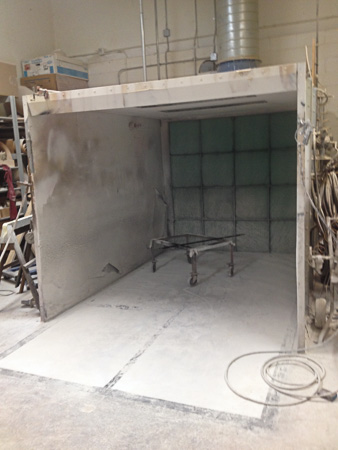
Spray Booth Included In Facility
Wide Air Emission Permit
Caltha LLP | Your Air Permit, Wastewater Permit,
Storm Water Permit Partner
Sunday, March 18, 2018
Is Hazardous Waste Allowed In City Sewer?
FAQ: Is It Legal To Discharge Hazardous Waste Into Sewer?
Possibly, if certain conditions are met.The Clean Water Act (CWA) Pretreatment Program regulations require that Industrial Users (IUs) report any substance discharged to the Publicly Owned Treatment Works (POTW) which, if otherwise disposed of, would be considered a Resource Conservation and Recovery Act (RCRA) hazardous waste. Under RCRA’s Domestic Sewage Exclusion (DSE), any mixture of domestic sewage and other wastes that passes through a sewer system to a POTW is not considered a hazardous waste for the purposes of RCRA.
However, reporting of such discharges are regulated under the CWA as follows:
- 40 CFR 403.12(p) requires a one-time report for each substance discharged to a POTW that, if otherwise disposed of, would be considered RCRA hazardous waste.
- 40 CFR 403.12(j) requires a report in advance of any substantial change in volume or character of any IU discharge.
Who Must Submit Notification of Hazardous Waste Discharge?
All IUs that discharge a substance that, if otherwise disposed of, would be characteristic or listed wastes under 40 CFR Part 261 and meet the following criteria:- Total waste discharged is greater than or equal to 15 kg/month; or
- Waste discharged is acute hazardous waste.
Where Does Notification Need To Be Sent?
If notification of hazardous waste discharge is required, it needs to be submitted to:- Local Sewerage Authority(i.e., POTW)
- EPA Regional Waste Management Director, and
- State Hazardous Waste Authority
What Does Notification Need To Include?
The notification must contain:For hazardous wastes ≥ 15 kg/month or any quantity of acute, the one-time notification from an IU to a POTW must contain:
- Name of the hazardous waste as set forth in 40 CFR Part 261.
- EPA hazardous waste number (code).
- Type of discharge to the sewer (continuous, batch, or other).
- A certification that the IU has a program in place to reduce the volume and toxicity of hazardous wastes generated to the degree it has determined to be economically practical.
- An identification of the hazardous constituents contained in the hazardous wastes.
- An estimation of the mass and concentration of such constituents in the waste stream discharged during the calendar month in which the one-time report is made.
- An estimation of the mass of constituents in the wastestream expected to be discharged during the 12 months following the notification.
Caltha LLP | Your Air Permit, Wastewater Permit,
Storm Water Permit Partner
Wednesday, March 14, 2018
Can I Throw Empty Pesticide Spray Cans In Trash?
How Are Spent Aerosols Containing Pesticides Regulated?
Hazardous waste aerosol cans that contain pesticides are also subject to the requirements of Federal Insecticide, Fungicide, and Rodenticide Act (FIFRA), including compliance with the instructions on the label. In general, the statement on aerosol pesticide product FIFRA labels prohibits the puncturing of the cans. However, in April 2004, EPA issued a determination that puncturing aerosol pesticide containers is consistent with the purposes of FIFRA and is therefore lawful pursuant to FIFRA section 2(ee)(6) provided that the following conditions are met:- The puncturing of the container is performed by a person who, as a general part of his or her profession, performs recycling and/or disposal activities;
- The puncturing is conducted using a device specifically designed to safely puncture aerosol cans and effectively contain the residual contents and any emissions thereof; and
- The puncturing, waste collection, and disposal, are conducted in compliance with all applicable federal, state and local waste (solid and hazardous waste) and occupational safety and health laws and regulations.
Tuesday, March 13, 2018
Used Aerosol Cans Could Be Universal Waste Under Proposed Rule
EPA is proposing to add hazardous waste aerosol cans to those “universal wastes” regulated under title 40 of the Code of Federal Regulations (CFR), part 273. This change in the Resource Conservation and Recovery Act (RCRA) regulations, once finalized, will reduce regulatory costs of a wide variety of establishments generating and managing aerosol cans, including the retail sector, by providing a clear, practical system for handling discarded aerosol cans.

Waste Audit Finds Improper Flammable Waste Storage And Labeling
Four states, California, Colorado, Utah and New Mexico, already have universal waste aerosol can programs in place, and two more states, Ohio and Minnesota, have proposed to add aerosol cans to their universal waste regulations.

Spent Aerosol Cans Being Handled As Universal Waste
EPA specifically excludes aerosol cans that have been emptied of their contents (both propellant and product). Once the contents of a universal waste aerosol can have been removed, the emptied can is considered a new point of generation and is subject to a hazardous waste determination.. An aerosol can that meets the definition of empty container is not subject to hazardous waste regulation, and may be recycled as scrap metal.
The proposed rule also excludes aerosol cans that show evidence of leakage, spillage, or damage that could cause leakage under reasonably foreseeable conditions. Through this exclusion, EPA intends that hazardous waste aerosol cans that are not intact continue to be subject to the full hazardous waste standards.

Aerosol Cans Being Stored For Disposal or Recycling
Under this proposed rule, the existing universal waste requirements currently applicable to small quantity handlers of universal waste (SQHUWs) and large quantity handlers of universal waste (LQHUWs) would also be applicable to handlers of discarded aerosol cans. For both SQHUWs and LQHUWs, these requirements include:
In addition, EPA is proposing that small and large quantity universal waste handlers must follow certain specific management standards while handling their aerosol cans. Under this proposal, all handlers must manage their universal waste aerosol cans in a manner designed to prevent releases to the environment. This includes accumulating universal waste aerosol cans in containers that are structurally sound and compatible with the contents of the can, and show no evidence of leaks, spills, or damage that could cause leaks under reasonably foreseeable conditions. Handlers may sort aerosol cans by type and consolidate intact aerosol cans in larger containers, remove actuators to reduce the risk of accidental release, and under certain conditions, may puncture and drain aerosol cans that are being recycled..
Future of Aerosol Can Puncturing Under Proposed EPA Rule

How Is Aerosol Can Disposal Currently Regulated?
Aerosol cans frequently contain flammable propellants such as propane or butane which can cause the aerosol can to demonstrate the hazardous characteristic for ignitability. In addition, the aerosol can may also be a hazardous waste if they contain materials that exhibit hazardous characteristics. Similarly, a discarded aerosol can may also be a P or U-listed hazardous waste if it contains a commercial chemical product. Therefore, fir several reasons, spent aerosol cans could be a regulated hazardous waste.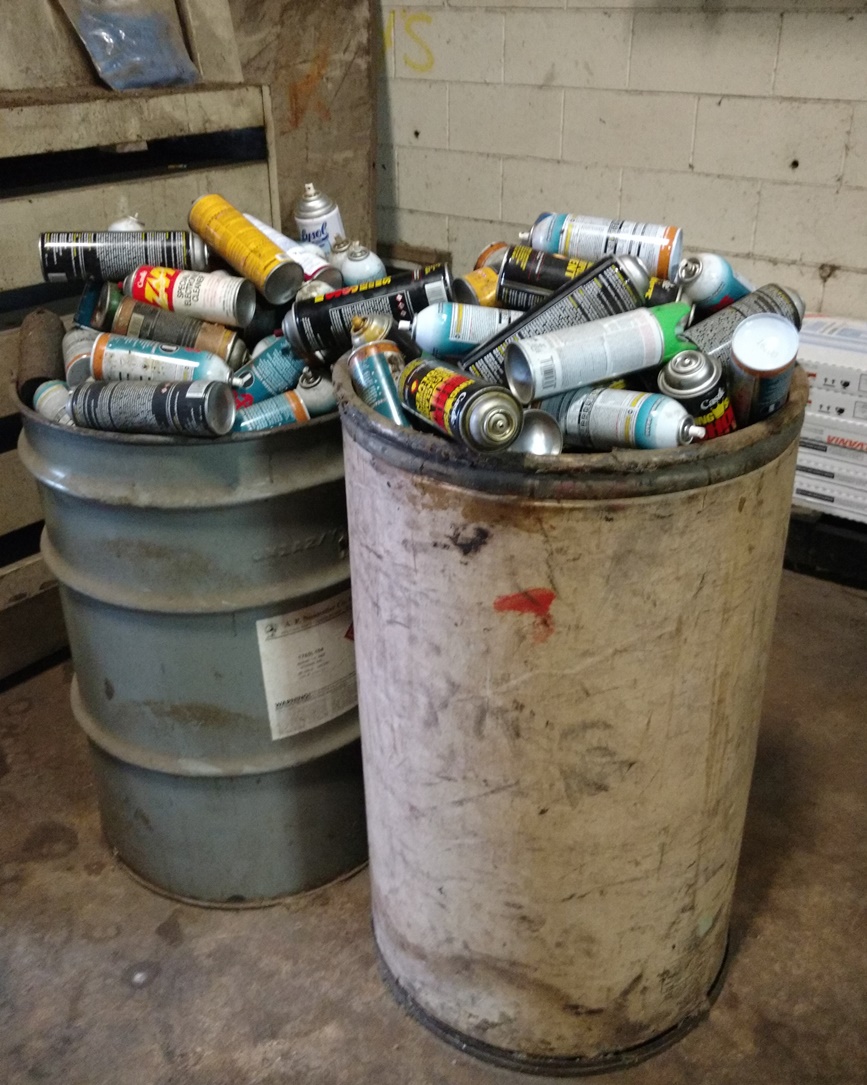
Waste Audit Finds Improper Flammable Waste Storage And Labeling
How Are Spent Aerosols Containing Pesticides Regulated?
Hazardous waste aerosol cans that contain pesticides are also subject to the requirements of Federal Insecticide, Fungicide, and Rodenticide Act (FIFRA), including compliance with the instructions on the label. In general, the statement on aerosol pesticide product FIFRA labels prohibits the puncturing of the cans. However, in April 2004, EPA issued a determination that puncturing aerosol pesticide containers is consistent with the purposes of FIFRA and is therefore lawful pursuant to FIFRA section 2(ee)(6) provided that the following conditions are met:- The puncturing of the container is performed by a person who, as a general part of his or her profession, performs recycling and/or disposal activities;
- The puncturing is conducted using a device specifically designed to safely puncture aerosol cans and effectively contain the residual contents and any emissions thereof; and
- The puncturing, waste collection, and disposal, are conducted in compliance with all applicable federal, state and local waste (solid and hazardous waste) and occupational safety and health laws and regulations.
Does The Proposed Rule On Aerosol Can Disposal Affect State Rules?
If approved, States with approved RCRA programs would need to made revisions to State rules.Four states, California, Colorado, Utah and New Mexico, already have universal waste aerosol can programs in place, and two more states, Ohio and Minnesota, have proposed to add aerosol cans to their universal waste regulations.
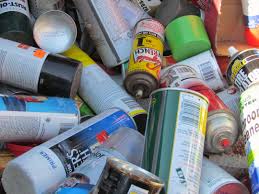
Spent Aerosol Cans Being Handled As Universal Waste
Are Any Containers Excluded From the Proposed Rule?
EPA intends the rule to be limited to sealed containers whose intended use is to dispense a material by means of a propellant or compressed gas. Other types of containers, including compressed gas canisters and propane cylinders, present a greater risk than aerosol cans and would not be included.EPA specifically excludes aerosol cans that have been emptied of their contents (both propellant and product). Once the contents of a universal waste aerosol can have been removed, the emptied can is considered a new point of generation and is subject to a hazardous waste determination.. An aerosol can that meets the definition of empty container is not subject to hazardous waste regulation, and may be recycled as scrap metal.
The proposed rule also excludes aerosol cans that show evidence of leakage, spillage, or damage that could cause leakage under reasonably foreseeable conditions. Through this exclusion, EPA intends that hazardous waste aerosol cans that are not intact continue to be subject to the full hazardous waste standards.
Aerosol Cans Being Stored For Disposal or Recycling
What Handling Requirements Are Proposed?
Under this proposed rule, the existing universal waste requirements currently applicable to small quantity handlers of universal waste (SQHUWs) and large quantity handlers of universal waste (LQHUWs) would also be applicable to handlers of discarded aerosol cans. For both SQHUWs and LQHUWs, these requirements include:- waste management standards,
- labeling and marking,
- accumulation time limits,
- employee training,
- response to releases,
- requirements related to off-site shipments, and
- export requirements.
In addition, EPA is proposing that small and large quantity universal waste handlers must follow certain specific management standards while handling their aerosol cans. Under this proposal, all handlers must manage their universal waste aerosol cans in a manner designed to prevent releases to the environment. This includes accumulating universal waste aerosol cans in containers that are structurally sound and compatible with the contents of the can, and show no evidence of leaks, spills, or damage that could cause leaks under reasonably foreseeable conditions. Handlers may sort aerosol cans by type and consolidate intact aerosol cans in larger containers, remove actuators to reduce the risk of accidental release, and under certain conditions, may puncture and drain aerosol cans that are being recycled..
Future of Aerosol Can Puncturing Under Proposed EPA Rule
Caltha LLP | Your EH&S Compliance, Auditing and EMS/SMS Partner
Wednesday, March 7, 2018
Information Collection Request For Recycled Hazardous Secondary Materials
EPA has proposed an extension of an “information collection request,” or ICR, regarding recordkeeping related to the recycling of hazardous secondary materials. The specific requirements affected by the ICR request include shipping records and receipts, financial assurance requirements, personnel training, labeling storage containers, and emergency preparedness and response conditions. These information requests were set to expire in April of this year. The information requirements proposed for extension impact generators, verified recyclers, contractors, and others involved in shipping, transporting, and recycling hazardous secondary materials under the exclusions added in the 2015 Final Rule. These exclusions are found at 40 CFR 261.4(a)(23), (24), and (27), and the revised speculative accumulation requirement at 40 CFR 261.1(c)(8).
EPA is soliciting comments and information to:
This action would extend paperwork requirements that originate from a January 2015 Final Rule that revised EPA’s Definition of Solid Waste to exclude certain hazardous secondary materials from regulation under RCRA. In addition to new exclusions, the Final Rule added recordkeeping rules EPA says ensure regulated entities meet their responsibilities and help inspectors verify compliance.

Flammable Hazardous Waste Storage
In 2015 the EPA published final revisions to the definition of solid waste that exclude certain hazardous secondary materials from regulation (80 FR 1694, January 13, 2015). The information requirements help ensure that (1) entities operating under the regulatory exclusions are held accountable to the applicable requirements; (2) state inspectors can verify compliance with the restrictions and conditions of the exclusions when needed; and (3) hazardous secondary materials exported for recycling are actually handled as commodities abroad.
Paperwork requirements finalized in that rule include:
EPA is soliciting comments and information to:
- Evaluate whether the proposed collection of information is necessary for the proper performance of the functions of the Agency;
- evaluate the accuracy of the Agency's estimate of the burden of the proposed collection of information;
- enhance the quality, utility, and clarity of the information to be collected; and
- minimize the burden of the collection of information on those who are to respond.
This action would extend paperwork requirements that originate from a January 2015 Final Rule that revised EPA’s Definition of Solid Waste to exclude certain hazardous secondary materials from regulation under RCRA. In addition to new exclusions, the Final Rule added recordkeeping rules EPA says ensure regulated entities meet their responsibilities and help inspectors verify compliance.
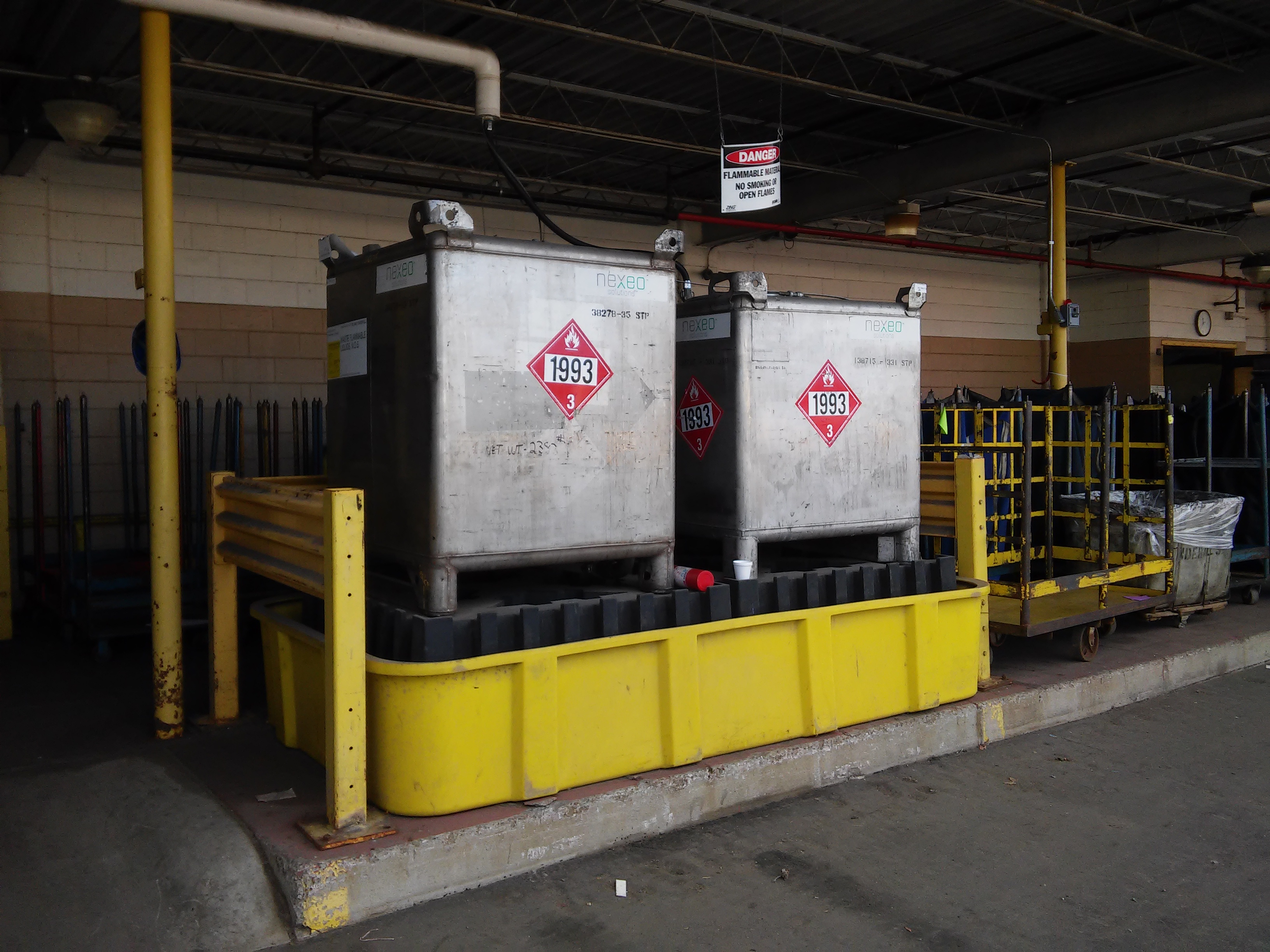
Flammable Hazardous Waste Storage
Background On Definition Of Solid Waste Rule
In 2015 the EPA published final revisions to the definition of solid waste that exclude certain hazardous secondary materials from regulation (80 FR 1694, January 13, 2015). The information requirements help ensure that (1) entities operating under the regulatory exclusions are held accountable to the applicable requirements; (2) state inspectors can verify compliance with the restrictions and conditions of the exclusions when needed; and (3) hazardous secondary materials exported for recycling are actually handled as commodities abroad.
Paperwork requirements finalized in that rule include:
- Under the generator-controlled exclusion at 40 CFR 261.4(a)(23), the tolling contractor has to maintain at its facility for no less than three years records of hazardous secondary materials received pursuant to its written contract with the tolling manufacturer, and the tolling manufacturer must maintain at its facility for no less than three years records of hazardous secondary materials shipped pursuant to its written contract with the tolling contractor. In addition, facilities performing the recycling of hazardous secondary materials under the generator-controlled exclusions at 40 CFR 261.4(a)(23) to maintain documentation of their legitimacy determination onsite.
- Under the verified recycler exclusion at 40 CFR 261.4(a)(24), a verified hazardous secondary materials recycler or an intermediate facility who has obtained a solid waste variance must meet the following conditions: Having financial assurance in place, having trained personnel, and meeting emergency preparedness and response conditions.
Under the remanufacturing exclusion at 40 CFR 261.4(a)(27), both the hazardous secondary material generator and the remanufacturer must maintain records of shipments and confirmations of receipts for a period of three years from the dates of the shipments. - Under the revised speculative accumulation requirement in 261.1(c)(8), all persons subject to the speculative accumulation requirements must label the storage unit by indicating the first date that the material began to be accumulated.
Caltha LLP | Your EH&S Compliance,
Auditing and EMS/SMS Partner
Friday, March 2, 2018
Is A Gap Analysis Required Under ISO?
For many organizations considering developing a formal Environmental Management System (EMS) or Safety Management System (SMS) or becoming registered under ISO 14001 or now ISO 45001, two questions asked early on are:

Flammable Liquid and Ignitable Hazardous Waste Storage Room
The Gap Analysis is typically formatted as a checklist of questions addressing the various elements of the ISO 14001 / 45001 standard. Based on the results of the Gap Analysis, the organization will understand the areas where improvement will need to be made, and can then do basic resource planning to determine the optimum strategy to move forward, including cost and schedule.

Hazardous Waste Storage Drum In Flammable Cabinet
Caltha LLP provides expert technical support to organizations wanting to improve their EMS or SMS or to become registered under ISO 14001 or ISO 45001. One of Caltha’s key services is help organizations conduct their Gap Analysis and resource planning. For more information go to ISO 14001 and Environmental and Safety Management Systems Services page.
- What will it cost? and,
- How long will it take?
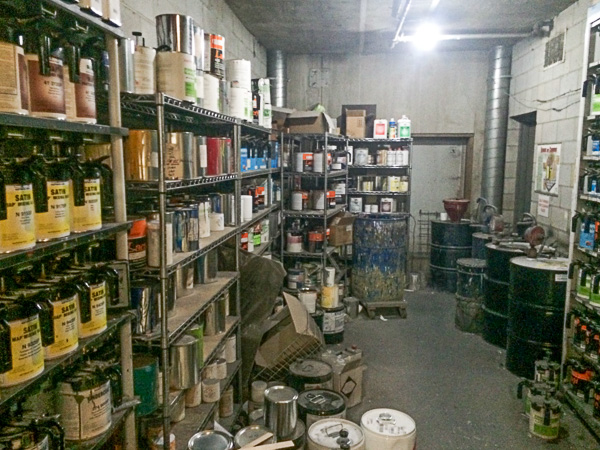
Flammable Liquid and Ignitable Hazardous Waste Storage Room
The Gap Analysis is typically formatted as a checklist of questions addressing the various elements of the ISO 14001 / 45001 standard. Based on the results of the Gap Analysis, the organization will understand the areas where improvement will need to be made, and can then do basic resource planning to determine the optimum strategy to move forward, including cost and schedule.
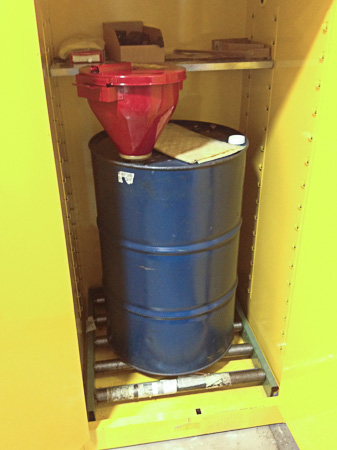
Hazardous Waste Storage Drum In Flammable Cabinet
Caltha LLP provides expert technical support to organizations wanting to improve their EMS or SMS or to become registered under ISO 14001 or ISO 45001. One of Caltha’s key services is help organizations conduct their Gap Analysis and resource planning. For more information go to ISO 14001 and Environmental and Safety Management Systems Services page.
Caltha LLP | Your EH&S Compliance,
Auditing and EMS/SMS Partner
Thursday, March 1, 2018
Maintenance of Legal And Other Requirements List For Pennsylvania Facility
Caltha LLP Project Summary
Project: Update and Maintenance of Legal and Other Requirements ListingClient: International Steel Manufacturer
Location(s): Pennsylvania
Key Elements: Review of regulatory requirements, preparation of ISO 14001 documentation of legal and other requirements
Overview: Caltha was contracted by the client to provide technical support to maintain their listing of "Legal and Other Requirements" which was prepared to conform to ISO 14001 Clause 4.3.2. An environmental management system that conforms to ISO 14001 must include a procedure to identify legal and other requirements that the organization believes are applicable to its operations. The organization also needs to have a system to be able to access the current version of these requirements.
]
Hazardous Waste Storage Drum In
Flammable Cabinet
The list of requirements is also essential for complying with other Clauses of the standard. This list becomes the scope of scheduled compliance audits the organization must perform. Caltha provided a technical update to the organization's existing listing of requirements, which included several new regulations that had been recently promulgated on both the Federal and State level.
The most recent update included important changes to the hazardous waste management requirements and Pennsylvania stormwater permit requirements, included in:
- Hazardous Waste Generators Improvement Rule,
- Solvent Contaminated Wipe Management Rule,
- 2016 Revised PDEP Industrial Stormwater Requirements.
Flammable Liquid and Ignitable Hazardous Waste
Storage Room
For more information on Caltha LLP services, go to the Caltha Contact Page
Caltha LLP | Your EH&S Compliance,
Auditing and EMS/SMS Partner
Sunday, February 25, 2018
Who Needs An Air Permit? Why Would I Need An Emission Control Permit?
This is a frequent question Caltha receives, often because determining if your whole facility, a single piece of equipment, or your process change requires an air emission permit requires a technical evaluation and relies on calculations which, to many, defy logic at first.
There are two primary reasons a facility or process requires an air permit:

Spray Booth Included In Facility Wide Air Emission Permit
Once the maximum hourly rate is determined, it is multiplied by 8,760 to estimate the maximum annual potential emissions. This value assumes the maximum emission rates are achieved 24 hours per day, 7 days per week for a full year.

Permitted Dust Control Cyclone System
There are two primary reasons a facility or process requires an air permit:
- It falls into a listed category of manufacturing processes which always requires a permit, usually referred to as NSPS or NESHAP standards; or
- Potential air emissions exceed specific thresholds.
How Do I Determine If I Will Exceed Permit Thresholds?
The permit thresholds for regulated air pollutants are listed in federal and State regulations. Facilities must determine their Potential To Emit, or PTE, in order to determine if they exceed these thresholds.
Spray Booth Included In Facility Wide Air Emission Permit
How Do I Determine My Potential To Emit?
Determining the PTE for a facility or process requires a technical evaluation of the process, including maximum throughput, process chemistry, and production bottlenecks, to estimate the maximum hourly emission rates for all regulated air pollutants. This maximum hourly rate does not include the removal efficiency of any pollution control equipment (such as baghouses, thermal oxidizer) being used.Once the maximum hourly rate is determined, it is multiplied by 8,760 to estimate the maximum annual potential emissions. This value assumes the maximum emission rates are achieved 24 hours per day, 7 days per week for a full year.
But I Don't Operate 24/7...
Few facilities actually operate for 8,760 hours per year. However, the Potential To Emit calculation uses this value only to compare to the permit thresholds. Your actual emissions will likely be much lower.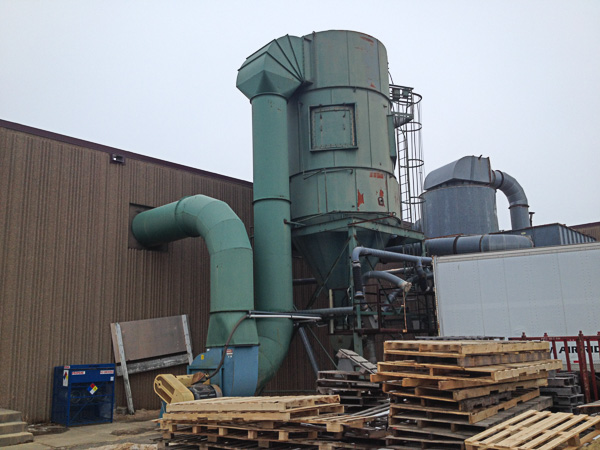
Permitted Dust Control Cyclone System
Why Can't I Take Credit For Pollution Control Equipment?
If a facility needs an air emission control permit, many of the permit requirements will involve how the pollution control equipment is operated and maintained to ensure effective control. The benefits of the pollution control equipment will be measured in actual emission estimates.
Caltha LLP | Your Air Permit, Wastewater Permit,
Storm Water Permit Partner
Saturday, February 24, 2018
Total Toxic Organics Management Plan For Metal Finisher
Caltha LLP Project Summary
Project: Total Toxic Organics Management Plan For Metal FinisherClient: Metal Finishing Company
Location(s): Minnesota
Key Elements: Total Toxic Organics Management Plan, SPCC Plan
Overview: This metal finishing was subject to Categorical Effluent Guidelines. In lieu of monitoring wastewater discharges for the full list of “Total Toxic Organics” the facility opted to prepare and implement a Total Toxic Organic Management Plan (TTOMP) for the site. Caltha was contracted to prepare the TTOMP for the facility. The TTOMP included:
• Inventory and description of TTO compounds used in the electroplating or finishing processes, and degreasing processes;
• Inventory and description of regulated processes where TTO compounds are used;
• Description of disposal methods for materials and wastes that contain TTO compounds;
• Description of controls used to limit or eliminate the discharge of TTO compounds to the sanitary sewer.
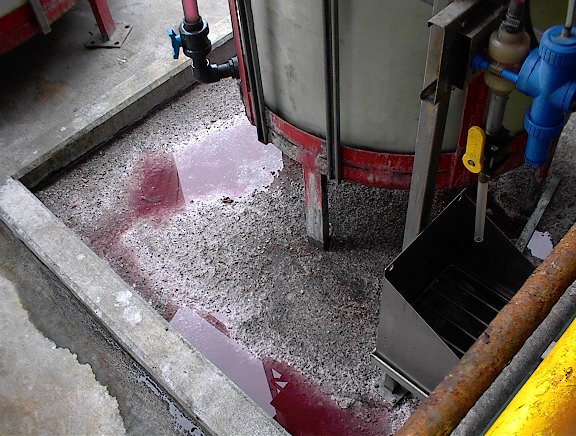
Spilled Corrosive Liquid From Aboveground Tank
The TTOMP was combined with a Facility Spill Plan which included processes and containers not specifically addressed under the Effluent Guidelines. Caltha prepared a spill control plan for the site to minimize and control spills from areas where liquids are stored, transferred and used. The spill plan included:
1. Inventory and description of chemical storage and process tanks;
2. Description of batch discharges to sanitary sewer;
3. Description of controls and procedures to prevent entry of chemicals and other restricted materials and wastes from entering the sanitary sewer;
4. Emergency notification procedures;
For more information on Caltha LLP services, go to the Caltha Contact Page
Caltha LLP | Your EH&S Compliance, Auditing
and EMS/SMS Partner
Thursday, February 22, 2018
Most Common Mistakes In Tank Secondary Containment
Common Problems With Secondary Containment
Missing Secondary Containment
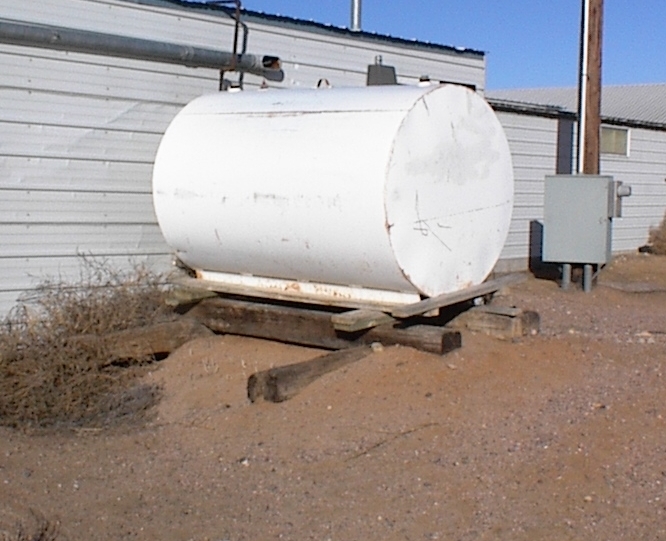
Fuel Tank Without Containment Or Proper Support
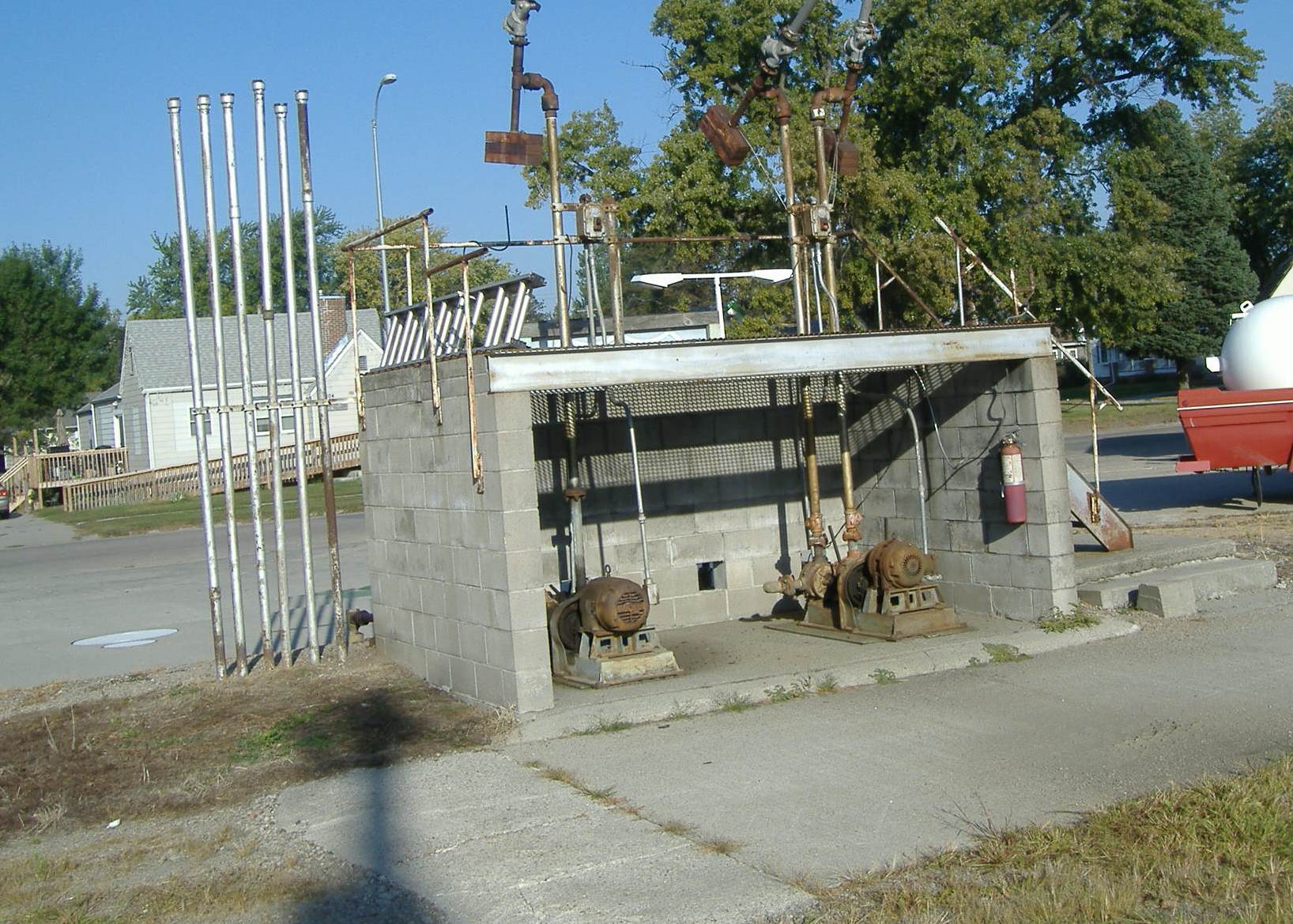
Fuel Loading Area Without Secondary Containment
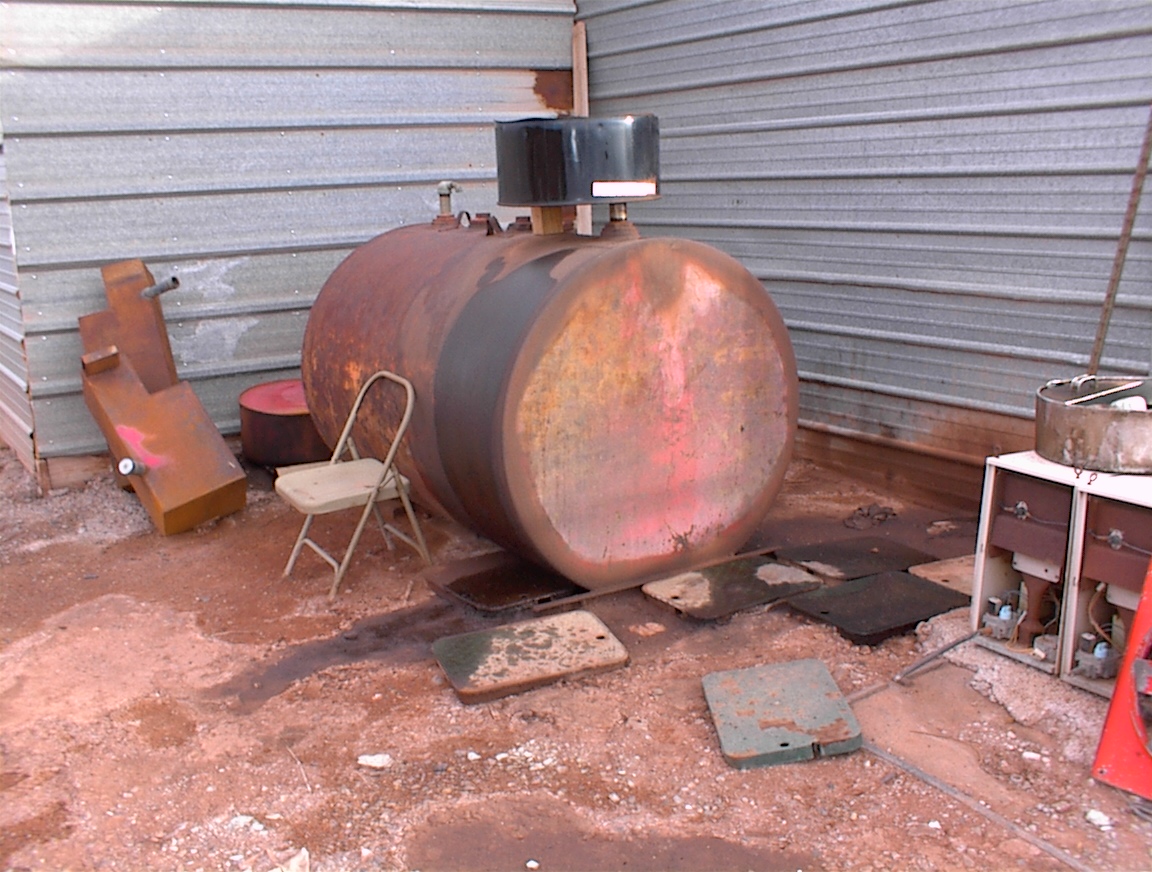
Leaking Used Oil Storage AST Observed During
Facility Inspection
Inadequate Volume Containment
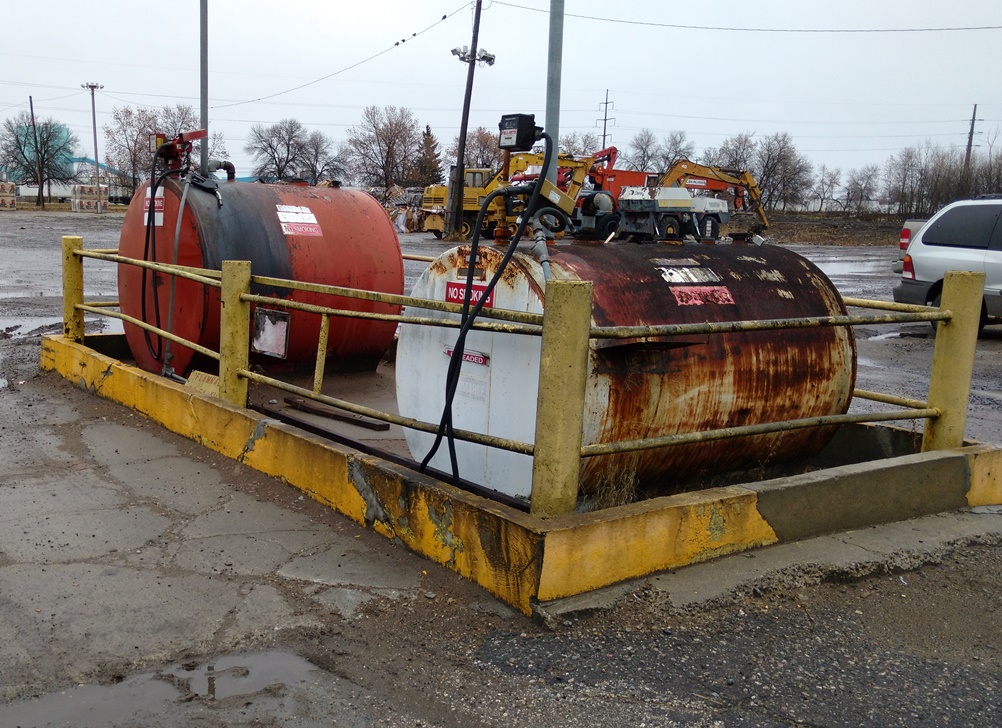
Environmental Inspection Finds Leaking Tanks
And Pumps In Refueling Area
Wrong Material
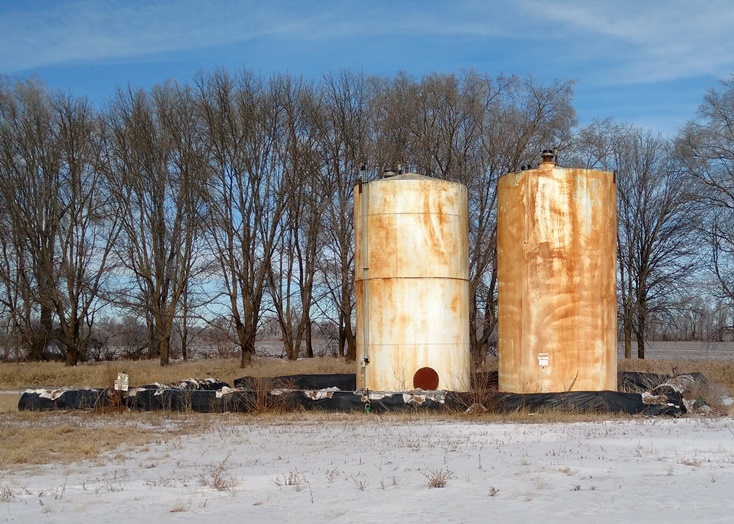
Bulk Fuel Storage With Hay Bale
Secondary Containment
Missing or Inadequate Maintenance
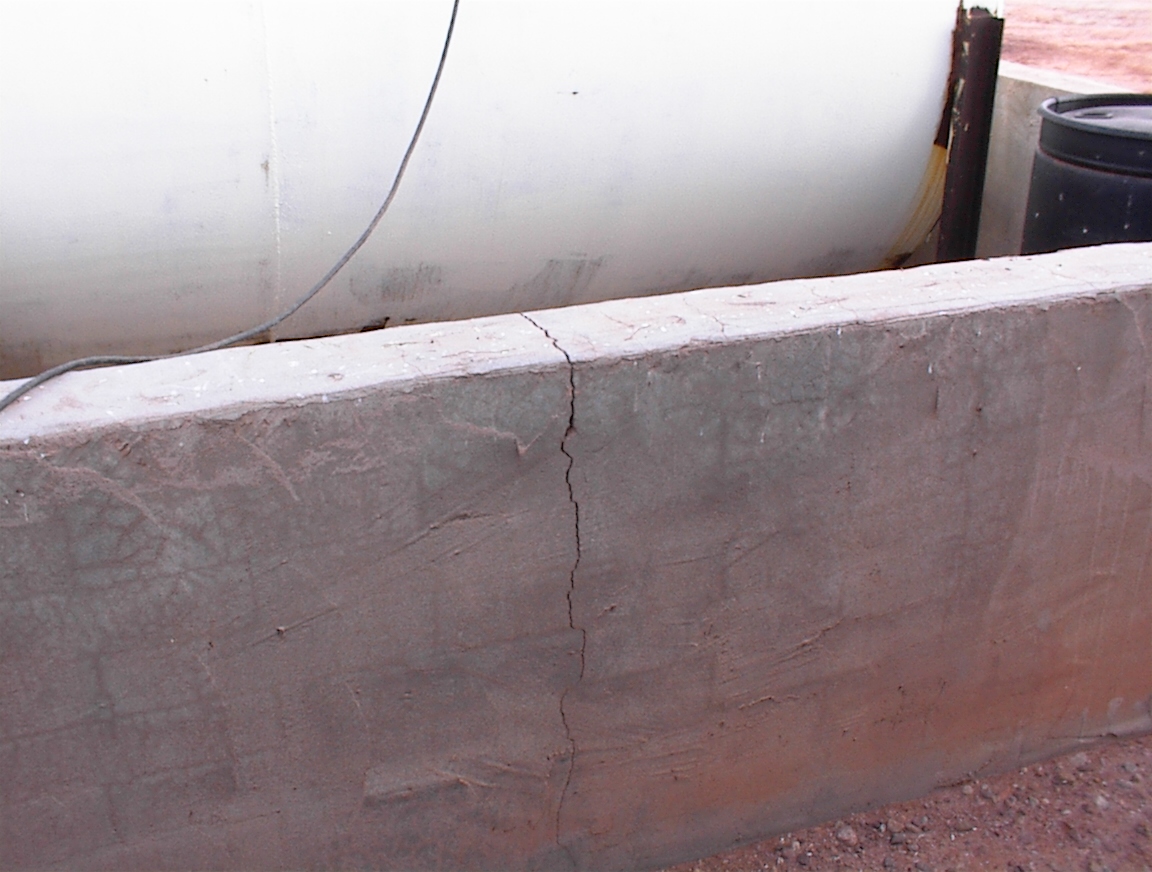
Cracked Secondary Containment Wall Identified
During SPCC Inspection
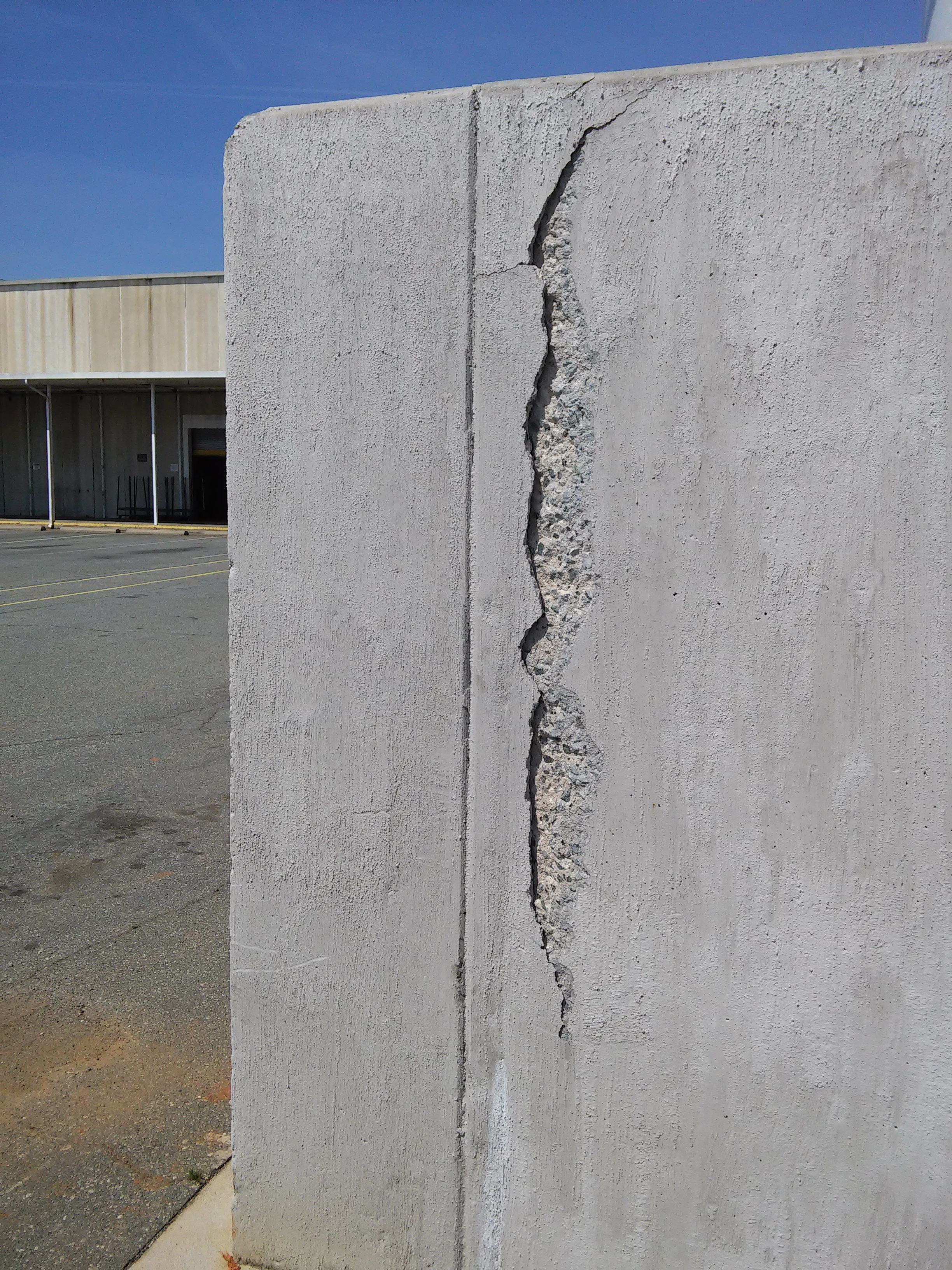
Damaged Oil Storage Containment
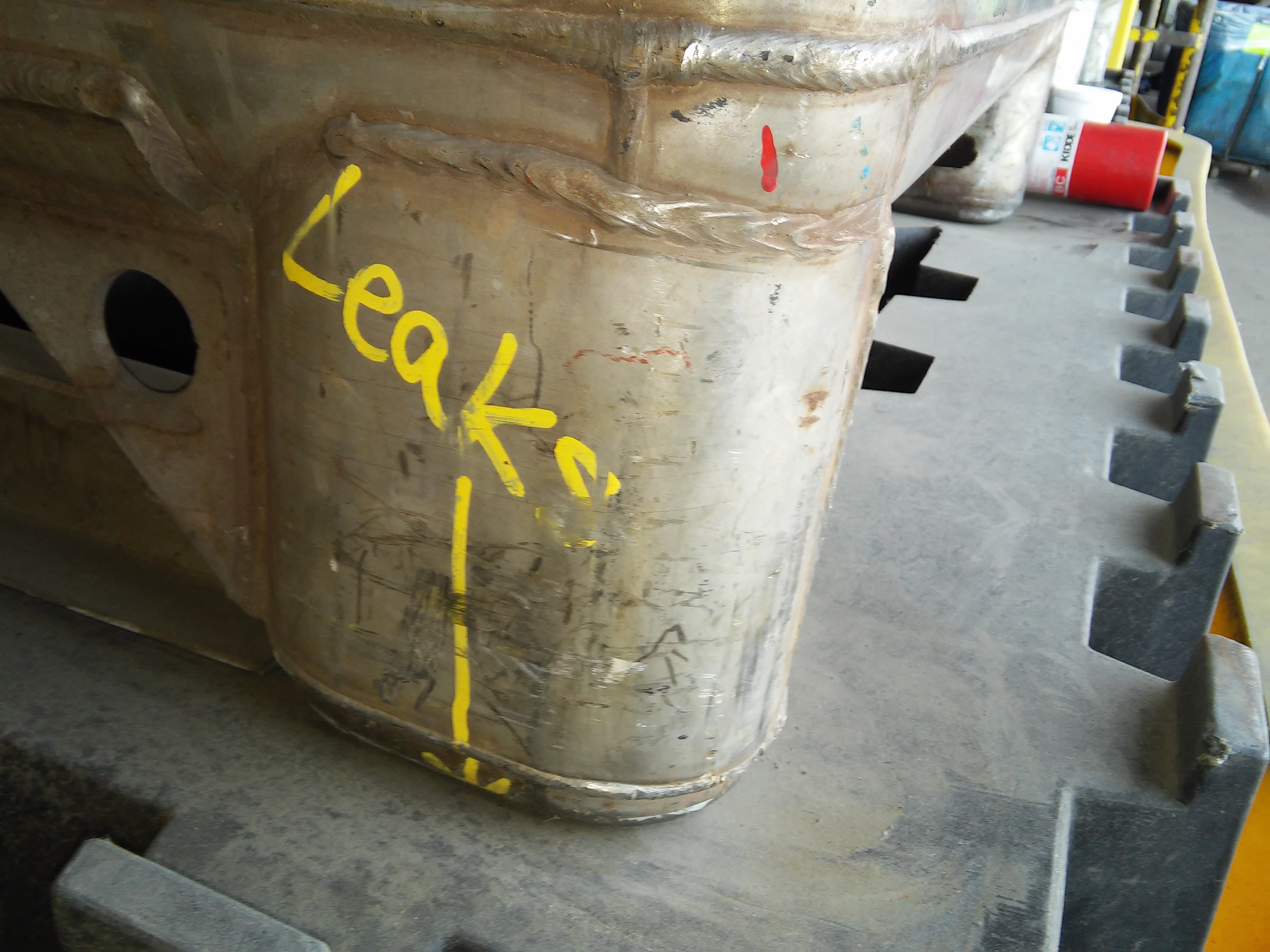
Leaking Waste Solvent Hazardous Waste Tank
Caltha LLP | Your Stormwater Permit,
SWPPP and Spill Plan Partner
Wednesday, February 21, 2018
New Hazardous Waste Rule Effective In North Carolina
The Hazardous Waste Generator Improvement Rule amended the Federal RCRA rules and enacted several important changes in how hazardous waste is managed. The Federal Rule was finalized in November 26, 2016 and became effective in a few States (Iowa, Alaska) on May 30, 2017. For all other States where implementation of RCRA had been delegated to State agencies, the Hazardous Waste Generator Improvement Rule did not become effective until States formally amended State rules to include these new provisions. Because some elements of the Hazardous Waste Generator Improvement Rule were less stringent that the existing RCRA rules, States had the option to include or exclude those portions when adopting their own State laws. For those portions of the Hazardous Waste Generator Improvement Rule that were more stringent than the existing RCRA rules, States were required to accept Federal rules in order to maintain an approved RCRA program.
Click here for a summary of the Hazardous Waste Generator Improvement Rule.

Leaking Waste Solvent Hazardous Waste Tank
In 2017, The North Carolina Department of Environmental Quality put a hold on all State rulemaking in order to go through a formal rulemaking process to incorporate the Hazardous Waste Generator Improvement Rule. That process was concluded in 2017. The State of North Carolina has finalized the updated hazardous waste rules which become effective on March 1, 2018.
Click here for more North Carolina regulatory updates and Caltha project examples from North Carolina.
Click here for a summary of the Hazardous Waste Generator Improvement Rule.
Leaking Waste Solvent Hazardous Waste Tank
In 2017, The North Carolina Department of Environmental Quality put a hold on all State rulemaking in order to go through a formal rulemaking process to incorporate the Hazardous Waste Generator Improvement Rule. That process was concluded in 2017. The State of North Carolina has finalized the updated hazardous waste rules which become effective on March 1, 2018.
Click here for more North Carolina regulatory updates and Caltha project examples from North Carolina.
Caltha LLP | Your EH&S Compliance, Auditing
and EMS/SMS Partner
Tuesday, February 20, 2018
Five Avoidable Hazardous Waste Compliance Violations
EPA, State and local agencies regularly inspect hazardous waste generators to determine compliance with the hazardous waste regulations and laws. Listed below are some of the most common hazardous waste rule violations observed by inspectors during compliance inspections along with some tips for how to avoid those violations.
You can use generator knowledge to assume your waste is hazardous, but you may need to test your waste for certain characteristics or properties such as heavy metals, flashpoint, pH and VOCs, to show it is nonhazardous.

Industrial Waste Disposal Burn Pit Observed During Inspection

Abandoned Chemical Products Stored In Lieu Of Disposal
Hazardous waste containers must be labeled with the words “Hazardous Waste,” a description of the waste and the accumulation start date.

Mislabeled Mercury Waste Drum Identified During RCRA Audit
Container must be closed and have a closure device that is designed to withhold contents if container is overturned.
Waste Audit Finds Improper Flammable Waste Storage And Labeling
Violation: Missing or incomplete SQG or LQG training records for hazardous waste personnel.

Leaking Waste Drums Discovered During Facility Inspection
1. Waste Evaluation
Violation: Disposing of unevaluated or inadequately evaluated products or materials used at your site as nonhazardous waste.You can use generator knowledge to assume your waste is hazardous, but you may need to test your waste for certain characteristics or properties such as heavy metals, flashpoint, pH and VOCs, to show it is nonhazardous.
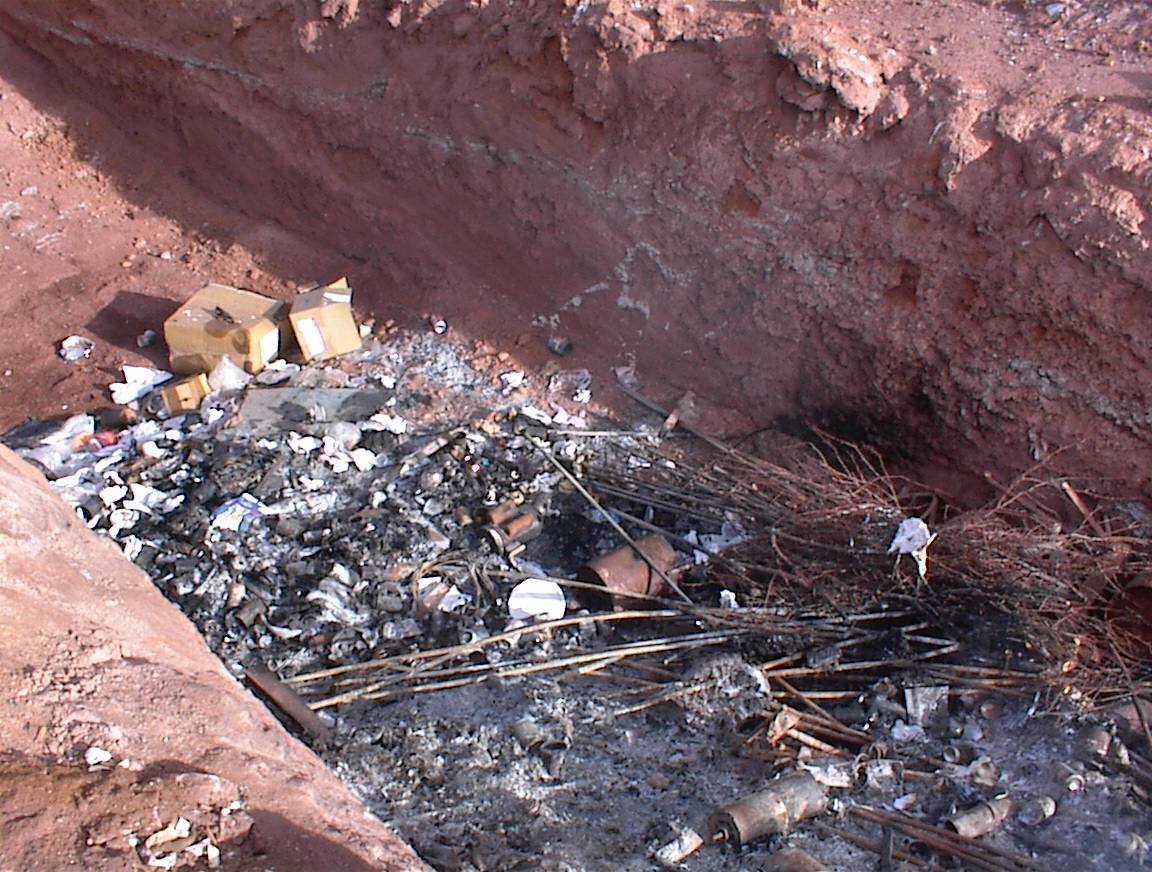
Industrial Waste Disposal Burn Pit Observed During Inspection
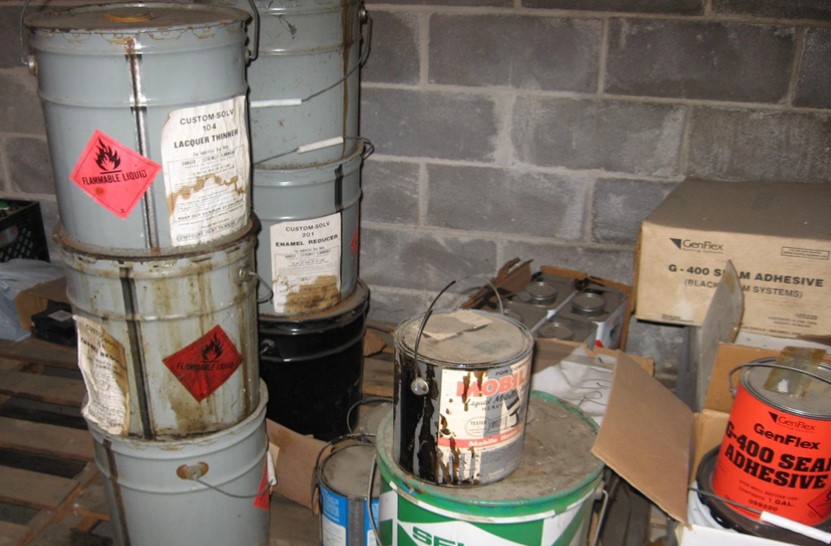
Abandoned Chemical Products Stored In Lieu Of Disposal
2. Labeling
Violation: Missing or illegible waste description, generator information, accumulation start dates and other required information.Hazardous waste containers must be labeled with the words “Hazardous Waste,” a description of the waste and the accumulation start date.
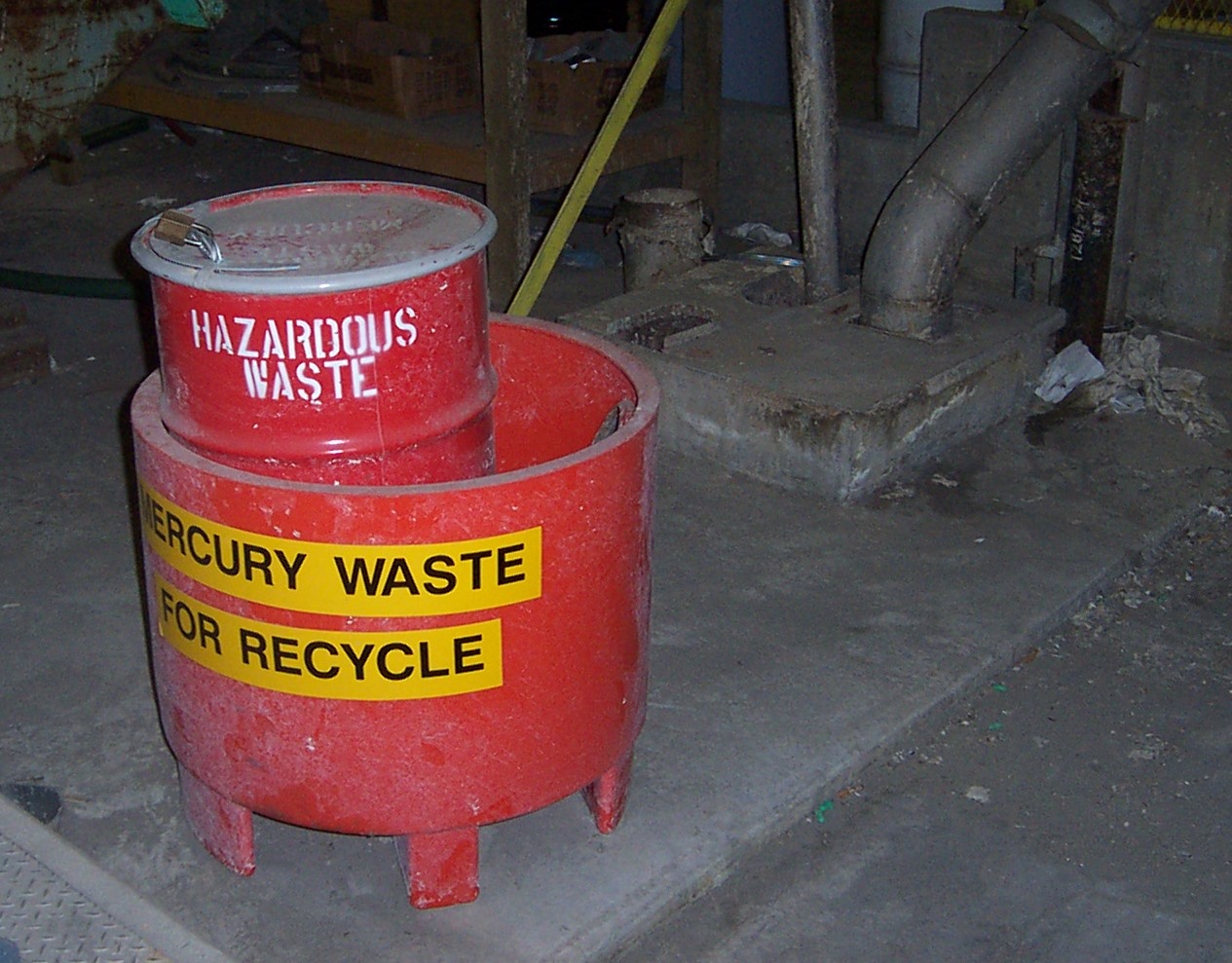
Mislabeled Mercury Waste Drum Identified During RCRA Audit
3. Open Container
Violation: Though funnel is covered, it is not designed with a closure device to withhold contents if overturned.Container must be closed and have a closure device that is designed to withhold contents if container is overturned.
Waste Audit Finds Improper Flammable Waste Storage And Labeling
4. Universal Waste Lamp and Battery Management
Violation: Lamps (intact or broken) and regulated batteries are not stored in appropriate containers.5. Record keeping
Violation: Evaluation records not kept at the licensed site or made easily available for inspection.Violation: Missing or incomplete SQG or LQG training records for hazardous waste personnel.
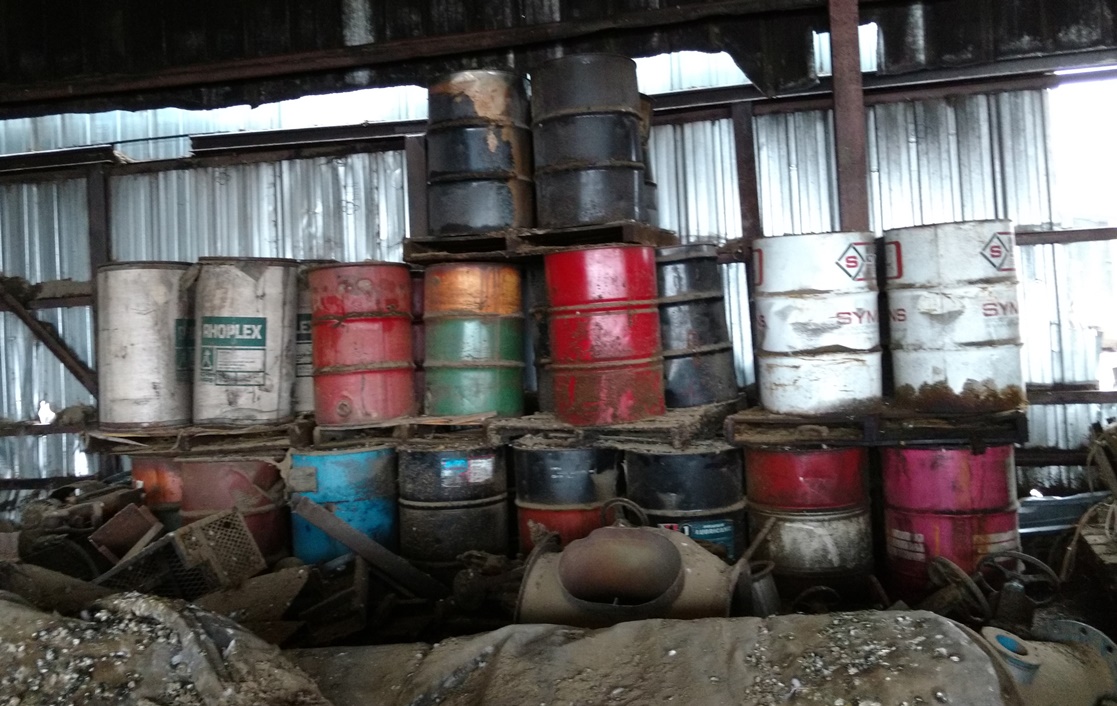
Leaking Waste Drums Discovered During Facility Inspection
Rule On Reporting Mercury And Mercury Added Products
The Lautenberg Act TSCA amendments established reporting deadline(s) and information requirements periodic update and publication of the inventory of mercury supply, use, and trade in the United States. As required under TSCA, the reporting requirements would apply to any person who manufactures mercury or mercury-added products, or otherwise intentionally uses mercury in a manufacturing process.
Mislabeled Mercury Waste Drum
Identified During RCRA Audit
On October 26, 2017, EPA issued a proposed rule to implement TSCA section 8(b)(10)(D), which requires EPA to issue a final rule no later than 2 years after the enactment of the Lautenberg Act TSCA amendments that establishes reporting deadline(s) and information requirements. As required under TSCA, the reporting requirements would apply to any person who manufactures mercury or mercury-added products, or otherwise intentionally uses mercury in a manufacturing process.EPA published the first inventory in March 2017. Based on the information collected, TSCA further directs EPA to identify any manufacturing processes or products that intentionally add mercury and recommend actions to achieve further reductions in mercury use.
EPA proposed reporting requirements in the Federal Register of October 26, 2017 to assist in the preparation of an “inventory of mercury supply, use, and trade in the United States.” Subsequently the deadline for the comment period was extended to January 11, 2018. The final rule is anticipated to be published by July 1, 2018.
Mislabeled Mercury Waste Drum
Identified During RCRA Audit
On October 26, 2017, EPA issued a proposed rule to implement TSCA section 8(b)(10)(D), which requires EPA to issue a final rule no later than 2 years after the enactment of the Lautenberg Act TSCA amendments that establishes reporting deadline(s) and information requirements. As required under TSCA, the reporting requirements would apply to any person who manufactures mercury or mercury-added products, or otherwise intentionally uses mercury in a manufacturing process.EPA published the first inventory in March 2017. Based on the information collected, TSCA further directs EPA to identify any manufacturing processes or products that intentionally add mercury and recommend actions to achieve further reductions in mercury use.
EPA proposed reporting requirements in the Federal Register of October 26, 2017 to assist in the preparation of an “inventory of mercury supply, use, and trade in the United States.” Subsequently the deadline for the comment period was extended to January 11, 2018. The final rule is anticipated to be published by July 1, 2018.
Caltha LLP | Your EH&S Compliance,
Auditing and EMS/SMS Partner
Subscribe to:
Posts (Atom)